


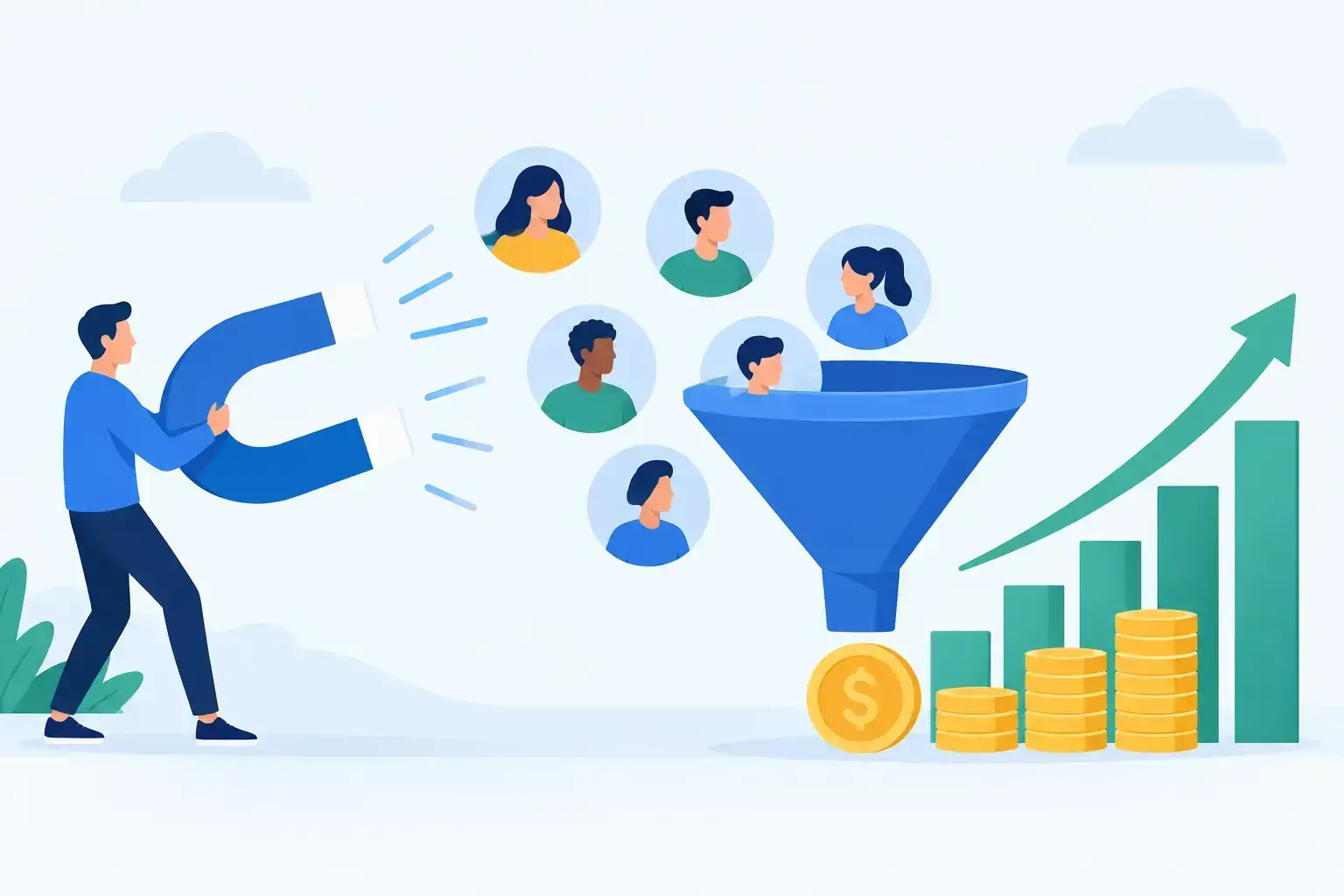
A startup can have a strong product, a polished logo, and a motivated team yet still struggle because too few of the right people know it exists. Startup lead generation solves that problem by creating a repeatable path from first impression to qualified conversation, proposal, and sale. The goal is not to collect the largest possible number of contacts. It is to create a pipeline of prospects who genuinely need what you offer and are ready to take the next step.
For founders and growing businesses, every marketing dollar must work hard. That means connecting your website, search visibility, paid campaigns, social media, content, and follow-up process around one commercial objective: generating opportunities your sales team can convert.


Start With a Clear Definition of a Qualified Lead
Many startups lose time chasing inquiries that were never likely to buy. A person who downloads a checklist is not automatically a sales opportunity. A qualified lead matches your target market, has a real problem your business can solve, and has enough intent, authority, budget, or urgency to move forward.
Define this before launching campaigns. A B2B software startup may target operations managers at companies with 20 to 200 employees. A travel startup may focus on families planning premium regional trips. An e-commerce brand may target buyers who have viewed key products twice or added items to their cart.
Your ideal customer profile should answer practical questions: Who buys? What triggers their search? What does the problem cost them? What objections stop them from acting? Where do they research solutions? Clear answers make every marketing activity more efficient.
Build a Website That Converts Attention Into Action
Your website is not an online brochure. It is your most important lead-generation asset, especially when paid advertising and SEO are directing traffic to it. If visitors cannot quickly understand what you do, why it matters, and how to contact you, campaign spending will produce weak results.
A high-converting startup website puts the offer first. Use a direct headline that explains the outcome you deliver, followed by proof, service details, and a clear call to action. For a professional services startup, that action might be “Request a Consultation.” For a product business, it could be “Get a Demo,” “Start Your Free Trial,” or “Shop the Collection.”
Each page should have one primary job. Do not send paid traffic to a general homepage packed with unrelated services if a dedicated landing page can address the exact need behind the search. A startup offering accounting software, for example, should create focused pages for freelancers, retailers, or small agencies when those audiences have different concerns.
Trust is equally important. Add client results, testimonials, case examples, certifications, team information, clear pricing guidance where appropriate, and fast contact options. A slow, outdated, or confusing website can damage confidence before a prospect ever speaks to your team.
Use Startup Lead Generation Channels With Intent
The best channel depends on how people buy from you. Search advertising can produce quick opportunities when prospects are actively looking for a solution. SEO takes longer, but it builds lasting visibility and reduces dependence on paid traffic over time. Social media can create awareness and demand, while email turns early interest into booked calls and repeat purchases.
The strongest approach is usually a focused mix rather than trying every channel at once. Start with the channels closest to buying intent, then expand once you know which message and audience convert.
Search Campaigns for Immediate Demand
Google Ads can work well for startups with a clear offer and a defined conversion action. A user searching for “CRM for real estate agencies” or “emergency IT support for small business” is already signaling a need. Your ad should match that need closely, and the landing page should continue the same message without distractions.
Paid search is not automatically profitable. Broad keywords can attract irrelevant clicks, and competitive markets may have high costs per click. Control spending with geographic targeting, negative keywords, audience exclusions, and campaign-level conversion tracking. The objective is not cheap traffic. It is a sustainable cost per qualified lead.
SEO for Long-Term Pipeline Growth
Search engine optimization helps your startup appear when prospects research problems, compare options, and look for providers. Strong SEO begins with technically sound web development, fast page speed, mobile usability, helpful page structure, and content built around real customer questions.
Create pages that serve commercial intent as well as educational intent. A guide explaining how to choose a website development agency can bring in early-stage prospects. A service page for custom e-commerce development can reach businesses ready to request a quote. Both matter, but they should lead visitors toward a relevant next action.
SEO requires patience. It is rarely the fastest route to leads in the first month, particularly for a new domain. Its value grows when your site builds authority, your content answers specific needs, and high-intent pages begin attracting consistent organic traffic.
Social Media That Creates Conversations
Social media is most useful when it gives potential customers a reason to trust your expertise before they are ready to buy. Show completed work, explain common business problems, share short practical advice, and demonstrate the results behind your services.
For B2B startups, LinkedIn may be more effective than high-volume entertainment platforms. For hospitality, retail, beauty, travel, and visual product brands, Instagram and Facebook can generate strong engagement and inquiries. The right choice depends on where your buyers spend time and how much consideration the purchase requires.
Do not judge social activity only by likes. Track profile visits, direct messages, form submissions, booked calls, and assisted conversions. A post that reaches fewer people but starts five qualified conversations has more commercial value than a viral post with no buyer intent.
Make Your Offer Easy to Say Yes To
Startups often ask prospects to make a large commitment too early. A visitor may not be ready to sign a yearly contract, purchase a complex system, or commit to a major project after one website visit. Give them a lower-friction next step that provides genuine value.
This could be a free website audit, a strategy call, a product demo, a cost estimate, a consultation, or a useful industry guide. The offer must be closely connected to the service you sell. Giving away a generic ebook may create email contacts, but a free e-commerce conversion review is more likely to attract businesses that need e-commerce support.
Keep forms short. Request only the information your team needs to respond intelligently. Name, business email, phone number, company, and a brief project requirement are often enough for service-based companies. Every additional field creates friction.
Follow Up Before Interest Disappears
Fast follow-up is one of the most overlooked advantages a startup can have. A qualified prospect who receives a helpful response within minutes or hours is far more likely to engage than one who waits several days. Speed communicates professionalism, especially in competitive service markets.
Set up a simple process for every lead source. Form submissions should trigger an immediate confirmation email, then alert the relevant salesperson or founder. Leads who do not book immediately should enter a short email sequence that answers objections, shares proof, and invites them back to a call or demo.
The message should feel personal, not automated. Refer to the service they asked about, the challenge they mentioned, or the page they visited. For high-value projects, a direct phone call can be more effective than another generic email.
Measure Revenue, Not Just Marketing Activity
A startup does not need a complicated analytics stack to make better decisions. It does need reliable tracking. Set up conversion tracking for form submissions, calls, demo bookings, purchases, and key engagement actions. Then connect leads to their original source whenever possible.
Review the numbers that affect growth: traffic by channel, landing-page conversion rate, cost per lead, qualified-lead rate, sales-call booking rate, close rate, customer acquisition cost, and revenue by source. A campaign with a higher cost per lead may still be the better investment if its leads close at a much higher rate.
This is where an end-to-end partner can make a real difference. Your(1)Site helps businesses connect web design, hosting, SEO, paid advertising, content, analytics, and technical support so lead generation does not become a collection of disconnected tasks. Every component should support the same business result.
Improve One Bottleneck at a Time
When lead volume is low, avoid changing everything at once. Find the weakest point in the journey. If traffic is low, improve reach through SEO, ads, partnerships, or content. If traffic is strong but inquiries are weak, improve the landing page, offer, and call to action. If leads arrive but sales remain slow, review lead qualification and follow-up.
Small improvements compound. A better headline, faster mobile page, sharper audience target, or same-day response process can turn an underperforming campaign into a dependable source of opportunities. Build the system, measure the outcome, and keep making it easier for the right customer to choose your business.