


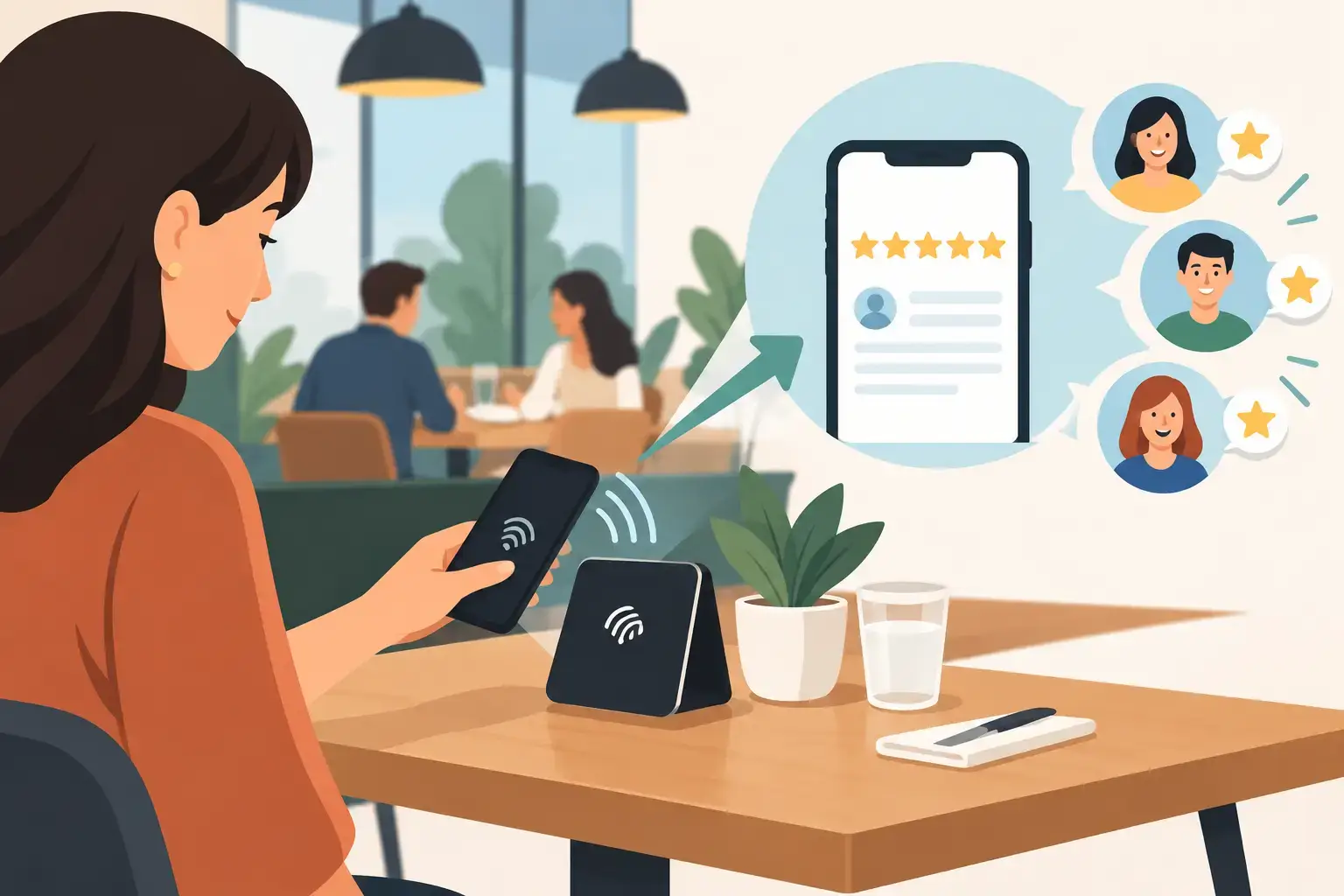
A great meal creates a short window of goodwill. The guest is satisfied, the table is cleared, and their phone is already in hand. A restaurant NFC campaign turns that moment into a simple tap or scan that can send customers directly to your Google Reviews page, TripAdvisor profile, social channel, or a custom destination. No searching for your restaurant. No spelling your business name correctly. No staff member needing to make an awkward request.
For restaurants competing on local search, ratings are not a side project. They influence where diners book, order, and walk in. The right NFC campaign gives your team a polished, repeatable way to collect more feedback while keeping the guest experience easy.


Why restaurants need a better review moment
Most restaurants ask for reviews too late or not at all. A receipt might include a tiny URL. A server may mention Google reviews during a busy dinner rush. A follow-up email can arrive hours after the guest has moved on. Each method depends on memory, time, and extra effort.
NFC reduces those steps. A customer taps an NFC stand, coaster, card, or table tent with a compatible smartphone, and the selected review link opens immediately. A QR code on the same display gives every guest a reliable alternative. The action takes seconds, which matters when the positive experience is still fresh.
That convenience can support stronger ratings over time, but it also creates a useful stream of operational feedback. Reviews reveal what guests mention without prompting: friendly service, a standout dish, a long wait, unclear parking, or an issue with pickup orders. Owners and managers can use those patterns to protect what works and improve what does not.
Build a restaurant NFC campaign around real guest touchpoints
The most effective campaign does not place one sign by the register and hope for the best. It maps where guests naturally pause after receiving value. Fine dining, fast casual, coffee shops, bars, and delivery-focused concepts have different traffic patterns, so placement should follow the service model.
A full-service restaurant may use elegant NFC table tents or premium stands at the host station and payment area. The request can be visible when guests are relaxed after dessert or while waiting for a card to be returned. A café may get better results from a countertop stand near the pickup shelf, where regulars already reach for their phones. For takeout and delivery orders, branded hang tags, stickers, or cards can carry the campaign beyond the dining room.
Consider using a mix of these placements:
- Table tents or coasters for dine-in guests after the meal
- A premium stand at the host desk or checkout counter
- NFC cards attached to check presenters or takeaway bags
- Branded stickers near the pickup counter or exit door
- Smart tags for catering boxes, loyalty materials, or event displays
The goal is not to put a review request everywhere. Too many prompts can look pushy. Choose two or three high-intent moments, keep the message consistent, and test which placement produces the best response.
Match the message to the moment
A generic “Review Us” sign works, but a specific, polite message performs better because it gives guests a reason to act. At a table, try language such as: “Loved your meal? Tap or scan to share your experience.” At pickup, use: “Your feedback helps local guests find us.” For a hotel restaurant or higher-end venue, a custom display in your brand colors can make the request feel like a considered part of the experience rather than an afterthought.
Keep the copy short. The display should make the next action obvious: tap or scan. Guests should not have to interpret a long explanation of NFC technology.
Choose the destination that supports your growth goal
A restaurant NFC campaign should have one primary destination. For most independent restaurants, Google Reviews is the strongest starting point because ratings appear prominently when nearby diners search for places to eat. A direct Google review link removes the extra navigation that often causes guests to abandon the process.
That said, the best destination depends on how customers discover you. TripAdvisor can be particularly relevant for restaurants in tourist areas. Booking-related destinations may make sense for hotel dining. Facebook and Instagram can support community engagement and visual sharing. WhatsApp can be useful for direct customer conversations, while a custom URL can lead to a feedback form, loyalty offer, menu, or campaign landing page.
Avoid splitting one display across too many choices unless you have a clear reason. When the primary objective is Google review growth, send the tap directly to Google. If you want a multi-platform strategy, assign different destinations to different physical touchpoints and track the response. A table display might lead to Google Reviews, while a social-ready bar display can lead to Instagram.
Flexible link assignment is especially valuable for seasonal promotions, new locations, or a restaurant group with separate profiles. You can keep a premium physical display in place while changing the digital destination as your marketing priorities change.
Make staff part of the campaign without turning them into salespeople
Technology creates the opportunity. Staff awareness determines whether the opportunity is used naturally.
Give servers, hosts, baristas, and cashiers one simple line they can use only when it fits the interaction: “If you enjoyed your visit, you can tap the stand to leave feedback.” The best time is after a guest has offered a compliment, thanked the team, or mentioned a favorite item. There is no need for every employee to repeat the request to every guest.
Train the team on the difference between inviting feedback and pressuring customers. Never imply that a review is required, and do not offer discounts, free items, or contest entries in exchange for positive reviews. Incentivized or selectively requested reviews can create platform-policy problems and damage trust.
Ask all guests for honest feedback, not only the guests who seem happiest. If someone raises an issue in person, solve it first. A thoughtful recovery may still lead to a positive review later, but the immediate priority is the customer, not the rating.
Protect the premium feel of the dining experience
Restaurant owners often worry that review displays will look cluttered or cheap. That is a valid concern. A handwritten QR sign taped to a counter may collect some scans, but it can undermine a carefully built dining environment.
Physical design matters because the display represents your brand before a guest ever taps it. A modern acrylic stand may suit a quick-service counter. A refined metal or premium display can fit a wine bar, steakhouse, boutique hotel restaurant, or upscale café. Customized pieces with your logo, colors, and a clear call to action make the campaign feel intentional.
ReviewsLink offers NFC and QR products in formats that suit different restaurant environments, including coasters, table tents, stands, cards, stickers, and custom branded displays. The practical advantage is not just appearance. You can create a consistent guest prompt across the dining room, checkout counter, and takeout experience without relying on disposable paper materials.
Measure more than the number of taps
A restaurant NFC campaign should be reviewed like any other revenue-focused marketing activity. Start with a baseline: your current review count, average rating, monthly review volume, and the phrases diners use most often. Then watch how those numbers change after launch.
Taps and scans are useful engagement signals, but they are not the final metric. A guest may open the review page and choose not to post. The outcomes that matter are a steadier volume of authentic reviews, improved local visibility, and stronger customer confidence when new diners compare options.
Review trends also help you evaluate placement. If takeout bag tags produce frequent feedback about order accuracy, that channel is working for off-premise guests. If table tents receive little engagement, the message may be too subtle, the display may be placed too early in the meal, or your guests may prefer an exit-point prompt. Test one change at a time so you can identify what caused the shift.
Respond to new reviews consistently. Thank guests for specific praise, address criticism calmly, and avoid copy-and-paste replies that sound automated. A visible response shows future diners that the restaurant pays attention after the check is closed.
Start small, then make it part of service
You do not need a complicated rollout. Select a primary review destination, choose a display format that fits your setting, and launch it in the one or two places where happy guests already pause. Brief the team, review performance after a few weeks, and refine the message or placement based on what customers actually do.
The best restaurant NFC campaign feels less like a marketing request and more like a final act of hospitality: a fast, elegant way for guests to share the experience they just had while it still matters.