


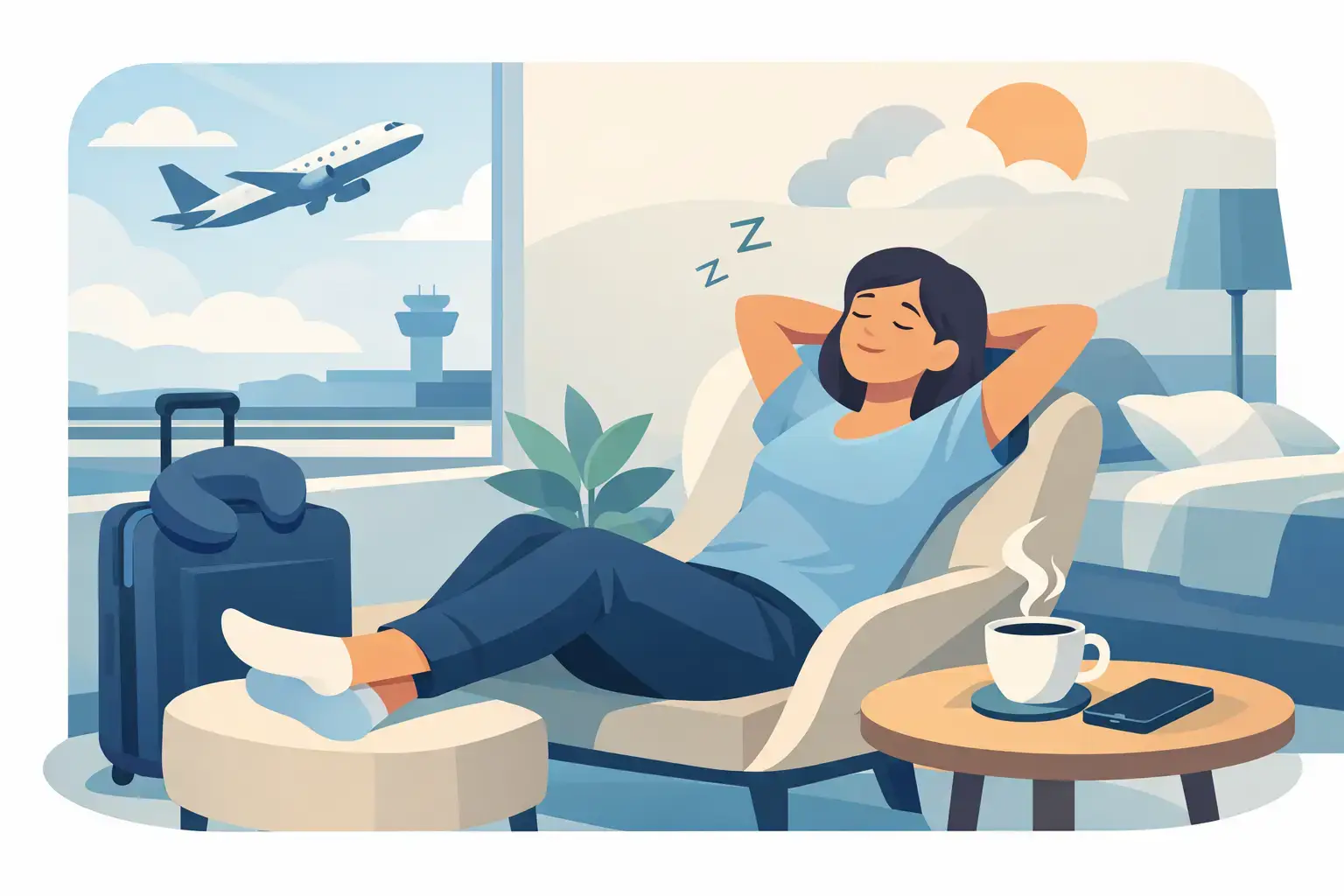
That heavy, puffy, slightly disoriented feeling after landing is hard to ignore. If you are wondering how to relax after flight, the answer is usually not one big fix – it is a few smart recovery choices that help your body settle, rehydrate, and release the tension travel leaves behind.
Flying asks a lot from the body. You sit longer than usual, move less, drink less water than you should, and often arrive carrying stress in your neck, lower back, hips, and legs. Add cabin pressure, dry air, poor sleep, and time-zone changes, and even a short trip can leave you feeling tight and drained. The good news is that post-flight recovery can start almost immediately if you know what your body actually needs.


Why flying leaves you tense and tired
A flight can feel passive, but physically it is not restful. Sitting in a fixed position shortens the hip flexors, stiffens the lower back, and slows circulation through the legs and feet. Many travelers also brace their shoulders and jaw without realizing it, especially during delays, takeoff, landing, or a long airport transfer.
Dry cabin air adds another layer. Mild dehydration can make fatigue feel worse, increase headaches, and leave your skin and muscles feeling flat. If you slept badly on the plane, your nervous system may also stay slightly overstimulated even after arrival. That is why some people feel exhausted but strangely unable to fully unwind.
Jet lag complicates things further. If you crossed time zones, your body clock may not match local time yet. In that case, recovery is not just about comfort. It is also about helping your system adjust without making the next day harder.
How to relax after flight without wasting the first day
The first few hours after landing matter more than most people think. If you push through fatigue, skip water, eat heavily, and stay immobile, stiffness tends to build. If you recover well early, the rest of the day usually feels smoother.
Start with water. Not iced, not rushed – just steady hydration. Sip rather than chug, especially if you feel bloated. A light meal can help too, but keep it balanced. Greasy food and too much alcohol may feel tempting after travel, yet they often deepen sluggishness and make jet lag more noticeable.
Then give your body gentle movement. You do not need a workout. A short walk, a few shoulder rolls, ankle circles, and slow stretching for the hips and calves can begin to reverse that compressed in-flight feeling. The goal is circulation and release, not intensity.
If possible, shower soon after arrival. Warm water helps relax muscles, while a cool finish can refresh you if you are fighting sleepiness at the wrong local hour. This is one of the simplest ways to signal a reset to both body and mind.
What helps most: rest, movement, or massage?
It depends on what kind of flight strain you are carrying.
If your main issue is exhaustion, rest comes first. A quiet room, dim lighting, hydration, and calm breathing may be enough to help your body downshift. If your main issue is stiffness, too much lying down can actually make you feel worse. In that case, gentle movement followed by bodywork tends to be more effective.
Massage is often the fastest way to feel genuinely better after a flight because it addresses both muscular tension and nervous system overload. Tight shoulders, an aching lower back, swollen feet, and heavy legs usually respond well to focused therapeutic touch. For many travelers, that combination of physical relief and mental calm is exactly what is missing after a long journey.
A lighter relaxation massage works well when you feel generally worn down and want to settle into rest. Hot oil massage can be especially comforting if you feel dry, tense, and overtired. Reflexology may suit travelers whose feet and calves feel congested after hours of sitting. If your body feels locked up rather than simply fatigued, deeper pressure may help, though very intense work right after a long flight is not always the best choice for everyone. Sometimes your body needs soothing before it needs strong correction.
Best ways to relax after flight when your body feels swollen
Swelling in the feet, ankles, and lower legs is common after travel. Usually, it improves with movement, hydration, and time. Elevating your legs for a short period can help, especially if you have been traveling all day.
A steam session may also feel beneficial because warmth encourages the body to soften and unwind. Still, there is a trade-off. If you are dehydrated, prolonged heat can leave you feeling weaker or lightheaded. Rehydrate first, then keep heat exposure moderate.
Massage focused on circulation and foot tension can be especially useful here. Reflexology and leg work can help relieve that congested, heavy sensation that follows long periods of sitting. If you are also carrying back and shoulder pain, a full-body treatment often gives a more complete sense of recovery.
If jet lag is the problem, relax differently
When people search for how to relax after flight, they often mean jet lag as much as muscle tension. The tricky part is that the right recovery strategy changes depending on arrival time.
If you land in the morning or early afternoon, try not to go straight to bed unless you are truly unwell. Light movement, daylight exposure, a shower, and a calming massage can help you feel restored without confusing your body clock further. If you nap, keep it short.
If you arrive at night, shift into sleep support mode. Lower the lights, reduce screen exposure, eat lightly, and choose relaxation that prepares you for rest rather than stimulation. A soothing body massage, warm bath, or quiet steam session can be ideal at this stage because the goal is not energy – it is deeper sleep.
This is where a luxury spa environment makes a noticeable difference. Recovery is easier when the setting is calm, clean, quiet, and designed to let the nervous system settle quickly. For travelers arriving in Dubai Marina, a well-timed massage at Stella Spa can turn the end of a draining travel day into something far more restorative.
Small mistakes that make post-flight fatigue worse
Many travelers accidentally prolong discomfort by doing too much too soon. A heavy meal, several coffees, alcohol on an empty system, or an aggressive gym session can all backfire when your body is already stressed.
Another common mistake is assuming that discomfort will pass on its own. Sometimes it does. But if you landed with a stiff neck, tight back, or throbbing legs, waiting it out can mean carrying that tension into meetings, sightseeing, or sleep. Early relief is often the smarter option.
There is also a difference between normal travel fatigue and signs that your body needs more care. If swelling is severe, one-sided, or accompanied by unusual pain, it is wise to seek medical advice rather than treating it as routine travel discomfort.
A simple post-flight recovery routine
If you want an easy rhythm to follow, keep it simple. Drink water, eat lightly, move gently, shower, and give yourself at least one proper recovery window before jumping into plans. That recovery window might be quiet rest in your room, a steam session, or a massage tailored to how your body feels.
For some people, a 30-minute treatment is enough to take the edge off. For others, especially after long-haul travel, a longer full-body session delivers better results. Couples arriving together often find that shared recovery time helps set a calmer tone for the rest of the trip. What matters most is choosing something that leaves you looser, calmer, and more comfortable in your body.
How to know what your body needs after a flight
Ask yourself one question: do you feel more wired or more heavy?
If you feel wired, choose calming recovery. Soft pressure, warm oil, quiet surroundings, and slow breathing usually help most. If you feel heavy, stiff, and dull, choose circulation and movement. A walk, a warm shower, and massage that focuses on the legs, back, and shoulders can help you feel human again.
And if you feel both, which is very common after travel, start gently. Your body usually responds better to thoughtful recovery than to extremes.
Travel can be exciting, but arriving well matters just as much as getting there. Give yourself permission to recover with the same care you give the rest of your plans, and your first hours after landing can feel less like survival and more like relief.