


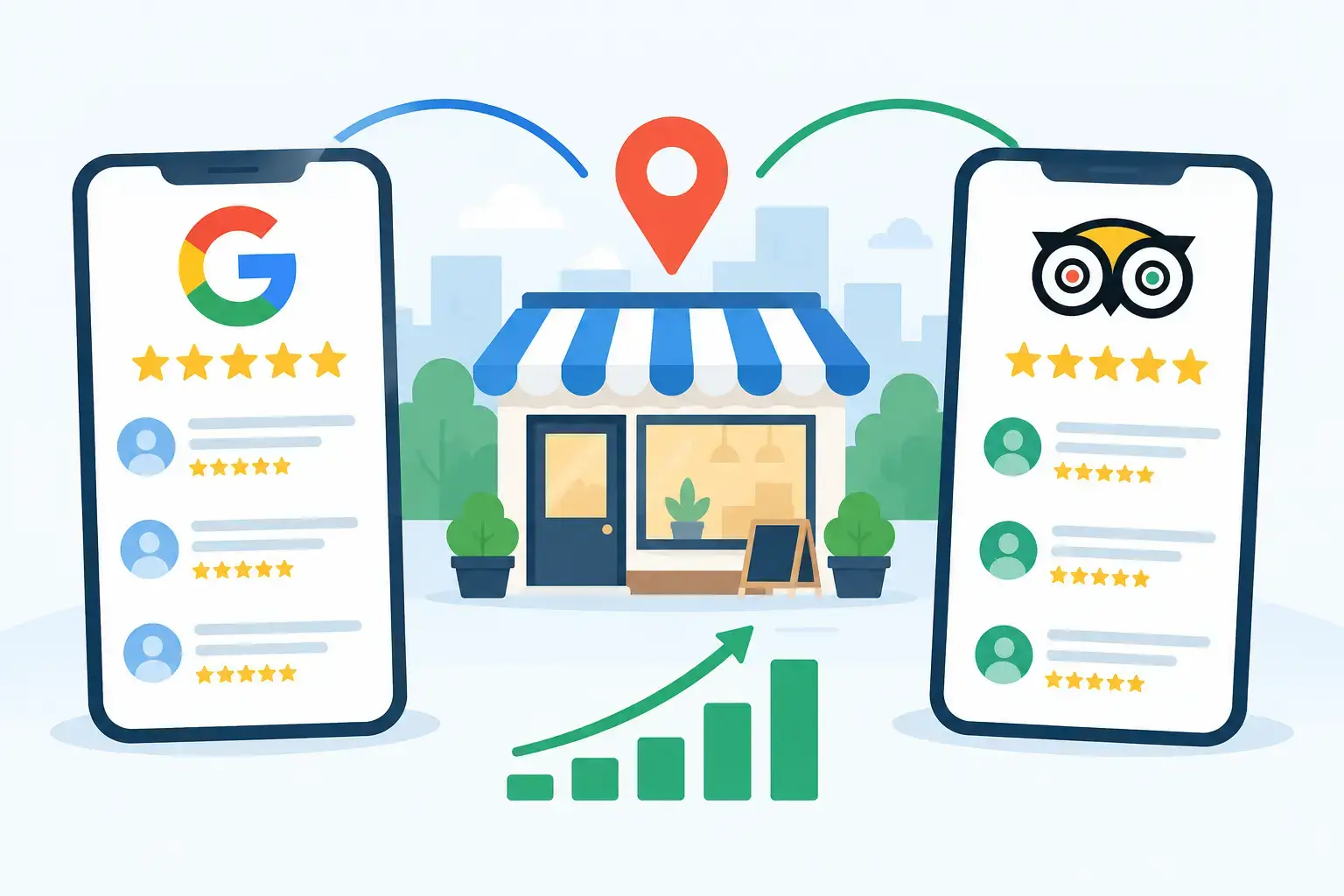
A guest finishes dinner, a patient leaves a successful appointment, or a shopper checks out with a great experience. That moment is valuable, but it passes quickly. In the Google Reviews versus TripAdvisor decision, the best platform is usually the one that matches how your next customer searches, compares, and chooses.
For many local businesses, Google Reviews delivers the broadest day-to-day visibility. TripAdvisor can be equally influential when travel, hospitality, and destination-based decisions are involved. The smart move is not treating one platform as universally better. It is building a review collection process that puts the right destination in front of the right customer at the right time.


Google Reviews versus TripAdvisor: The Core Difference
Google Reviews is closely connected to Google Search and Google Maps. When a nearby customer searches for a dentist, coffee shop, salon, gym, hotel, or restaurant, ratings and reviews can appear directly alongside local business listings. This gives Google reviews an immediate role in local discovery, customer trust, and the decision to call, visit, book, or request directions.
TripAdvisor is a dedicated travel and experience platform. Its users are often comparing options before or during a trip. They may be looking for a hotel in a specific neighborhood, restaurants near an attraction, activities for a weekend, or places that other travelers consistently recommend. The audience is highly intent-driven, but it is not always local in the same way as Google users.
That distinction changes the answer for each business. A dental office in a residential area will usually benefit most from making Google reviews its primary request. A boutique hotel, waterfront restaurant, winery, tour operator, or resort may have a strong case for actively collecting TripAdvisor reviews too. A restaurant in a tourist district may need both.
Where Google Reviews has the advantage
Google is often the first place people turn when they need something now. A customer searching “best urgent care near me,” “hair salon open today,” or “Italian restaurant nearby” is not browsing casually. They are looking for a practical next step.
A strong Google Business Profile with recent, credible reviews can help a business stand out at that exact moment. Ratings influence how customers perceive quality before they ever visit a website. Review volume and freshness also give people confidence that the business is active, established, and consistently delivering a good experience.
For local service businesses, this matters beyond foot traffic. Google reviews support trust when customers are choosing providers for higher-consideration services, including dental care, med spas, home services, fitness memberships, and professional appointments. A few detailed reviews that mention friendly service, easy scheduling, clean facilities, or excellent results can reduce hesitation before a prospect reaches out.
Google also fits a wide range of review-request moments. A QR code on a checkout counter, an NFC card handed over after a completed service, or an elegant stand at reception can send a customer straight to the review destination with a simple scan or tap. There is no need to ask staff to explain a complicated process while managing the next customer.
Where TripAdvisor has the advantage
TripAdvisor is especially valuable when customers are planning experiences away from home. Travelers tend to spend more time reading reviews, comparing categories, studying photos, and evaluating a business against nearby alternatives. They may be deciding where to stay for three nights, where to celebrate an anniversary, or which attraction is worth a limited afternoon.
That makes TripAdvisor particularly relevant for hotels, vacation rentals, restaurants in visitor-heavy areas, tours, attractions, museums, spas, and destination retailers. A strong profile can create reassurance for guests who have never heard of the business and cannot rely on local word of mouth.
TripAdvisor reviews can also provide useful detail. Travelers often describe location, atmosphere, service, value, views, amenities, and the overall experience. For hospitality brands, those specifics can shape expectations and help future guests choose the property or venue that feels right for them.
The trade-off is volume. A neighborhood café may have hundreds of opportunities to earn Google reviews from regulars but relatively few TripAdvisor users. Asking every customer to leave a TripAdvisor review could create unnecessary friction. A hotel, on the other hand, may have a steady flow of guests who already use travel platforms to plan and share their experiences.
Which Platform Drives More Business Value?
Google Reviews generally produces the wider business impact for customer-facing local companies because Google Search and Maps influence so many purchase journeys. If your priority is being found by nearby customers, building a stronger Google rating and a consistent flow of recent feedback should usually be the first objective.
TripAdvisor can have greater value per review in travel-led categories. One thoughtful hotel review from a verified guest may influence a traveler’s booking decision, especially when they are comparing several properties at a similar price point. The same applies to restaurants and experiences competing for visitor attention in a crowded area.
The right question is not, “Which platform has more reviews?” Ask where your highest-value customers begin their search. Consider your business type, location, customer mix, and purchase cycle.
A suburban medical practice may place Google first and use TripAdvisor not at all. A downtown steakhouse can prioritize Google while directing visitors and hotel guests toward TripAdvisor. A luxury hotel may display both options at relevant touchpoints, with Google at reception and a TripAdvisor-focused prompt included in a post-stay communication flow.
How to Collect Reviews Without Interrupting Service
The biggest problem is rarely customer satisfaction. It is timing and friction. Staff may remember to ask for feedback during a slow shift, then forget during the busiest and most important hours. Customers may say they are happy to leave a review, then never find the right link once they walk out the door.
Physical review tools solve that gap by making the request visible and immediate. A branded NFC stand on a restaurant table, a QR sticker at a reception desk, a review card at checkout, or a hang tag attached to a product gives the customer a simple next action. They tap or scan, land on the selected platform, and can share feedback while the experience is still fresh.
Placement matters. Restaurants can use table tents, coasters, or checkout displays. Hotels can position a premium stand at the front desk or place a discreet review card in guest materials. Clinics and salons can use a counter display near payment, where the service interaction has just ended. Retailers can add a QR code to packaging, receipts, or a branded plaque by the exit.
Keep the request short and respectful. “Enjoyed your visit? Scan to share your feedback” is often enough. The physical display should look like part of your brand, not an afterthought. A polished, customized product reinforces the quality customers have just experienced while making the digital action feel easy.
ReviewsLink products can be assigned to Google Reviews, TripAdvisor, Booking, Trustpilot, Facebook, Instagram, WhatsApp, or a custom URL after purchase. That flexibility is useful for operators who want one physical format across multiple locations but need different destinations by business type or campaign.
Avoid the Common Review Collection Mistakes
Do not make customers search for your business page themselves. Every extra step reduces completion rates. Send them directly to the review destination whenever possible.
Do not wait until days later to ask. Follow-up messages still have a place, especially for hotels and service businesses, but the strongest opportunity often occurs at the point of service. A scan or tap captures attention before the customer moves on to the rest of their day.
Do not pressure customers for a five-star rating or request reviews only from people you believe will be positive. Ask for honest feedback from customers consistently, and follow each platform’s current review policies. Authentic reviews build more lasting trust than a sudden, suspicious spike in perfect scores.
Finally, do not neglect the response. Thank customers for positive feedback with a genuine, specific reply. Address critical reviews calmly, professionally, and with a willingness to resolve the issue. Prospective customers read those responses too, and they reveal how your business handles real service situations.
A Practical Platform Strategy for Your Business
Start with Google if local discovery is central to your growth. It is the natural first destination for most restaurants, clinics, salons, gyms, retailers, and service providers because potential customers encounter ratings while searching Maps and local results.
Add TripAdvisor when travelers, tourists, hotel guests, or experience seekers are a meaningful share of your audience. In some businesses, it should be a co-primary channel rather than a secondary one. Use the same easy physical review request, but match the destination to the customer and location.
A review display should never feel like a complicated marketing system. It should be a polished prompt at the moment a customer is most likely to respond. Put the right platform one scan or tap away, let service speak for itself, and give every great experience a chance to become the proof that brings in the next customer.