


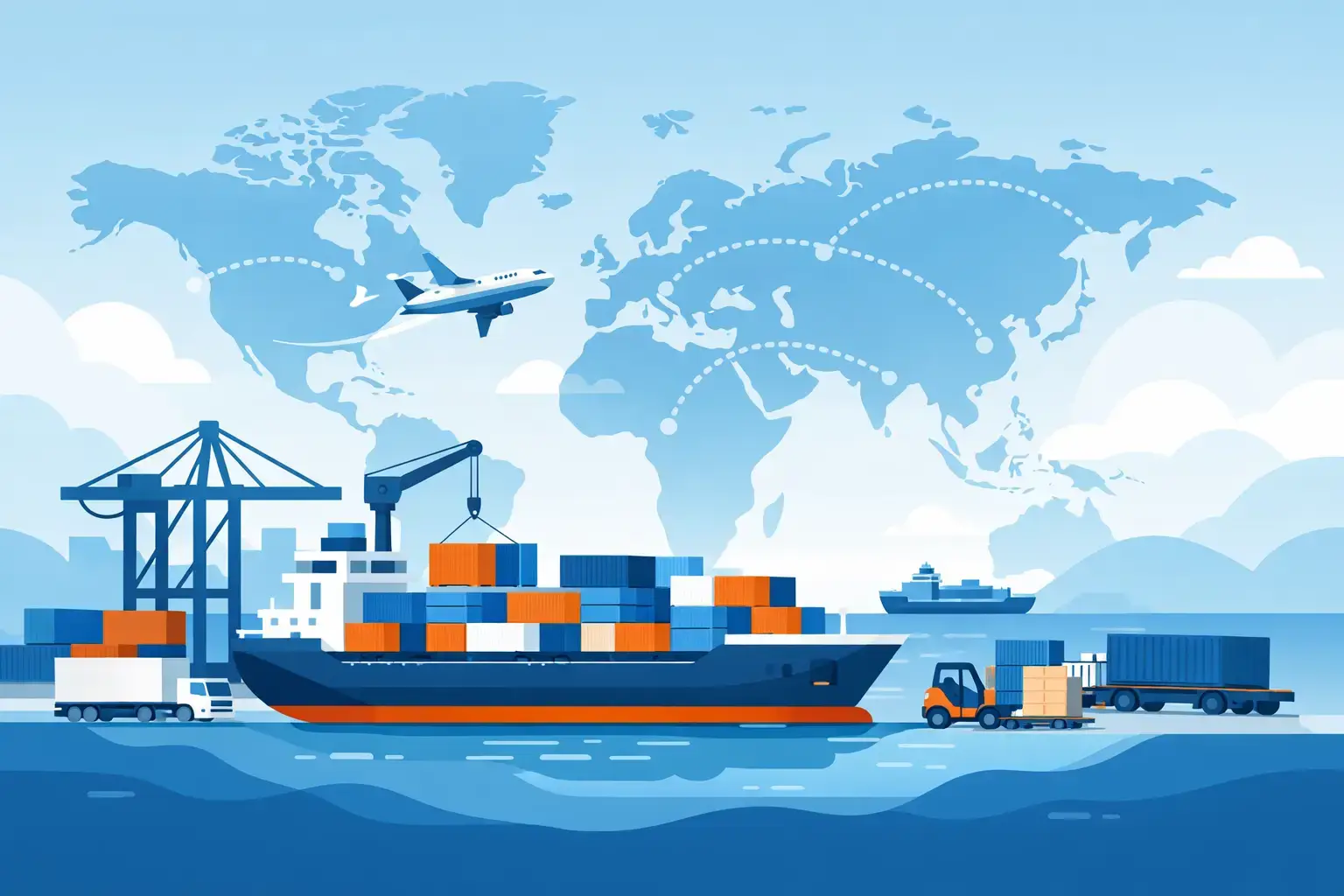
A shipment can look straightforward at the port gate and still become complicated long before it reaches the vessel. A vehicle export may need secure storage, export clearance, specialized loading, and destination coordination. Industrial machinery may require heavy-lift planning, industrial packaging, and a route that accepts out-of-gauge cargo. Ocean freight forwarding brings those moving parts under one operational plan.
For importers, exporters, manufacturers, dealers, and private vehicle owners, the objective is not simply to book container space. It is to move cargo safely, control total costs, meet documentation requirements, and keep responsibility clear from origin through delivery. That is where an experienced freight forwarder earns its place.


What Ocean Freight Forwarding Actually Covers
Ocean freight forwarding is the coordination of cargo transportation by sea, including the services needed before loading and after discharge. A forwarder arranges the most suitable ocean carrier and service, but the work extends well beyond the booking confirmation.
Depending on the shipment, this can include pickup from the supplier or seller, export packing, container loading, cargo securing, customs clearance, port handling, marine insurance support, shipping documents, destination-agent coordination, and final delivery. For cargo moving through Dubai and the UAE, it may also involve free-zone procedures, cross stuffing, open-yard storage, and movement between port, warehouse, and customer site.
The right scope depends on the cargo and the commercial terms of sale. A large importer with its own destination team may only require port-to-port forwarding. A first-time vehicle exporter may need hands-on support from collection through export clearance. Neither approach is universally better. The practical choice is the one that gives the shipper control without leaving critical tasks between multiple vendors.
Choosing the Right Ocean Freight Forwarding Method
Ocean services are not one-size-fits-all. The cargo dimensions, shipment volume, handling needs, destination, and delivery deadline determine the best option.
Full Container Load for Control and Security
Full Container Load, commonly called FCL, gives one shipper use of an entire container. It is often the most efficient choice for regular commercial volumes, multiple vehicles, machinery, boxed cargo, or goods that should not be mixed with another shipper’s freight.
FCL can improve handling control because cargo is loaded and sealed at origin before moving to the port. It is also well suited to multi-vehicle loading, where careful positioning, lashing, and weight distribution are essential. The container size still matters. A 20-foot, 40-foot, 40-foot high-cube, open-top, flat-rack, or refrigerated container each serves different cargo requirements.
Less-than-Container Load for Smaller Volumes
Less-than-Container Load, or LCL, allows several shippers to share a container. It can be cost-effective when cargo does not justify a full container, particularly for palletized goods or smaller commercial orders.
The trade-off is additional handling. Cargo is consolidated at origin and separated at destination, which can add time and increase the importance of proper packaging and labeling. LCL is usually not the preferred solution for high-value vehicles, sensitive equipment, or unusually shaped freight, but it can work well for standard cargo with flexible transit requirements.
RoRo, Breakbulk, and Project Cargo for Non-Standard Loads
Roll-on/Roll-off shipping, known as RoRo, is designed for wheeled cargo that can be driven or towed onto a vessel. New and used cars, trucks, buses, construction equipment, and other mobile machinery often move this way. It can be an efficient option for individual vehicles and bulk automotive shipments where the trade lane has regular RoRo sailings.
Breakbulk and project cargo services are used when equipment is too large, too heavy, or too irregular for standard containers. This may include cranes, generators, industrial components, yachts, oversized machinery, and heavy equipment. These shipments require detailed planning around lifting points, vessel capability, port restrictions, cargo protection, permits, and final-mile transport. A lower freight rate means little if the selected route cannot safely handle the cargo at either end.
Documentation Is Part of the Cargo Move
Ocean shipping depends on accurate documents. A missing certificate, incorrect consignee name, wrong commodity description, or mismatch between the invoice and packing list can hold cargo at the port and create storage or demurrage charges.
The document set varies by commodity and destination, but commonly includes a commercial invoice, packing list, bill of lading instructions, certificate of origin when required, export declaration, and permits or certificates for regulated goods. Vehicle shipments may also require ownership documents, registration records, export certificates, or destination-specific compliance paperwork.
Dangerous goods need another level of precision. Batteries, chemicals, flammable products, aerosols, and other regulated cargo must be declared, packed, marked, and documented according to applicable maritime rules. Undeclared dangerous goods create serious safety and financial exposure. The correct response is not to simplify the description. It is to involve a qualified specialist early enough to plan the shipment correctly.
Cost Control Starts Before the Booking
The ocean freight rate is only one part of the landed cost. Shippers should review the full movement, including origin trucking, packing, loading, export customs, terminal handling, documentation, ocean freight, insurance, destination charges, customs clearance, duties, storage, and final delivery.
Rates can change with carrier capacity, equipment availability, fuel-related charges, port congestion, seasonal demand, and the balance of imports and exports on a trade lane. A low initial quote may not be the lowest total cost if it excludes essential handling or creates avoidable destination charges.
Good planning also reduces preventable fees. Cargo should be ready when the container arrives. Documents should be checked before cutoff dates. Container loading should be completed within the agreed time. At destination, customs documents and payment arrangements should be prepared before the vessel discharges. These are simple disciplines, but they directly affect cost and delivery performance.
Visibility, Storage, and Cargo Protection Matter
A shipment does not stop needing attention once it enters the port. Commercial shippers need clear updates on cargo readiness, vessel departure, transshipment, arrival, customs status, and delivery. Private customers need the same clarity, especially when shipping a vehicle or household goods for the first time.
Secure storage can be equally important. Cargo may need to wait for vessel space, documentation, customer instructions, or inland transport. Vehicles and equipment require appropriate yard handling, while packed commercial cargo may need warehouse space, container stuffing, or cross stuffing before export. Facilities with controlled access and 24/7 surveillance provide practical protection during these transition points.
Euro Star Shipping Services L.L.C. combines more than 25 years of forwarding experience with operations in Dubai, including Ras Al Khor and Jebel Ali Free Zone facilities, to coordinate cargo movements across 150 countries. For customers moving vehicles, heavy equipment, commercial freight, or specialized cargo, direct operational capability helps keep the shipment under coordinated control rather than passing it through disconnected service providers.
How to Prepare for a Better Shipment
The strongest ocean shipment begins with complete information. Provide the cargo dimensions, weight, commodity, cargo value, collection address, destination, ready date, and required delivery terms. For vehicles, include make, model, VIN, operating condition, and whether the vehicle contains personal effects. For machinery, share drawings, lifting details, and any known handling restrictions.
It also helps to state the real priority. Some customers need the lowest feasible transport cost. Others need a fixed sailing, reduced handling, secure storage, or delivery by a project deadline. A forwarder can recommend the right service only when those priorities are clear.
Ocean transport remains one of the most cost-effective ways to move cargo internationally, but successful shipments are built on preparation, not assumptions. When the cargo is properly classified, packed, documented, and matched to the right service, sea freight becomes a dependable foundation for international trade and personal exports alike.