


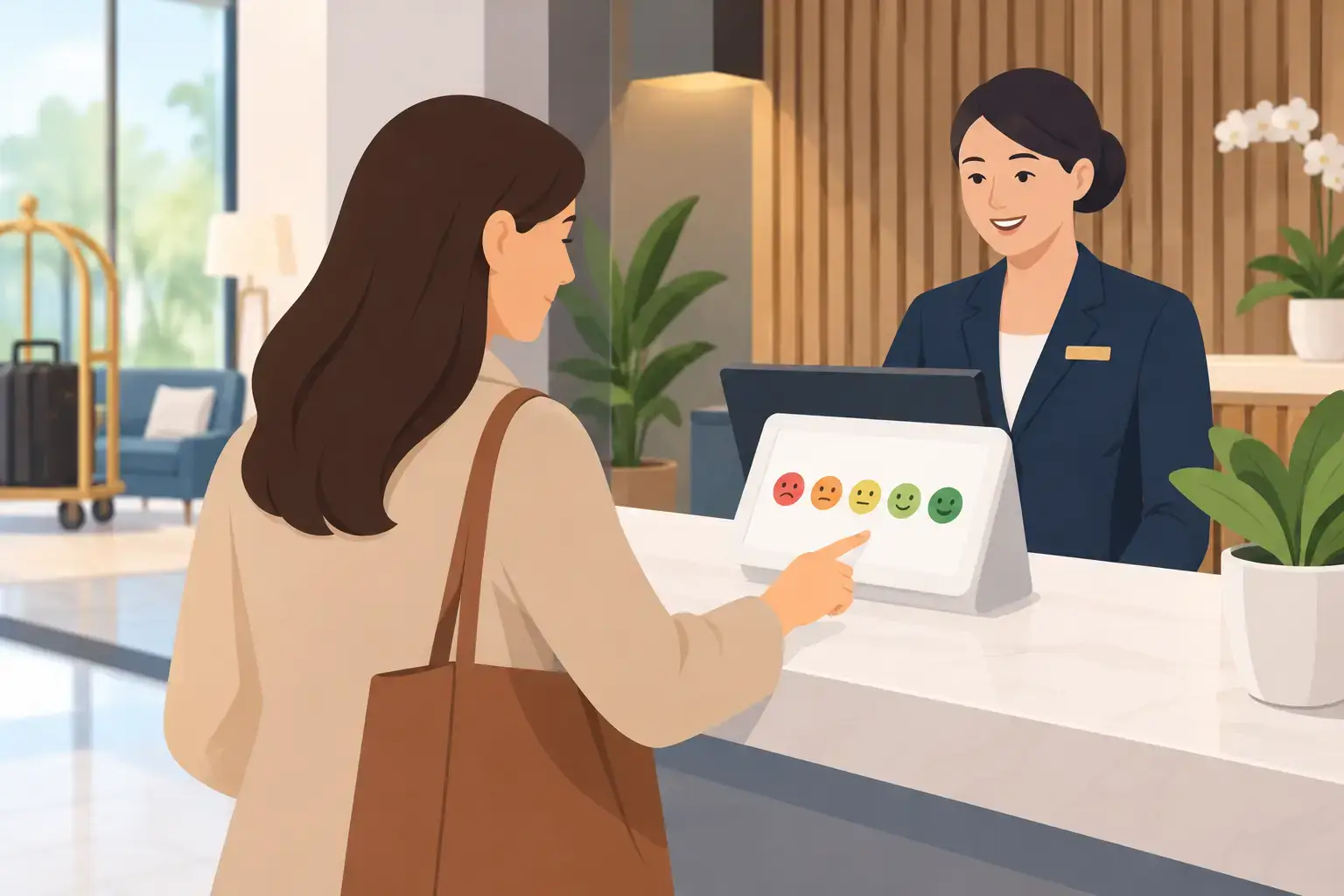
A guest has just complimented the front desk team, thanked the concierge for a dinner recommendation, or checked out after a flawless weekend stay. That is the moment when feedback is easiest to earn. The best top feedback displays for hotels put a clear, elegant next step in front of the guest while the experience is still fresh: tap or scan, choose a platform, and leave a review.
For hotel operators, review collection is not a side project for the marketing team. Strong, recent feedback influences traveler confidence, local search visibility, booking decisions, and the perceived quality of the property before a guest ever enters the lobby. The challenge is collecting it without making staff sound scripted or adding friction to a guest’s departure.


Physical NFC and QR feedback displays solve that problem when they are placed with intention. A polished display gives guests a private, self-directed way to respond. Staff can make a warm invitation, and the technology handles the next step.
Why Hotels Need Feedback Displays at the Right Moment
Hotels create dozens of service moments in a single stay. A guest might interact with reception, housekeeping, valet, the breakfast team, the spa, maintenance, or a restaurant. Yet many properties wait until after checkout to request feedback by email, when the guest is back in transit, busy at home, or already focused on something else.
A feedback display shortens the distance between satisfaction and action. Instead of asking a guest to remember a link later, it directs them to Google Reviews, TripAdvisor, Booking, Facebook, Trustpilot, or another selected destination with a phone tap or QR scan.
The benefit is not simply convenience. It is relevance. A guest who has received a fast room upgrade or exceptional help with a delayed flight is far more likely to share that experience when the request arrives close to the interaction. Hotels can collect more authentic, detailed reviews by making the process immediate and easy.
That said, timing matters. A display should never feel like a demand for a five-star rating. It is an invitation to share an honest experience. The most effective hotels pair it with service recovery: if a guest raises a concern, solve it first. A review request comes after the guest has had a fair opportunity to experience the property at its best.
Top Feedback Displays for Hotels and Where to Use Them
There is no single display format that suits every hotel. A boutique property with a design-led lobby may want a premium branded stand, while a select-service hotel may get better results from compact counter displays, keyrings, and room-ready QR materials. The right choice depends on the guest journey, available surfaces, and the tone of the brand.
Reception desk stands for checkout and arrivals
The front desk remains the most visible location for review collection. A standard or premium review stand positioned near the payment terminal or checkout folio gives guests a simple action to take while they are already waiting for a receipt, arranging transport, or confirming departure details.
For upscale and lifestyle properties, the physical quality of the display matters. A generic printed sign can undermine a carefully designed lobby. An elegant stand customized with the hotel logo, brand colors, and a concise message such as “Enjoyed your stay? Tap or scan to share your feedback” looks intentional and protects the guest experience.
Reception displays also work at arrival, but checkout is usually the stronger opportunity for a public-review request. At check-in, consider directing guests to WhatsApp, an information page, or a hotel concierge channel instead. This gives the property a useful engagement path without asking for an opinion before the stay has happened.
Concierge, valet, and bell desk displays for standout service
Concierge desks, valet stations, and bell desks are ideal for hotels that win loyalty through personal service. These are places where guests often express appreciation directly. A small NFC-enabled smart tag, plaque, or countertop display lets the employee respond naturally: “We are glad we could help. If you have a moment, you can tap here to leave feedback about your stay.”
Keep the message focused on the complete hotel experience, rather than pressuring guests to name one employee. Guests should feel free to recognize individuals, but the display should help build the property’s broader reputation across the platforms future travelers use.
Restaurant, bar, and breakfast displays for dining feedback
Hotel dining outlets create valuable review opportunities, particularly when the restaurant or rooftop bar attracts local guests as well as travelers. Table tents, coasters, table stands, and payment-area displays can collect feedback at the point when a guest finishes a memorable meal or receives excellent service.
The trade-off is platform choice. A restaurant may want Google Reviews or TripAdvisor, while the hotel’s main priority may be Booking feedback after a completed stay. If one display is meant for a specific outlet, assign its link accordingly. Do not send a diner who never stayed overnight to a hotel-stay review destination that does not match their experience.
Guest-room and amenity displays for quieter moments
Rooms, spa reception areas, pool cabanas, fitness centers, and business lounges can support feedback collection when displays are subtle and useful. A branded smart tag near a guest directory, a small plaque at spa checkout, or a QR card beside a welcome amenity can direct guests to share feedback without requiring a face-to-face ask.
These placements should be selective. A room display should not compete with emergency information, Wi-Fi instructions, or property policies. Keep it compact, place it where guests naturally pause, and give it a clear purpose. For example, a spa display can ask for a review after treatment, while a guest-room tag can offer a direct route to guest support or a feedback page.
Build a Simple Review Request Into Staff Service
Displays work best when staff know exactly when and how to mention them. The language should be short, warm, and optional. At checkout, a receptionist might say, “Thank you for staying with us. If you enjoyed your visit, you can tap this display to share your feedback.” That is enough.
Avoid asking every guest with the same rehearsed script. Train the team to recognize natural moments: a guest gives a compliment, says they will return, praises a clean room, or thanks someone for solving a problem. A personal invitation after genuine positive feedback will feel more appropriate than a blanket request.
Managers should also make the process easy for staff. Decide which destination each display supports, confirm that the QR code and NFC tap open the correct page, and explain who checks the results. If a display is moved from the lobby to the restaurant, update its assigned link so the customer journey still makes sense.
With flexible post-purchase link assignment, a hotel can change where a display directs guests without replacing the physical product. That is useful when a property launches a new Google Business Profile, wants to promote a seasonal campaign, or needs different platforms for separate outlets.
Design Matters More Than Most Hotels Expect
A feedback request becomes part of the guest-facing environment. That is why top feedback displays for hotels should look like hotel assets, not marketing clutter. The display needs enough visual contrast to be noticed, but it should still belong on the front desk, bar, or spa counter.
Customized branding creates that balance. Use the hotel logo, recognizable colors, and a message that fits the property’s voice. Luxury hotels may choose restrained copy and premium materials. Family hotels may use a warmer, more conversational invitation. Business hotels may prioritize speed with a direct “Tap to review your stay” message.
Clarity is equally important. Guests should immediately understand what happens after they tap or scan. Include one clear call to action and avoid placing several competing QR codes on the same display. If you offer more than one destination, use a landing page that lets the guest select the platform they prefer.
Measure What Is Working, Then Improve the Placement
Hotel teams should treat feedback displays as a practical reputation channel, not a decorative purchase. Track review volume, rating trends, review recency, and the number of guests who mention specific teams or services. Compare results after placing a display at reception, in dining, or at the spa.
Do not judge performance only by scans. A lower-traffic display positioned at the concierge desk may generate fewer interactions but more detailed, high-value reviews. A busy breakfast display may produce volume, but it may need a different review destination to fit the guest’s experience.
Review the placement every month. Is the display visible but not intrusive? Are staff comfortable mentioning it? Is the destination correct? Are guests receiving a clear invitation after positive service? Small adjustments can produce a meaningful lift in review consistency.
ReviewsLink displays help hotels turn their best in-person moments into simple digital actions, with NFC and QR options that can be branded for the property and assigned to the platforms that matter most.
A great stay deserves more than a passing compliment at the desk. Put an elegant tap-or-scan option where gratitude naturally happens, and give guests an easy way to help the next traveler choose your hotel with confidence.