


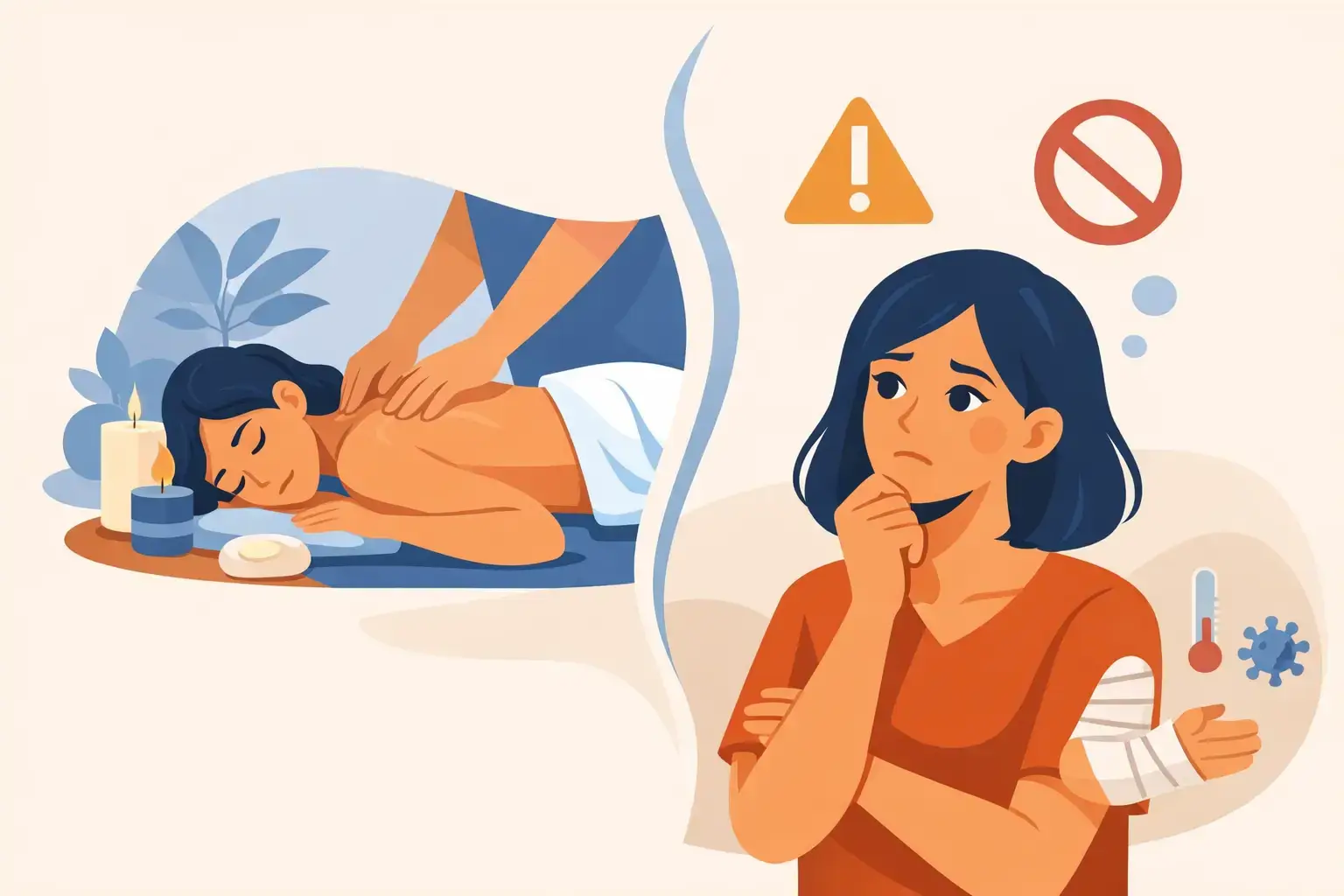
You booked time to relax, ease muscle tension, and leave feeling lighter – then you wake up with a fever, unusual pain, or a fresh injury. That is exactly when should you avoid massage becomes the more useful question than which treatment to choose. A great massage should support recovery and comfort, not work against what your body is dealing with.
At a luxury spa, the goal is never to push a treatment through just because the appointment is on the calendar. The right therapist will always want to know how you feel that day, what medications you are taking, and whether anything has changed since booking. Sometimes the best wellness decision is to wait, adjust the session, or speak with a medical professional first.


When should you avoid massage completely?
There are times when massage is best postponed, not modified. If you have a fever, chills, a contagious illness, vomiting, or active diarrhea, massage should wait. Your body is already working hard, and the pressure, heat, and stimulation of treatment can leave you feeling worse rather than restored.
The same goes for skin infections, open wounds, unexplained rashes, or anything that could be irritated by oils, touch, or heat. A spa environment should feel clean, calm, and restorative. If the skin is inflamed or vulnerable, treatment can aggravate the area and create unnecessary discomfort.
Acute injuries are another clear reason to pause. If you have just sprained an ankle, pulled a muscle, or suffered a recent strain with swelling and sharp pain, deep pressure is not the answer. In the early stage of injury, tissues are sensitive, and massage may increase inflammation instead of relieving it.
If you are experiencing chest pain, shortness of breath, sudden dizziness, or severe unexplained pain anywhere in the body, massage is not the next step. Those symptoms call for medical attention first.
Situations that need caution, not always cancellation
Not every health concern means you must avoid massage entirely. In many cases, it depends on the type of treatment, the intensity, and the skill of the therapist. This is why a proper pre-treatment conversation matters so much.
Pregnancy is a good example. Many expectant mothers enjoy massage for back tension, swollen legs, and stress relief, but timing and technique matter. Certain positions may be uncomfortable, and some pressure points are usually avoided. If you are pregnant, especially in the first trimester or in a high-risk pregnancy, it is wise to confirm medical clearance and choose a therapist experienced in prenatal care.
High blood pressure can also fall into the caution category. A gentle relaxation massage may feel wonderful, while intense heat treatments or very vigorous deep tissue work may not be ideal for everyone. If your blood pressure is uncontrolled or you have a history of cardiovascular issues, your therapist should know before treatment begins.
Varicose veins need careful handling too. Massage may still be possible, but direct pressure over affected veins should generally be avoided. The treatment can be adjusted so you still enjoy relief in other areas without irritating sensitive spots.
When medication changes the picture
Some medications make massage less straightforward. Blood thinners can increase bruising risk, even with moderate pressure. Steroid use may make tissues more delicate. Pain medication can mask what your body would normally tell you, which means a therapist may need to work more conservatively.
If you recently started a new medication or had a change in dosage, mention it before your session. This is especially true if you are booking deep tissue massage, hot stone massage, or anything involving strong pressure or heat.
Recent surgery or medical procedures
After surgery, fillers, injections, dental work, or cosmetic procedures, the body needs time to settle. Massage too soon may disrupt healing, increase swelling, or create discomfort around sensitive areas. That does not always mean all massage is off limits, but it often means waiting until your doctor says it is safe.
Even after less invasive procedures, timing matters. A steam session, hot oil treatment, or jacuzzi experience may feel tempting, but heat can sometimes aggravate inflammation if your body is still recovering.
When should you avoid massage if you want deep pressure?
Sometimes the real question is not whether you should avoid massage altogether, but whether you should avoid a specific style. Deep tissue massage can be excellent for chronic tension, athletic fatigue, and stubborn knots, but it is not right for every day or every body.
If you are badly sunburned after a beach day, dehydrated after travel, or sore from an intense workout that happened only hours ago, deep pressure can feel excessive. The same is true if you are exhausted, hungover, or unusually tender to touch. On those days, a gentler relax massage may bring better results.
Clients are often surprised by this. They assume stronger pressure always means more benefit. In reality, a body that is inflamed, overtired, or hypersensitive often responds better to calming techniques, lighter flow, and time to reset. Wellness is not about intensity for its own sake. It is about choosing the treatment that helps your body feel better afterward.
Health conditions that should always be discussed first
There are several conditions that deserve a clear conversation before any massage begins. Diabetes, osteoporosis, nerve disorders, clotting disorders, cancer treatment, epilepsy, and autoimmune flare-ups all affect how a session should be planned. Some people with these conditions can still receive massage safely, but pressure, positioning, timing, and treatment goals may need to be adjusted.
A history of blood clots deserves particular attention. Massage is deeply relaxing, but if there is any concern about an active clot, treatment should be avoided until a doctor has confirmed it is safe. This is one of the areas where guessing is never worth it.
If you have chronic pain, massage can absolutely be part of your comfort routine, but unexplained new pain should not be treated like ordinary tension. A therapist can help with muscular stress. They cannot diagnose the cause of pain that has suddenly appeared, worsened quickly, or started radiating in an unusual way.
Signs you should reschedule your appointment
Sometimes the body gives quiet signals that today is not the right day for massage. You may feel run down, unusually sensitive, or not fully recovered from travel, illness, or lack of sleep. Rescheduling is not a setback. It is part of receiving thoughtful care.
It is smart to postpone if you have a fever, an active cold or flu, a new injury with swelling, an unexplained rash, severe sunburn, or any symptom that makes lying still feel difficult. It is also worth reconsidering if you have had alcohol recently, are severely dehydrated, or feel faint.
A premium wellness experience should leave you refreshed, not depleted. If your body is asking for rest, hydration, or medical support first, listen to that.
How a quality spa handles these situations
A professional spa does not treat health questions as an inconvenience. It treats them as part of good care. That means asking the right questions before the session, adjusting pressure when needed, and recommending a different treatment if your original choice does not suit your condition that day.
For example, someone dealing with travel fatigue and mild dehydration may do better with a soothing body massage and water afterward instead of a strong deep tissue session. Someone with localized tension but sensitive skin may prefer reflexology or a gentler customized treatment. The best experience is personal, not automatic.
This is where a refined, service-led environment makes a difference. At Stella Spa, every treatment should feel indulgent, but also responsible. Luxury is not only about beautiful rooms, warm oils, or a quiet atmosphere. It is also about feeling safe in expert hands.
Before you get on the massage table
Be honest during consultation, even if the issue feels small. Mention recent illness, medication, pregnancy, pain, injuries, surgery, or skin irritation. If you are unsure whether something matters, say it anyway. A skilled therapist would always rather adapt the session than leave you uncomfortable.
And if you are ever asking yourself when should you avoid massage, trust that question. It usually means your body wants a little more attention before treatment begins. The most restorative choice is not always to go ahead as planned. Sometimes it is to pause, recover, and return when relaxation can truly do what it is meant to do.
The best massage arrives at the right moment – when your body is ready to receive it, your mind can soften into it, and the result is genuine relief rather than added strain.