


A customer can have an excellent meal, a smooth appointment, or a great retail experience and still never leave a review. The problem is rarely satisfaction. It is timing and friction. Customer engagement hardware puts a simple QR scan or NFC tap directly where that positive moment happens, making it easy to act before the customer walks away.
For customer-facing businesses, that small change can have a meaningful commercial effect. More recent reviews strengthen social proof, help local customers feel confident choosing your business, and create a more active presence across the platforms people already use to make decisions.

What Is Customer Engagement Hardware?
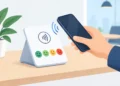
Customer engagement hardware is a physical product that connects an in-person interaction to a digital action. A customer taps an NFC-enabled display with their phone or scans a QR code, then lands on the destination you choose. That might be your Google Reviews page, TripAdvisor profile, Booking listing, Trustpilot page, Facebook, Instagram, WhatsApp, or a custom URL.
The technology is simple. The value comes from placing it in the right moment. A premium stand at a restaurant table, a smart tag at a clinic reception desk, a QR sticker near a checkout counter, or a branded card handed over after service can turn a vague request for feedback into an immediate next step.
This is not another software process for staff to learn. It is a practical, visible prompt that works alongside the service experience you already provide. Customers use their own phones, choose whether to engage, and reach the intended page in seconds.
Why Physical Prompts Generate More Action
Many businesses ask for reviews through email or text after a visit. Those methods can work, especially when customer details are available and follow-up is part of the experience. But they also arrive after the customer has moved on, become busy, or forgotten the specifics that made the visit worthwhile.
Physical engagement tools work at the point of satisfaction. A guest finishing dinner, a patient thanking the front desk, or a shopper complimenting a team member is already thinking about the experience. A polished tap-or-scan prompt gives that goodwill a clear direction.
The difference is not pressure. It is convenience. Instead of staff saying, “Please remember to leave us a review later,” the customer sees a simple invitation such as “Tap or scan to share your experience.” The action is available when it is most relevant and requires very little effort.
For businesses, this approach also adds consistency. Staff turnover, busy periods, and uneven training often make manual review requests unreliable. Hardware keeps the invitation present without turning every customer conversation into a script.
The Right Hardware Depends on Where Customers Pause
The best format is not always the biggest display or the most elaborate design. It depends on how customers move through your location, how long they stay, and where they are most likely to have their phones in hand.
Counters, Reception Desks, and Checkout Areas
Standard stands, premium stands, plaques, and countertop displays are ideal for locations with a clear payment or departure point. Think dental offices, medical clinics, salons, gyms, boutiques, and service counters. The customer has completed their visit, staff can point to the display naturally, and the call to action is easy to see.
A premium stand can be especially effective in settings where presentation matters. Hotels, upscale spas, hospitality venues, and luxury retail businesses need tools that match the care they put into their physical environment. A flimsy sign can feel out of place. A refined branded display supports the experience rather than interrupting it.
Tables, Waiting Areas, and Shared Spaces
Restaurants, cafés, bars, lounges, and waiting rooms benefit from coasters, table tents, and table-ready smart displays. These products create an opportunity for customers to scan while they are seated and relaxed, without requiring staff to make a direct ask at every table.
Placement matters here. A table tent should be visible without competing with menus, condiments, or other essential items. Coasters can feel more integrated into the setting, but the message needs to remain clear. For a high-volume café, a small countertop sign near pickup may outperform table hardware simply because that is where guests naturally pause.
Doors, Products, and Takeaway Touchpoints
QR and NFC stickers, hang tags, cards, keyrings, and compact smart tags are useful when the engagement moment happens away from a fixed counter. A sticker on a delivery bag, a hang tag on a purchased product, or a card included with a completed service can carry the request beyond the main point of sale.
These formats are flexible, but they need intentional use. A sticker placed too low, too far from the customer path, or on a cluttered surface will not get noticed. A card can be personal and effective, but it relies on staff remembering to hand it out. Choose the format that fits the actual behavior of your customers, not just the available space.
NFC and QR Codes Give Customers a Choice
NFC and QR technology solve the same core problem in different ways. NFC lets compatible phones open a selected destination with a quick tap. QR codes work through a phone camera scan and are familiar to nearly every smartphone user.
Using both on the same customer engagement hardware is often the most practical choice. Customers can tap if they know how and prefer it, or scan if that feels more familiar. There is no need for an app download, account setup, or complicated instructions.
The destination should be equally straightforward. Sending a restaurant customer directly to Google Reviews can make sense if local search visibility is the priority. A hotel may want to prioritize TripAdvisor or Booking. A brand focused on customer conversation may choose WhatsApp, Instagram, or a custom landing page. The right destination depends on where future customers are most likely to evaluate your business.
Flexibility matters as priorities change. A physical display should not become obsolete because you want to update a link, promote a different platform, or shift a campaign. Hardware with post-purchase link assignment gives a business more control over how each product is used.
Make the Request Feel Like Part of Great Service
The most effective review prompt is short, friendly, and earned. The hardware makes the action easy, but service still determines whether a customer wants to respond.
Use direct language that fits your business: “Loved your visit? Tap to leave a Google review.” “Share your stay with us.” “Tell us how we did.” The message should state the action clearly and avoid making customers work out what happens after they scan.
Staff should understand the purpose without sounding rehearsed. A simple reminder at the end of a positive exchange is enough: “We would appreciate your feedback. You can tap the stand right here if you have a moment.” In busy environments, the display can do most of the work on its own.
Avoid promising rewards in exchange for positive reviews or steering only happy customers to public review sites. Customers value authenticity, and platforms have their own review policies. The goal is to make honest feedback easier to share, then use what you learn to improve the experience.
Measure More Than the Number of Reviews
Review volume is a useful starting point, but it should not be the only measure of success. Look at the consistency of incoming reviews, your average rating over time, the themes customers mention, and whether more people are finding you through local search and recommendation platforms.
It also helps to compare locations, service periods, or placements. If one stand at the front desk generates steady engagement while a table tent receives little attention, the lesson may be placement rather than product. Small adjustments can improve results without adding complexity.
For multi-location businesses, branded customization creates consistency across every customer touchpoint. Your logo, colors, and preferred review destination make the request recognizable whether a customer visits one location or ten. It also gives managers a repeatable system instead of a collection of improvised signs.
ReviewsLink offers that range of QR and NFC products, from compact tags and stickers to elegant customized displays, so businesses can match the hardware to the service moment instead of forcing one format everywhere.
A Better Review Request Starts on the Counter
Customers are already carrying the device needed to leave feedback. The missing piece is usually a clear, well-placed invitation at the right time. Start with one high-value location, choose the platform that matters most to your business, and make the action visible in a way that reflects your brand. When sharing feedback takes one tap or scan, a good experience has a much better chance of becoming the proof that brings in the next customer.