

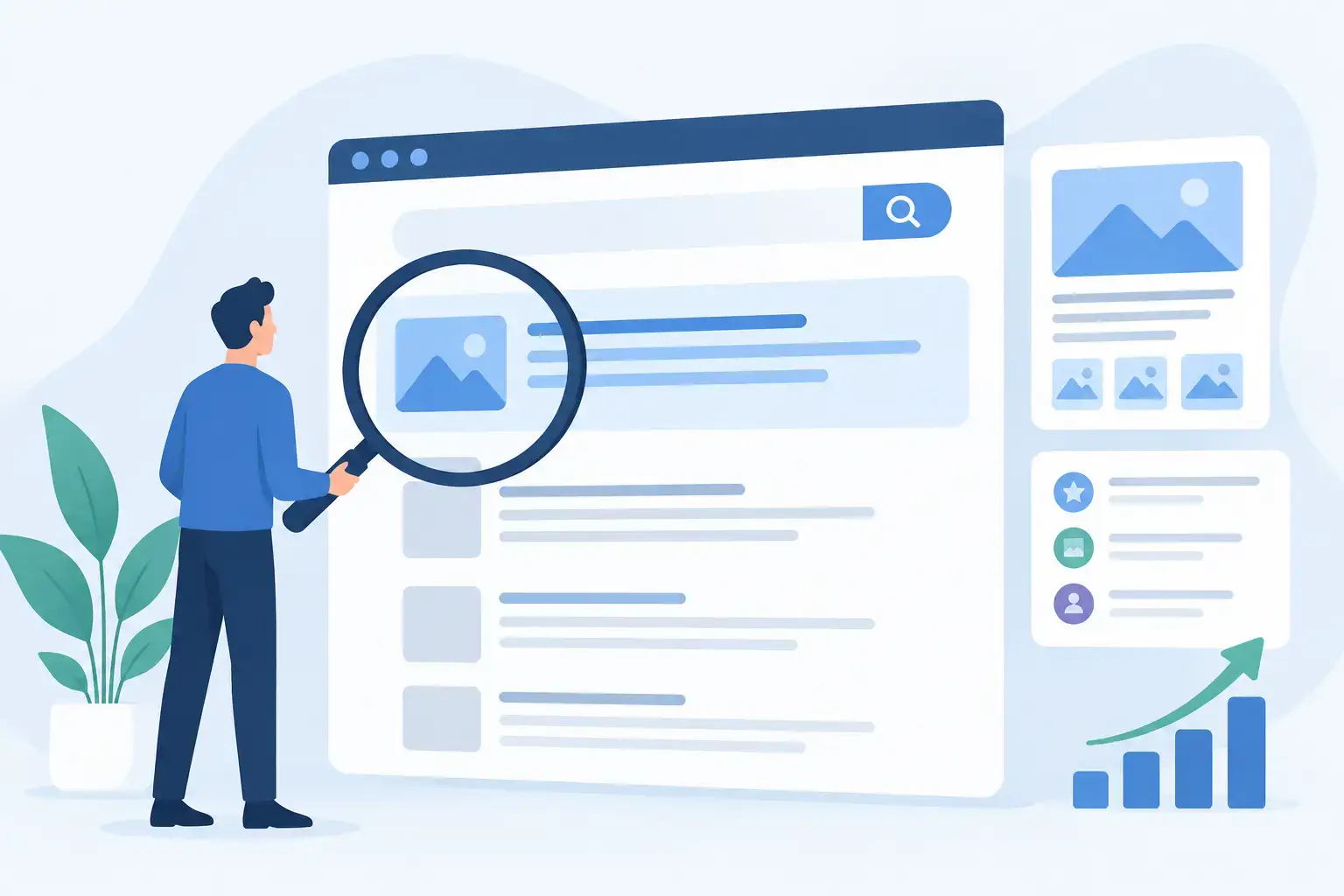
A potential customer searches “best accounting firm near me,” “Dubai hotel booking,” or “how much does CCTV installation cost.” Google shows a map, reviews, business hours, a short answer, and phone numbers before the customer opens a website. That is zero click search – and it is changing what successful SEO looks like for growing businesses.
For a business owner, this does not mean your website has stopped mattering. It means your online presence must work in more places than your homepage. Your information needs to be clear enough for search engines to understand, persuasive enough for customers to trust, and complete enough to generate a call, direction request, or branded search even when a visitor does not click immediately.


What zero click search means for your business
A zero-click search happens when someone gets what they need directly on the search results page. They may read a featured answer, see a local business profile, compare products, check operating hours, find a phone number, or use an AI-generated result. The search ends without a traditional website visit.
This is especially common for local and quick-answer searches. A customer looking for an emergency electrician, a restaurant menu, a nearby car service center, or a company’s contact details often wants action, not research. Search engines are designed to remove steps between a question and an answer.
That can sound like bad news if your team measures success only by organic traffic. But traffic has never been the final goal. Leads, bookings, inquiries, sales, and long-term brand recognition are what pay for marketing. If your business appears prominently when customers are ready to act, a search result can still create commercial value without producing a recorded session on your site.
The trade-off is real. Fewer clicks can reduce the audience available for remarketing, email capture, detailed product education, and on-site conversion. That is why the answer is not to abandon website SEO. The answer is to build a search strategy that wins visibility on the results page while giving high-intent customers a compelling reason to visit your site.
Where zero-click results appear
Google can answer a search in several formats, and each one requires a slightly different approach. For local businesses, the map results and business profiles are often the highest-value real estate. For service companies, featured snippets and “People also ask” questions can put expertise in front of buyers early in their decision process. Product results, image packs, knowledge panels, review stars, and rich results can also influence who earns attention.
Four areas deserve consistent attention:
- Local business profiles for calls, directions, hours, categories, reviews, photos, and service information.
- Featured snippets for clear answers to practical questions such as pricing factors, process steps, and common problems.
- People also ask results for customers comparing options or researching before they contact a provider.
- Rich results for content with structured information, including products, events, FAQs where appropriate, reviews, and organization details.
A local restaurant may benefit most from accurate hours, menu information, strong reviews, and appealing photos. A B2B software provider may gain more from answering detailed implementation questions. An e-commerce store needs reliable product data, pricing, availability, and high-quality category pages. There is no single zero-click formula because search intent changes from industry to industry.
Shift from traffic-first SEO to outcome-first SEO
The strongest SEO plans now look beyond ranking reports. A number-one position is valuable, but it is not automatically a win if it produces no calls, no inquiries, and no sales. At the same time, a search result that triggers a direct call can be highly profitable even if the website analytics show no visit.
Start by mapping the actions that matter to your business. For a travel agency, that may be WhatsApp inquiries, quote requests, and phone calls. For a medical clinic, it may be appointment requests and direction clicks. For an IT provider, it may be consultation forms, branded searches, and requests for infrastructure proposals.
Then connect search visibility to those outcomes. Monitor calls from business profiles, direction requests, profile views, keyword impressions, form submissions, and branded search growth. Ask new leads how they found you. Sales teams should record whether prospects discovered the company through Google, maps, social media, referrals, or a direct recommendation. This gives you a more honest picture than website traffic alone.
How to optimize for zero click search without losing clicks
First, make your core business information consistent. Your business name, address, phone number, website, service areas, working hours, and categories should match across the web. Small inconsistencies create confusion for both customers and search engines. For companies serving multiple cities or operating internationally, this work requires particular care. Do not claim locations you cannot genuinely serve or maintain.
Next, strengthen your local business profile. Add current services, professional photos, accurate descriptions, holiday hours, and a direct method for customers to contact you. Encourage genuine reviews after successful projects, deliveries, or appointments. Do not buy reviews or pressure customers into writing identical feedback. A steady pattern of authentic reviews builds more durable trust than a sudden burst of suspicious ratings.
Your website should also answer questions directly. Instead of writing broad, promotional copy on every page, include concise explanations that match real searches. A managed hosting page can explain what is included, who needs it, what support covers, and how migration works. A CCTV page can explain placement considerations, recording options, remote viewing, and installation timelines. Lead with the answer, then provide the details that help a serious buyer choose your company.
Use clear headings, logical page structure, and specific language. Search engines need context, but humans do too. A paragraph that explains a service in plain English is more useful than repeating a target keyword five times. Technical SEO, mobile performance, secure hosting, schema markup, and crawlable content all support this work behind the scenes. They do not replace good content, but they make it easier for search platforms to present your information correctly.
Give customers a reason to click anyway
Zero-click visibility is valuable, but your site remains the place where your brand can make its full case. A search result can show your phone number. It cannot fully demonstrate your project process, portfolio quality, industry knowledge, guarantees, team credibility, or custom solution options.
Create pages that offer something beyond a one-line answer. Use case examples, transparent service details, useful calculators where relevant, downloadable specifications, original photography, before-and-after work, and clear next steps. A customer may see your business in a map result, then visit your website to decide whether you are the right fit.
This is where fast, mobile-friendly web design matters. If a high-intent visitor clicks and finds a slow page, vague messaging, or a difficult form, the visibility you earned is wasted. The same applies to phone handling. A prominent call button is only useful if someone answers quickly and knows how to turn an inquiry into a qualified opportunity.
Content that earns trust in answer-driven search
The content most likely to perform well is specific, accurate, and rooted in real customer needs. Generic articles written only to rank are easy to ignore. Practical expertise is harder to copy.
Talk to your sales and support teams. What questions do prospects repeat before buying? What misunderstandings delay a decision? What details help customers compare packages, timelines, or technical options? Those answers can become service-page sections, short articles, video scripts, and sales resources.
For example, a web development company could publish useful guidance on the difference between a template website and a custom CMS. A networking provider could explain how office size, cabling needs, security requirements, and future growth affect a project scope. A retail business could create accurate pages for product availability, delivery areas, return rules, and seasonal offers. These topics support visibility while helping customers move forward with confidence.
Build a search presence that supports growth
Zero click search rewards businesses that keep their information current and make customer decisions easier. It also exposes weak foundations quickly. Outdated phone numbers, thin service pages, poor reviews, slow websites, and unclear location data can all send ready-to-buy customers elsewhere before your team gets a chance to speak with them.
Your(1)Site approaches this as a connected growth system: website performance, local visibility, content, paid campaigns, analytics, hosting, and responsive technical support should reinforce one another. The right mix depends on your market, competition, sales cycle, and the action you want customers to take.
Do not judge search performance only by how many people clicked. Judge it by whether the right people found your business, trusted what they saw, and had an easy path to contact you. When your information answers the first question and your digital presence earns the next conversation, search becomes a stronger source of real business growth.