


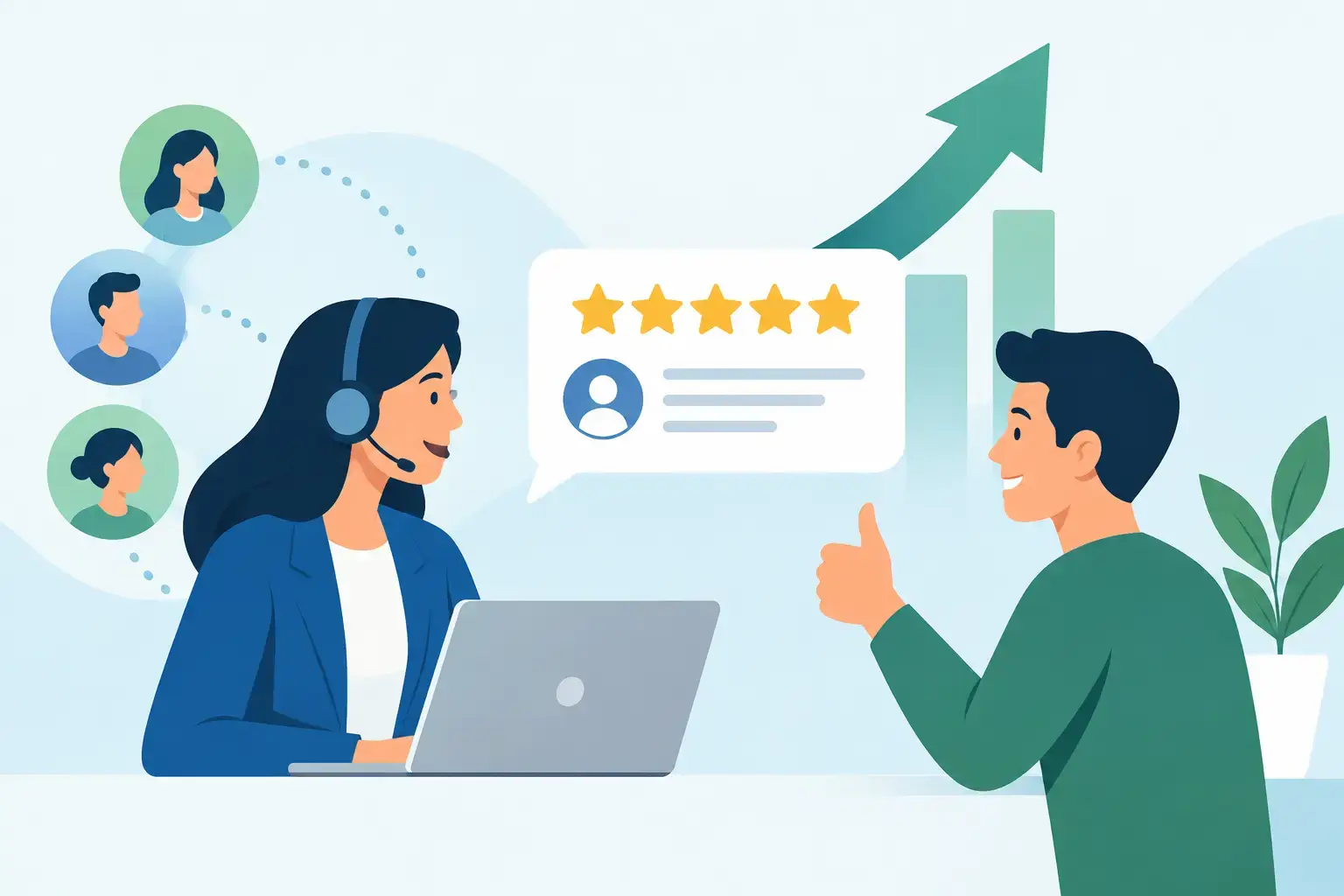
A guest tells your server the meal was excellent. A patient leaves a dental appointment relieved and grateful. A salon client admires their new look at the front desk. Those are high-trust moments, but they fade quickly if there is no easy next step. Reputation marketing turns real-world customer satisfaction into visible proof that helps the next customer choose your business.
For customer-facing businesses, reputation is not a side project for the marketing team. It influences who appears credible in local search, who earns the call or booking, and who can justify a premium experience. The goal is not to chase reviews for their own sake. It is to make it simple for happy customers to share feedback when their experience is still fresh.


What Reputation Marketing Actually Means
Reputation marketing is the practice of actively collecting, managing, and using customer feedback to build trust and attract new business. Reviews are a major part of it, especially on Google, TripAdvisor, Booking, Trustpilot, Facebook, and industry-specific platforms. But the work extends beyond a star rating.
A strong reputation marketing program connects four things: a consistently good customer experience, a timely way to request feedback, professional responses to public reviews, and a visible presence wherever customers research your business. When those pieces work together, your reputation becomes a practical growth asset rather than a passive collection of comments.
Consider how people choose a nearby restaurant, clinic, hotel, gym, or service provider. They may see dozens of options in seconds. Ratings, review volume, recent feedback, photos, and owner responses help them reduce risk. A business with a steady stream of authentic, recent reviews often feels more dependable than one with a higher rating based on a handful of old comments.
That is why consistency matters more than a one-time review push. Asking 10 customers this week and none for the next three months does not create the same confidence as making review collection part of your regular service flow.
Make the Review Request Easy Enough to Act On
The hardest part of collecting reviews is rarely customer willingness. Most satisfied customers are happy to support a business they enjoyed. The obstacle is friction. If they need to search for your business, find the correct profile, sign in later, and remember what they wanted to say, many will never finish.
A simple scan or tap removes those extra steps. NFC and QR review products can send a customer directly to your chosen destination from a table, counter, checkout area, reception desk, door, or product package. Instead of asking someone to “please leave us a review sometime,” your team can offer a clear, immediate action: “If you enjoyed your visit, you can leave a review with a quick tap or scan.”
The technology should feel natural, not intrusive. A premium review stand at a hotel reception desk can invite feedback as guests check out. A discreet table tent can work well in a café after a meal. A branded smart tag or card can give salon, fitness, and service clients a convenient way to respond after their appointment.
Ask at the right moment
Timing shapes response rates. Request feedback after the value has been delivered, not before. In a restaurant, that may be after a guest compliments the meal or receives the check. In a clinic, it may be after a successful visit and a positive exchange with the front desk. In retail, it may be at checkout after a customer has found what they needed.
Staff should not pressure customers or make a review request feel like a script. A short, friendly prompt works best when it matches the moment. Train employees to recognize positive signals, such as a compliment, repeat visit, successful resolution, or enthusiastic conversation.
Put review access where customers naturally pause
Physical placement is one of the biggest advantages of tap-and-scan review collection. The best location depends on your service model, traffic flow, and the platform you want to grow. Useful locations include:
- Reception desks and checkout counters for clinics, hotels, spas, and retail businesses
- Tables, payment areas, and host stands for restaurants, cafés, and bars
- Exit doors and waiting areas where customers have a few unhurried seconds
- Product packaging, takeout bags, invoices, and follow-up materials for service businesses
A single display is often enough for a small location. Higher-volume businesses may benefit from several touchpoints, provided the request remains tasteful. The physical product should fit your brand environment. An elegant stand can reinforce a premium hotel, medical, or beauty experience, while a compact sticker or tag may be better for fast-moving counters and delivery orders.
Turn Feedback Into Proof Customers Can See
Collecting reviews is the beginning, not the finish line. Reputation marketing earns its value when feedback is visible, current, and connected to customer decisions.
Start with the platform that most directly affects discovery. For many local businesses, Google Reviews is the priority because prospects often search by category and location. A hotel may also prioritize TripAdvisor or Booking. A professional service business may want Trustpilot, Facebook, or a custom review destination. The right choice depends on where your prospective customers compare options.
Keep your business information accurate across those profiles: address, hours, phone number, services, photos, and service categories. A strong review profile can still lose leads if a customer cannot tell whether you are open, where to park, or how to book.
Then use customer language to strengthen your broader marketing. When guests repeatedly mention attentive staff, quick service, clean facilities, exceptional results, or a welcoming atmosphere, those are not just compliments. They show what customers notice and value. That insight can inform your website copy, service descriptions, staff training, and in-store messaging.
Do not over-edit the story. A credible reputation includes specific, human feedback rather than generic praise alone. Customers recognize the difference between a business that has real supporters and one that looks overly managed.
Respond in a Way That Builds Confidence
Potential customers read owner responses, especially when they are considering a higher-trust purchase such as healthcare, hospitality, beauty services, or home services. A thoughtful response shows that there are real people behind the business.
For positive reviews, thank the customer by name when appropriate, mention a detail from their experience, and keep the response genuine. There is no need to repeat a sales pitch. A short reply such as, “Thank you for sharing this. We are glad our team made your visit comfortable,” feels personal and professional.
For critical reviews, speed and tone matter. Avoid arguing in public, sharing private details, or responding defensively. Acknowledge the concern, apologize for the experience when warranted, and offer a direct path to resolve it. Some complaints reveal an operational problem worth fixing. Others may be misunderstandings or unfair claims. Either way, future customers are watching how you handle the situation.
Never offer incentives in exchange for positive reviews or ask only selected customers to leave feedback. Review platforms have policies around manipulation, and customers can spot it. Invite honest feedback consistently from your full customer base. That approach protects credibility and gives you a more useful view of the customer experience.
Measure What Changes, Not Just What Arrives
A growing review count feels encouraging, but it is only one metric. Track your average rating, review volume, recency, response time, and the themes customers mention most often. Compare those patterns with calls, directions requests, bookings, website visits, and revenue where possible.
You can also test practical variables. Does a counter stand generate more reviews than a printed card? Does asking at checkout perform better than a follow-up email? Does sending customers to Google produce better local visibility, while a different platform supports your industry more effectively? The answer varies by business, which is why simple tracking matters.
Products with flexible link assignment make this easier to manage. You may start by sending customers to Google Reviews, then switch a campaign or location to TripAdvisor, Booking, Instagram, WhatsApp, or a custom URL without replacing every physical display. For multi-location operators, customized displays with location-specific links can keep the experience clear for customers and useful for reporting.
ReviewsLink makes that physical-to-digital step feel polished: a customer taps or scans a branded product, lands on the destination you choose, and can act while the experience is still top of mind. The best setup is the one your staff will actually use every day and your customers can understand without explanation.
Your next great review is probably not waiting for a complicated campaign. It is sitting across the counter, leaving the table, walking out of the treatment room, or opening a delivery bag. Give that customer a simple, elegant way to be heard while their experience still speaks for itself.