


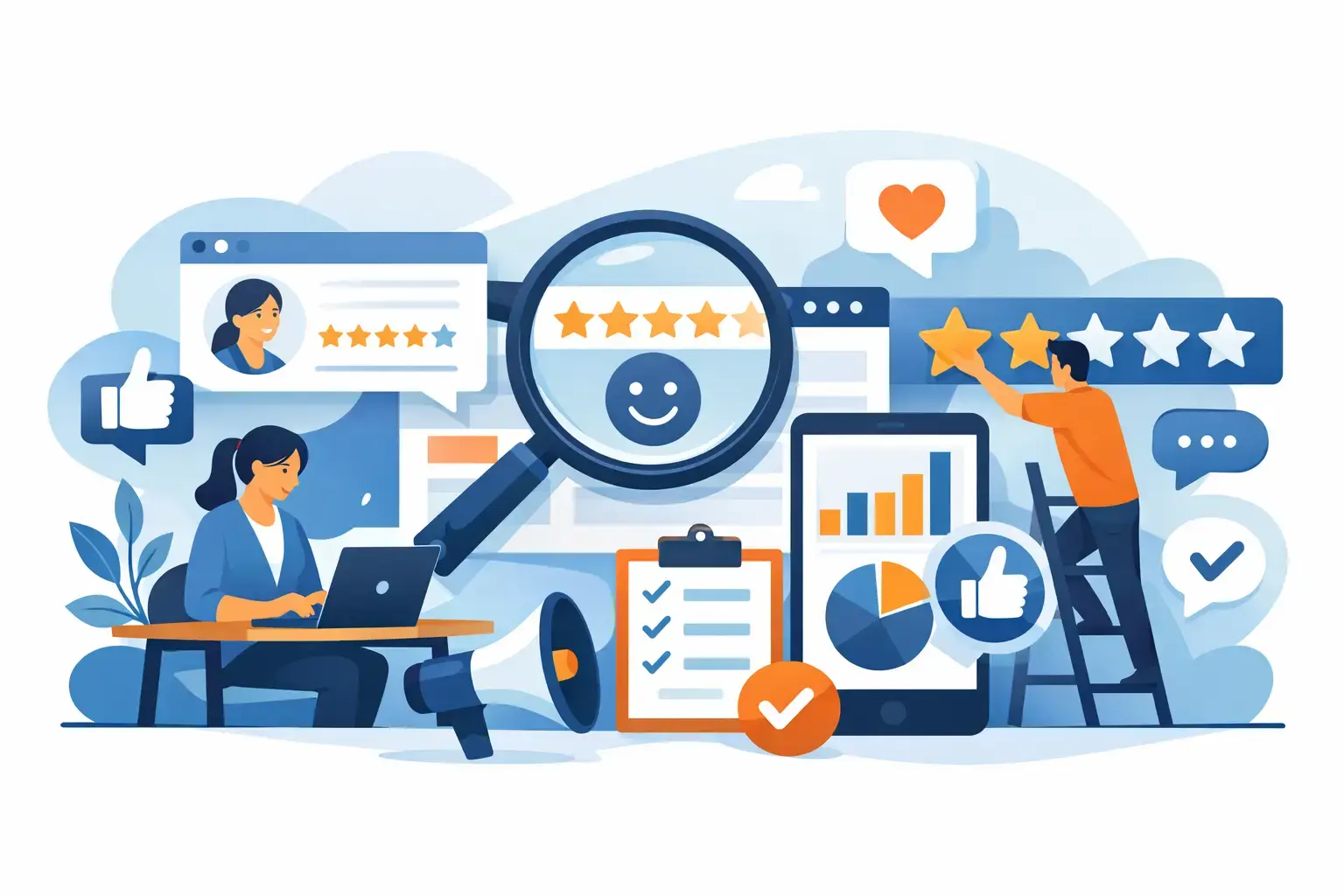
A great customer experience can disappear the moment a guest walks out the door unless you make feedback easy to give. The right reputation management tools turn that brief moment of satisfaction into a new Google review, a stronger rating, and more proof for the next customer deciding where to spend their money.
For restaurants, clinics, hotels, salons, gyms, retailers, and service businesses, reputation management is not just about dealing with a bad review. It is about creating a reliable system to collect feedback while the experience is still fresh, monitor what people say, and respond in a way that protects trust. The best setup is usually simple enough for staff to use without slowing down service.

What Reputation Management Tools Should Do
A reputation tool should remove friction, not add another process for your team to manage. At a minimum, it should help you request reviews, direct customers to the right platform, keep an eye on incoming feedback, and make timely responses easier.
The exact mix depends on your business. A hotel may prioritize TripAdvisor, Booking, and Google Reviews. A local dental practice may focus almost entirely on Google. A salon might want Google reviews alongside Instagram and WhatsApp engagement. Start with the channels customers already use when they search for businesses like yours.
Here are 10 tool categories that work together to build a stronger local reputation.
1. NFC and QR review displays
Physical tap-and-scan products are often the fastest way to collect a review from an in-person customer. A customer taps an NFC stand with their phone or scans a QR code, then lands directly on your selected review page. There is no searching for your business name, no handwritten instructions, and no need for a staff member to explain every step.
Place an elegant NFC or QR display where the positive experience happens: on a restaurant table, at a hotel reception desk, beside a checkout terminal, in a treatment room, or near a salon mirror. A well-positioned display turns existing foot traffic into a consistent review opportunity.
The format matters. Table tents and coasters work naturally in cafés and restaurants. Premium stands and plaques suit reception areas and luxury hospitality settings. Cards, stickers, keyrings, and smart tags give service businesses more portable options. ReviewsLink offers these formats with a chosen destination and branded customization, so the request feels like part of your business rather than an awkward afterthought.
2. Google Business Profile management
For many local businesses, Google is the reputation channel that matters most. Your rating, review volume, recent comments, photos, business hours, and responses can influence whether a nearby customer calls, visits, or keeps scrolling.
A Google Business Profile management tool helps keep listing details accurate and makes review activity easier to track. This is particularly useful for businesses with multiple locations, where small inconsistencies in phone numbers, categories, or hours can create customer frustration.
Keep the goal practical: more recent, genuine reviews from real customers. Do not pressure people for five stars or offer incentives in exchange for reviews. Ask for honest feedback, make the path simple, and let the service experience do the selling.
3. Review monitoring dashboards
Reviews can appear on Google, TripAdvisor, Booking, Facebook, Trustpilot, and industry-specific directories. Checking each platform manually can work for one small location, but it becomes difficult as volume grows.
A monitoring dashboard brings new reviews into one place and alerts the right person when attention is needed. That helps managers spot a service issue before it becomes a pattern. If several guests mention slow check-in, parking difficulty, or unclear pricing, you have useful operational feedback, not just a marketing problem.
Choose a dashboard based on the sites that influence your buyers. Paying for broad coverage is not always worthwhile if your customers only rely on Google and one industry platform.
4. Review response tools
Fast, thoughtful responses show potential customers that someone is paying attention. A positive review deserves a genuine thank-you. A negative review deserves a calm, professional reply that acknowledges the concern without turning the public comment section into an argument.
Response tools can organize reviews by location, assign them to team members, and provide approved templates. Templates are helpful for consistency, but they should never make every response sound copied and pasted. Use the customer’s name when available, refer to a specific detail, and keep private account or health-related information out of the reply.
For healthcare businesses, privacy requires extra care. Thank the reviewer generally, avoid confirming that they are a patient, and move detailed concerns to a private conversation.
5. Customer feedback surveys
Not every customer wants to post publicly, and not every issue should first appear in a public review. Short post-visit surveys give customers a private way to share feedback about service, staff, cleanliness, wait time, or product quality.
Surveys are especially useful after an appointment, completed job, hotel stay, or purchase. They can reveal what needs attention before a small issue becomes a public complaint. Keep surveys brief and mobile-friendly. If a customer has to answer 15 questions, response rates will drop quickly.
A survey should support your review strategy, not replace it. Customers who are delighted still need a clear, direct route to leave feedback on the platform that helps your business get discovered.
6. Automated review request software
Email and text review requests can create a dependable follow-up process after a visit or transaction. They work well when your business already collects contact information through bookings, invoices, loyalty programs, or appointment scheduling.
Timing makes the difference. Send the request soon after the experience, when the customer remembers what went well. A home service company may send it after the technician completes the job. A dental office may send it later that day. A hotel may wait until shortly after checkout.
Automation is efficient, but it should not feel relentless. Use one clear request and, when appropriate, one polite reminder. Customers who have already reviewed should not keep receiving the same prompt.
7. Social listening tools
Customers do not only share opinions on review sites. They tag businesses in Instagram posts, mention them in local Facebook groups, and discuss service experiences in comments. Social listening tools track these mentions so you can respond, celebrate positive content, or address misinformation quickly.
For a restaurant or spa, a customer-created photo can be valuable social proof. Ask permission before reusing it in marketing. For a retailer, recurring questions in comments may reveal a gap in product information or staff communication.
Social listening is useful, but it should not pull attention away from your highest-value review platforms. Focus on the channels where your ideal customers actually make decisions.
8. Listing and directory management
Incorrect listings can undermine a polished customer experience before a guest ever arrives. If Google says you close at 8:00 p.m. while your website, Apple Maps, or a directory says 7:00 p.m., customers may show up frustrated or choose a competitor instead.
Listing management tools help maintain consistent business names, addresses, phone numbers, categories, photos, and operating hours across major directories. This is more valuable for multi-location brands and businesses that have moved, rebranded, or changed phone systems.
Accuracy does not create reviews by itself. It does make your business easier to find and prevents avoidable negative feedback.
9. Sentiment and trend analysis
As review volume increases, reading every comment one by one becomes less practical. Sentiment analysis groups recurring themes, such as staff friendliness, food quality, cleanliness, wait times, value, or communication.
Treat the results as a starting point, not final judgment. Software can miss sarcasm or misunderstand context. A manager should still read the comments behind a trend before changing a process.
When used well, this tool connects reputation to operations. A repeated complaint about checkout delays may point to a staffing issue. Repeated praise for a particular team member can identify a service standard worth replicating.
10. Reporting tools for teams and locations
The final piece is reporting. Owners and managers need to see whether review volume, average rating, response time, and common feedback themes are moving in the right direction. Clear reports also make it easier to coach staff and recognize teams that deliver exceptional service.
Avoid reporting that creates activity without insight. A weekly total is less useful than knowing which location receives fewer reviews, which platform drives the most calls, or why rating changes occurred. For a single location, a simple monthly review may be enough. For a growing group, location-level comparisons become far more valuable.
How to Build a Practical Reputation Management Stack
You do not need all 10 categories on day one. Start with the point of greatest friction. If happy customers rarely leave reviews, begin with a branded NFC or QR display that sends them directly to Google Reviews or your preferred destination. If reviews are arriving but going unanswered, prioritize monitoring and response workflows.
For many customer-facing businesses, the strongest foundation includes a physical review collection tool, Google Business Profile management, review monitoring, and a clear response process. Add automated requests, surveys, social listening, and deeper reporting as your volume and locations grow.
Make ownership clear. Decide who checks new reviews, who replies, what response time is expected, and when a complaint should be escalated. Technology can create the prompt, but consistent reputation growth still comes from excellent service and accountable follow-through.
Every counter, table, reception desk, and checkout moment can become a simple invitation to share an experience. Give customers one easy scan or tap at the right moment, then let the quality of your business speak where future customers are looking.