


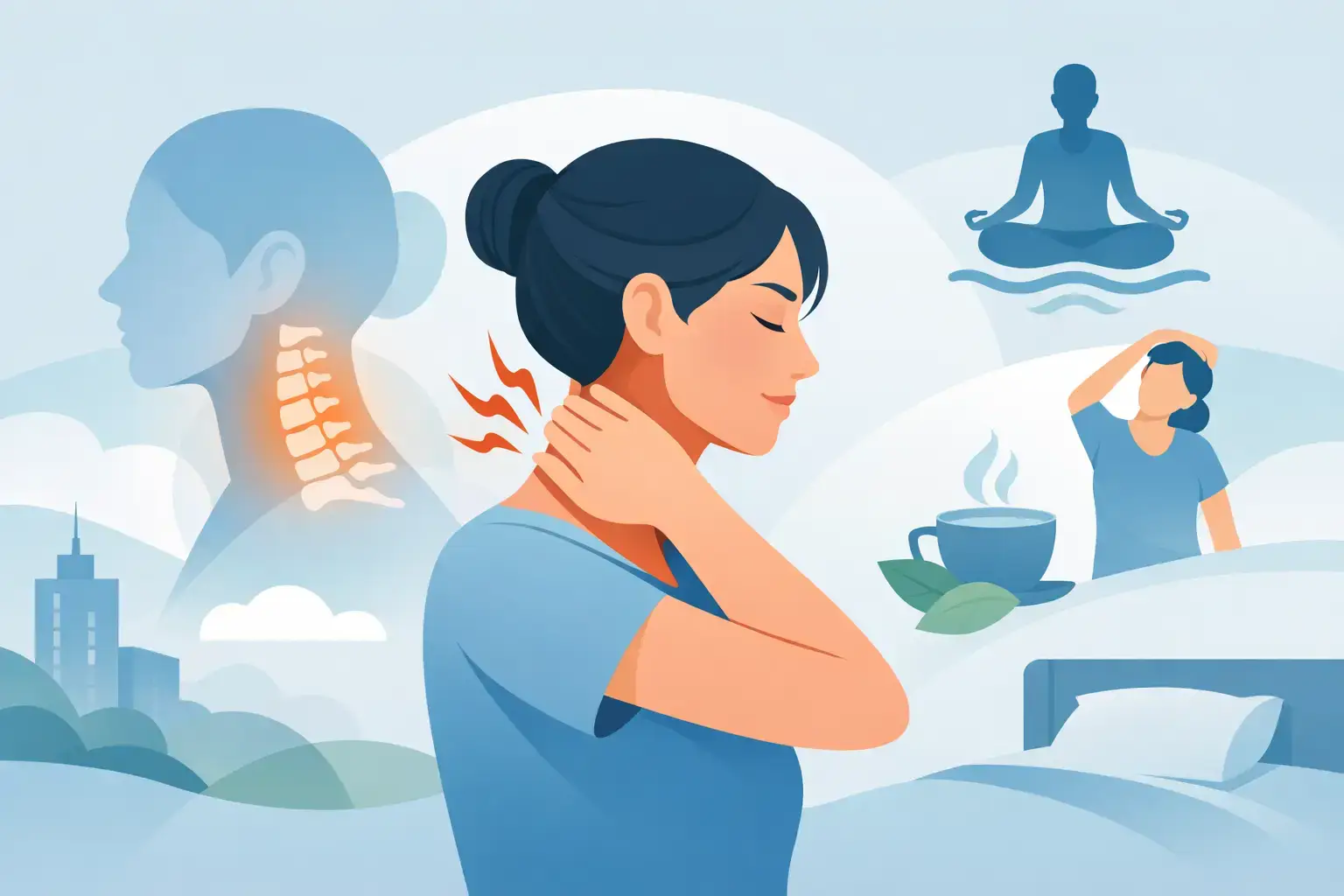
A stiff neck can turn a simple morning into an uncomfortable one. Looking down at a phone, working through long hours at a laptop, sleeping in an unfamiliar hotel bed, or carrying travel stress in your shoulders can leave the neck feeling tight, heavy, and reluctant to move. Knowing how to reduce neck stiffness starts with treating the area gently, rather than forcing it to loosen.
The neck is closely connected to the shoulders, upper back, jaw, and even the way you breathe. Lasting relief often comes from a few calm, consistent habits that reduce strain while giving tired muscles time to recover.


How to Reduce Neck Stiffness Without Forcing It
When stiffness appears, the instinct is often to stretch hard or crack the neck. That can feel tempting, but aggressive movement may irritate already sensitive muscles. Begin with warmth, light motion, and a slower pace.
A warm shower, heated towel, or warm compress applied for 15 to 20 minutes can help relax guarded muscles. Keep the heat comfortably warm, never hot enough to burn the skin. Afterward, move your head gently: look slightly left and right, lower each ear toward its shoulder without lifting the shoulder, and nod slowly as if saying yes. Stay in a comfortable range. The goal is easy movement, not a deep stretch.
It also helps to reset the shoulders. Roll them backward slowly several times, then allow them to rest away from the ears. Many people feel neck tension because their shoulders have been held high through stress, concentration, driving, or phone use. A few unhurried breaths can make this small adjustment more effective. Inhale softly, then let the shoulders drop as you exhale.
If the area feels tender after a busy day, a cool pack wrapped in a cloth may feel better than heat, especially within the first day after an awkward movement or minor strain. There is no single rule for everyone: choose the temperature that brings the most comfortable relief.
Improve the Habits That Keep Your Neck Tight
A neck rarely becomes stiff for just one reason. It is often the result of repeated positions that ask the same muscles to work without enough breaks. The most useful changes are usually the ones you can keep doing.
Lift Your Screen, Not Your Shoulders
When a screen sits too low, the head drifts forward. Although the head does not feel especially heavy, the muscles at the back of the neck must work harder the farther it moves from a neutral position. Raise your laptop with a stand or stable support and use a separate keyboard when possible. Position the top portion of the screen around eye level so you are looking forward rather than down.
Your chair matters too. Sit back so your lower back is supported, place both feet on the floor or a footrest, and keep elbows relaxed near your sides. Perfect posture is not a rigid pose held all day. The better approach is varied posture: change position often and avoid staying fixed for long periods.
Give Your Phone a Better Position
Phone use is one of the most common sources of day-to-day neck tension. Bring the phone closer to eye height instead of bending your head toward your hands. If you are reading or messaging for several minutes, pause regularly, look across the room, and gently move your shoulders.
This is particularly helpful while traveling. Waiting in airports, sitting in cars, or resting between meetings can invite long periods of downward scrolling. A short posture reset every 20 to 30 minutes is more realistic and more effective than waiting until your neck is already painful.
Reconsider Your Pillow and Sleep Position
Sleep should restore the body, yet an unsuitable pillow can leave the neck feeling compressed or unsupported. The best pillow height depends on your preferred sleep position and body shape. Side sleepers generally need enough support to fill the space between the shoulder and head, while back sleepers often do better with a lower pillow that keeps the chin from tipping toward the chest.
Stomach sleeping can place the neck in a prolonged rotated position, which may worsen stiffness for some people. If changing this habit feels difficult, try gradually spending more time on your side with a pillow that supports your head and another pillow hugged in front of the chest. Small changes are often easier to maintain than a complete overnight adjustment.
Use Movement as Daily Neck Care
Rest has a place when the neck is acutely sore, but complete stillness for days can make muscles feel even tighter. Gentle movement improves circulation and reminds the body that the neck can move safely.
Try a brief routine once or twice a day. Start by sitting tall with your jaw relaxed. Slowly turn your head to one side and pause for a few comfortable breaths, then repeat on the other side. Next, gently draw your chin straight backward as though creating a soft double chin, without looking down. This can counter the forward-head position common during desk work. Finish with shoulder-blade squeezes, bringing the shoulder blades lightly toward each other without arching the lower back.
Move slowly and stop if you feel sharp pain, tingling, dizziness, or symptoms traveling into the arm. Stretching should create mild relief, not a battle with your body.
Regular walking can also help. It encourages the arms and upper back to move naturally, supports circulation, and gives your mind a break from the posture that may be creating tension. For urban professionals and frequent travelers, even a calm 10-minute walk after work or after a flight can be a meaningful reset.
Let Massage Address Deeper Muscle Tension
When neck stiffness is tied to tight shoulders, upper-back fatigue, stress, or exercise recovery, professional massage can provide a more complete release than home care alone. A skilled therapist can work around the neck, shoulders, shoulder blades, and upper back, where tension often begins before it is felt in the neck itself.
The right massage style depends on what your body needs. A relaxing oil massage may suit general stress and muscle fatigue. Hot stone or hot oil treatments can bring comforting warmth to areas that feel chronically tight. Deep tissue massage may be helpful for persistent muscular tension, but it should be tailored carefully. More pressure is not always better, particularly when the neck is sensitive or you are new to therapeutic massage.
Thai herbal massage can be especially appealing when you want a combination of warmth, gentle assisted stretching, and full-body renewal. Tell your therapist where stiffness is strongest, whether it began after travel, desk work, a workout, or sleep, and what level of pressure feels comfortable. Personalized care makes the experience safer and more restorative.
At Stella Spa in Dubai Marina, a tailored massage session in a refined hotel setting can create the unhurried space many tired bodies need to relax, renew, and restore balance.
When Neck Stiffness Needs Medical Advice
Most simple neck stiffness improves with gentle care, posture changes, and time. However, do not treat every neck symptom as ordinary tension. Seek prompt medical assessment if stiffness follows a fall, collision, or other injury, or if it comes with severe headache, fever, confusion, loss of balance, weakness, numbness, or pain that shoots down an arm.
It is also wise to speak with a qualified healthcare professional if pain is severe, steadily worsening, repeatedly returns, or does not improve after a reasonable period of self-care. Massage and relaxation can be valuable parts of wellness, but they are not substitutes for diagnosis when warning signs are present.
Give your neck the same consideration you give the rest of your recovery: warmth when it craves comfort, movement when it feels guarded, and quiet time away from the positions that created the tension. A few thoughtful adjustments can make everyday life feel lighter, from the first morning stretch to the final moment of rest.