


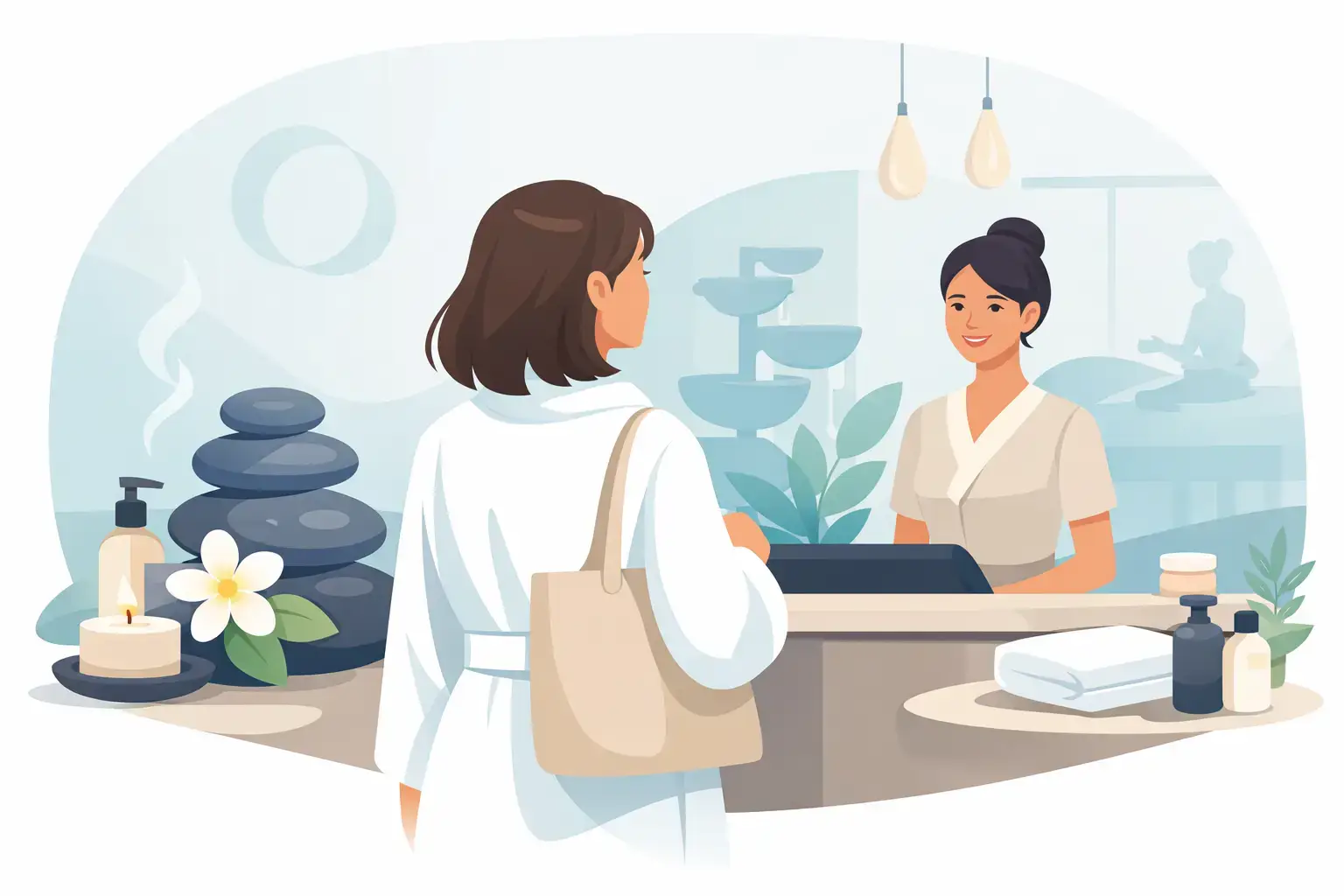
Walking into a spa for the first time can feel a little uncertain. You want to relax, but you may also be wondering what to wear, when to arrive, whether you should talk during the massage, and how the whole experience actually works. This guide to first spa visit questions is designed to take that uncertainty away, so you can enjoy what matters most – comfort, relief, and a true sense of escape.
A great spa visit should never feel intimidating. Whether you are booking after a long flight, planning a couples experience, or simply looking for a quiet reset after a busy week, the best experience starts with knowing what to expect. Once the small details are clear, it becomes much easier to settle in and let your body unwind.


Why your first spa visit feels unfamiliar
Most first-time guests are not nervous about the treatment itself. They are unsure about the process around it. Spa spaces are quieter, slower, and more refined than most everyday environments, so even simple things like checking in or changing for a treatment can feel new.
That is completely normal. A professional spa is designed to guide you through each step with ease. You are not expected to know every treatment name or understand every massage style in advance. The role of the team is to help you choose well, feel comfortable, and receive a treatment that suits your needs.
Guide to first spa visit planning
The best first experience begins before you arrive. If you are choosing a treatment, think less about what sounds impressive and more about what your body actually needs. If your goal is deep relaxation, a relax massage or hot oil massage often feels approachable and soothing. If you are carrying heavy tension in the shoulders, back, or legs, deep tissue may be more effective, though it can feel more intense.
If you are unsure, ask for guidance when booking. A quality spa will explain the difference between options such as reflexology, hot stone massage, Thai herbal massage, or a steam and jacuzzi add-on. This is especially helpful if you are visiting during travel, after exercise, or with a partner who may want a different pressure level or treatment focus.
Timing matters too. Try not to schedule your first spa visit so tightly that you are racing in from one commitment and rushing straight out to the next. A spa works best when you give yourself breathing room. Even 15 to 30 extra minutes before or after your session can change the entire experience.
What to do before you arrive
Eat lightly rather than arriving very full. Hydrate well, especially if you are booking a massage, steam session, or any treatment that encourages circulation and muscle release. If you have injuries, recent surgeries, pregnancy, or medical concerns, mention them in advance. This is not a formality. It helps the therapist adjust pressure, positioning, and technique in a way that feels safe and effective.
It is also wise to avoid showing up sunburned, dehydrated, or straight from an intense workout. In those situations, some treatments may feel less comfortable than expected. A luxury spa experience should restore you, not push your body harder when it is already overstimulated.
What to wear to a spa
This is one of the most common first-time questions, and fortunately the answer is simple. Arrive in comfortable clothing that is easy to change out of. If your treatment includes a massage, you will be given privacy to undress to your comfort level and settle under a sheet or towel. Professional draping is standard, which means only the area being worked on is uncovered.
You do not need to overthink it. For a massage, many guests undress fully, while others keep undergarments on. Both are common. What matters is that you feel at ease. If you are using a steam bath or jacuzzi, bring or ask about suitable attire, depending on the spa’s setup and guidance.
Jewelry, watches, and tight clothing are best left off during treatments. They can distract from relaxation and sometimes interfere with the therapist’s work.
What happens when you check in
When you arrive, you will usually be greeted, checked in, and asked a few short questions about your appointment, preferences, and any health concerns. Some spas provide a brief consultation form. This is where you can mention things like lower back pain, neck tension, sensitivity to pressure, or areas you would prefer to avoid.
From there, you may be shown to a changing area, relaxation lounge, steam room, or treatment room, depending on your booking. In a premium setting, the pace is intentional. You are meant to slow down from the moment you enter.
If it is your first time, do not hesitate to ask practical questions. Where do your belongings go? Should you shower first? How long is the session? Is the steam bath before or after the massage? Clear guidance helps you settle in quickly.
During the treatment
A first spa treatment often feels easier than people expect. The therapist will explain how to position yourself and will step out while you get ready. Once the treatment begins, communication is welcome. If the pressure feels too strong, too light, too fast, or too focused on one area, say so. Good therapists want to tailor the session, not guess through it.
This is especially relevant if you choose a modality with stronger physical effects. Deep tissue can be excellent for muscle tension and recovery, but it is not the right fit for everyone on a first visit. Hot oil massage tends to feel gentler and more calming. Reflexology can be surprisingly effective if your feet and lower legs carry a lot of fatigue, especially after shopping, sightseeing, or long days on your feet.
If you are receiving a couples massage, the same rule applies. You and your partner do not need to want the exact same pressure or focus. A well-run spa can personalize the experience for each guest while still preserving the shared atmosphere.
Talking during the treatment is a personal choice. Some guests enjoy light conversation, while others prefer silence. Neither is wrong. If you want quiet, simply relax into it. If you need an adjustment, speak up without hesitation.
Spa etiquette without the awkwardness
The easiest version of spa etiquette is this: arrive on time, speak honestly about your comfort, and respect the calm environment. Everything else is secondary.
Silencing your phone is a small detail that makes a big difference. Showering before certain facilities or treatments may be requested, particularly if steam, jacuzzi, or body-focused services are involved. Tipping practices vary by location and venue, so if you are unsure, ask discreetly at reception.
One thing first-time guests sometimes misunderstand is the difference between enduring a treatment and benefiting from it. A massage does not need to be painfully intense to be effective. There is a place for stronger pressure, but there is also a point where too much pressure can make you tense up rather than release.
Choosing the right treatment for your first visit
If your goal is simple relaxation, start there. A calming full-body massage is often the best first experience because it introduces the spa environment without asking your body to adapt to something too specific or intense.
If you are dealing with travel fatigue, hot oil massage, steam access, or a jacuzzi session can feel especially restorative. If your muscles are tight from work, training, or long periods of sitting, deep tissue may be worth considering, though it helps to mention if you are new to stronger pressure. If you want a treatment that feels warming and grounding, hot stone massage can offer a beautiful balance of comfort and muscle release.
Guests looking for something memorable may enjoy four hands massage or a VIP couples experience, but these tend to work best when you already know a little about your preferences. For a first visit, simpler is often better. Luxury does not have to mean complexity.
In Dubai Marina, where many guests are balancing travel, work, beach days, and packed schedules, the most valuable treatment is often the one that meets you exactly where your body is that day. At Stella Spa, that personalized approach is part of what makes a first visit feel effortless rather than overwhelming.
After your treatment
Take your time getting up. Drink water. Notice how your body feels before you rush back into your day. Some guests feel sleepy and deeply calm, while others feel lighter, looser, and more energized. Both responses are normal.
If you had a stronger massage, a little tenderness can happen later, especially if your muscles were very tight. That does not always mean the treatment was too much, but it is useful feedback for next time. This is why your first visit is partly about discovery. You learn what pressure, pace, and treatment style your body responds to best.
If you loved one part of the session and could have skipped another, remember that. The second visit is where the experience often becomes even better, because your preferences are clearer.
A first spa visit is not about getting every detail perfect. It is about giving yourself permission to pause, receive professional care, and enjoy a level of comfort that daily life rarely offers. Once you let go of the uncertainty, the experience becomes what it was always meant to be – restorative, indulgent, and genuinely good for you.