


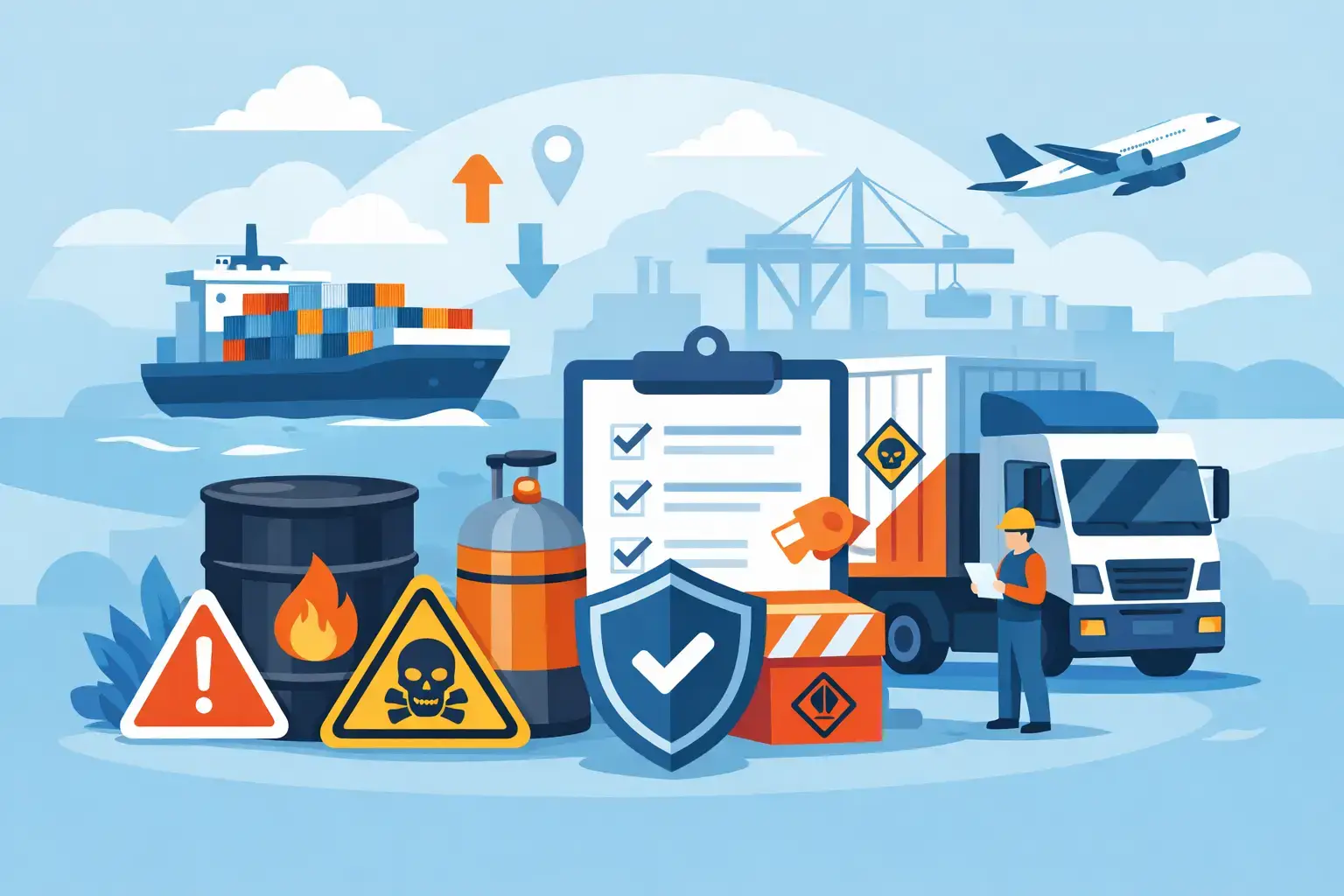
A shipment can be ready to leave the warehouse and still be stopped by one missing technical detail: an incorrect UN number, an expired safety data sheet, or packaging that does not match the cargo’s hazard class. Dangerous goods freight shipping is not ordinary freight with extra labels. It is a controlled process that protects people, equipment, cargo, and the communities along every transport route.
For manufacturers, traders, automotive businesses, industrial suppliers, and project cargo teams, the right freight partner turns that process into a practical shipping plan. The objective is clear: move regulated cargo safely, on schedule, and with documentation that stands up to carrier, port, airport, and customs checks.


What Makes Dangerous Goods Freight Shipping Different?
Dangerous goods are materials or articles that may create a risk during transport. They include obvious cargo such as flammable liquids, compressed gases, corrosive chemicals, explosives, and radioactive materials. They also include shipments that are often overlooked, including lithium batteries, paint, aerosols, adhesives, cleaning products, vehicle airbags, and machinery containing fuel or batteries.
The risk is not always visible from the outside. A sealed carton of batteries can create a fire risk if it is damaged, short-circuited, poorly packed, or loaded incorrectly. A container carrying chemical products may require temperature control, segregation from incompatible cargo, or special emergency information. That is why a product name alone is never enough to plan a shipment.
Each consignment must be assessed against its proper shipping name, UN number, hazard class, packing group where applicable, quantity, and transport mode. A product accepted by road may face different limits or handling rules for air freight. Ocean transport can offer greater capacity and lower cost for many regulated commodities, but it also requires careful container packing, declarations, and port acceptance.
Classification Comes Before Booking
The most reliable dangerous-goods shipment begins before a booking request is sent. Classification determines virtually every later decision, from the packaging specification to the carrier that can accept the cargo.
A current Safety Data Sheet, commonly called an SDS, is usually the starting point. It helps identify the material’s transport classification, flash point, physical state, and emergency-response requirements. However, the SDS should be reviewed carefully rather than treated as a complete shipping instruction. The transport information must match the actual product, concentration, packaging, and quantity being shipped.
For commercial shippers, keeping product data current prevents expensive last-minute changes. A reformulated chemical, a new battery type, or a different package size can change the compliance requirements. For first-time exporters, especially those shipping vehicles or equipment, the key question is often whether the cargo contains batteries, fuel, pressurized components, or other regulated items that require special declaration.
Misclassification creates more than a paperwork problem. It can lead to refused cargo, storage charges, missed sailings, fines, cargo damage, or serious safety incidents. When there is uncertainty, the correct approach is to verify first and book second.
Packaging, Marks, and Labels Protect the Shipment
Approved packaging is designed to contain the product under the stresses of transport. Depending on the cargo, this may involve UN-certified drums, jerricans, boxes, combination packaging, overpacks, absorbent material, inner receptacles, or specialized battery packaging. The package must be suitable not only for the material but also for the selected mode of transport.
Proper packing also considers what happens after the box is closed. Can the contents shift? Is there enough cushioning? Are closures secure? Does the package need orientation arrows? Is the outer package strong enough for stacking and handling? These details matter when freight moves from truck to warehouse, warehouse to container, and container to vessel.
Required marks and hazard labels must be visible, durable, and accurate. They communicate critical information quickly to handlers, carriers, and emergency responders. Incomplete labeling can result in rejection even when the underlying product and packaging are acceptable.
For containerized cargo, the work continues at the loading stage. Weight distribution, cargo securing, segregation, ventilation, and placarding must be planned correctly. A container should never be treated as a way to hide a difficult shipment. It is a transport unit that must be packed to the same safety standard as every individual package inside it.
Documents Keep Cargo Moving Across Borders
International dangerous-goods logistics depends on documents that agree with one another. The dangerous goods declaration, packing list, commercial invoice, transport document, SDS, certificates, and permits must describe the shipment consistently. A small mismatch in quantity, product name, net weight, or UN number can delay acceptance.
The applicable regulations also depend on the route. Air shipments are generally governed by carrier requirements and the International Air Transport Association dangerous goods rules. Ocean shipments follow the International Maritime Dangerous Goods Code. Road transport requirements vary by country and region. A shipment moving from a UAE warehouse to a European consignee, for example, may need to satisfy requirements at origin, during transshipment, and at final inland delivery.
Customs clearance adds another layer. Customs authorities need a clear commercial description and accurate value information, while carriers need compliant dangerous-goods details. Neither requirement replaces the other. Strong freight coordination brings both sides together before the cargo reaches the terminal.
Choosing Air, Ocean, or Road Transport
There is no single best mode for dangerous goods freight shipping. The right choice depends on the material, quantity, urgency, destination, cost target, and carrier acceptance.
Air freight can be the right solution for urgent, high-value, or low-volume shipments, but it has strict limitations and may be unavailable for certain commodities. It also requires precise packaging and documentation, often with lower quantity allowances than ocean freight.
Ocean freight is frequently more cost-effective for larger volumes, industrial products, and container loads. It is well suited to planned supply chains, although schedules, port restrictions, and segregation rules must be considered. Some dangerous goods are accepted only under specific stowage conditions or only by selected carriers.
Road freight provides flexibility for regional collection and delivery, including movement between warehouses, ports, airports, and project sites. Yet it still requires suitable vehicles, trained drivers where required, correct placards, and safe loading practices. For complex shipments, multimodal planning is often the practical answer: secure road collection, compliant export handling, ocean or air transport, then coordinated delivery at destination.
Where Experience Saves Time and Cost
The cheapest freight quote is not always the lowest-cost shipment. If cargo is rejected at a port or airport, the shipper may face rehandling, repacking, storage, amendment fees, and a missed departure. The value of specialist planning is avoiding those preventable costs before they begin.
An experienced logistics provider should review the cargo details early, confirm feasible transport options, coordinate approved packing where needed, prepare documentation, arrange pickup and storage, and communicate carrier requirements clearly. For businesses moving mixed cargo, this is especially valuable. General freight and regulated freight may need separate packing, storage, or loading arrangements.
Euro Star Shipping Services brings more than 25 years of freight-forwarding experience to shipments moving through Dubai and the UAE, with access to ocean, air, and land transport solutions across 150 countries. Its operational capabilities, including warehousing, industrial packaging, customs clearance, and specialized cargo handling, help customers manage difficult cargo through one coordinated logistics partner.
Questions to Answer Before You Ship
Before arranging collection, provide the logistics team with the product name, SDS, quantity, package type, gross and net weight, dimensions, origin, destination, and required delivery date. If the cargo is machinery, vehicles, or equipment, disclose batteries, fuel levels, airbags, fire suppression systems, gas cylinders, and any chemicals stored inside.
Also be realistic about timing. Dangerous goods require review and acceptance steps that ordinary cargo may not. Booking early gives carriers time to assess the shipment and gives the shipper time to correct any packaging or document issues. For repeat cargo, establishing an approved shipping profile can make future movements faster and more predictable.
Safe transport does not have to mean slow or complicated transport. It means treating the cargo accurately from the first conversation, then matching it with the right packing, paperwork, route, and handling team. When every detail is addressed before departure, dangerous goods can move with the control and confidence serious international trade demands.