


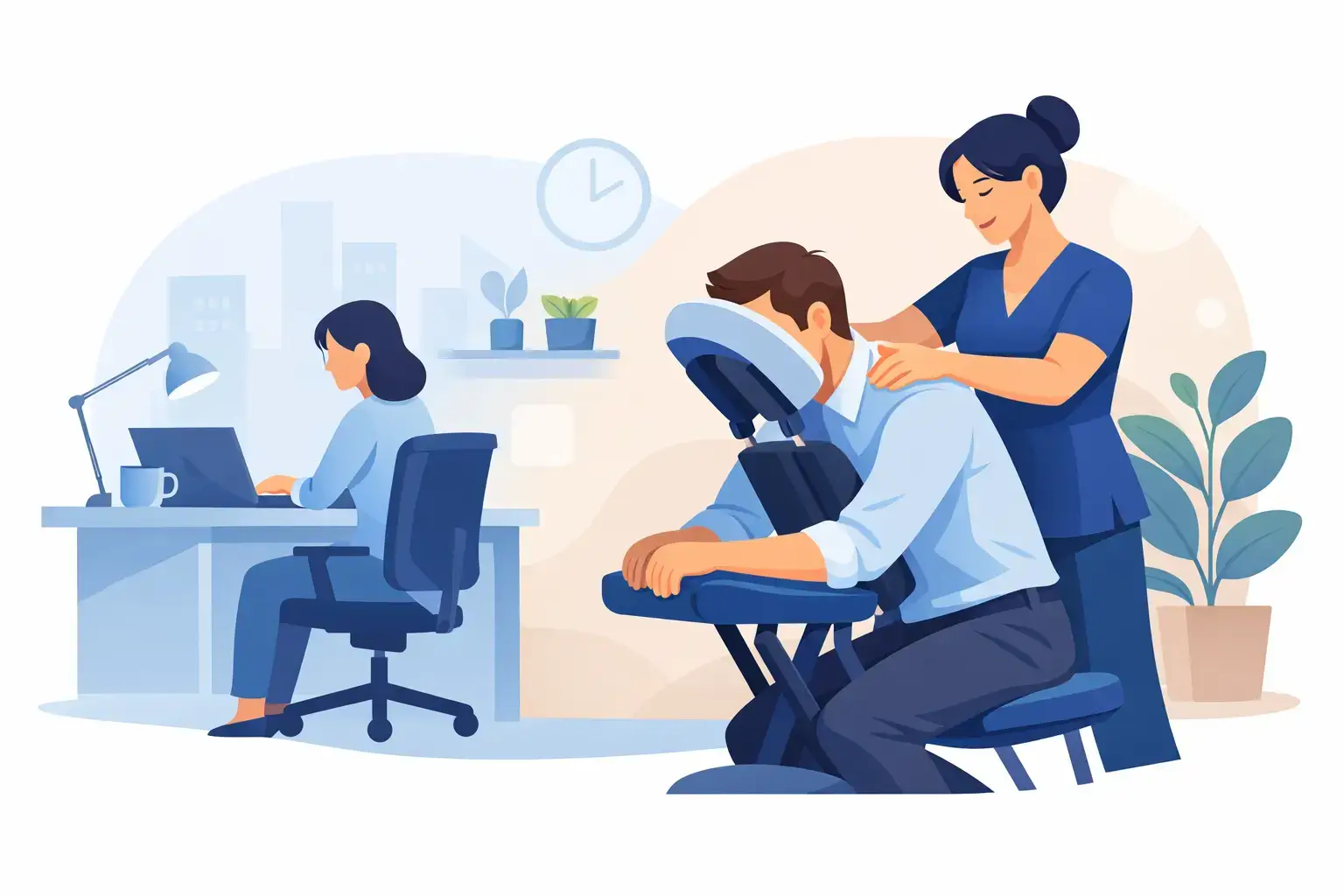
By 3 p.m., the shoulders are creeping upward, the lower back feels tight, and your neck starts arguing with every email. That is why the best massage for office workers is rarely about simple indulgence. It is about correcting the strain of long desk hours, restoring circulation, and giving the body a chance to reset before tension becomes a daily companion.
For many professionals, office fatigue follows a familiar pattern. Hours of sitting shorten the hip flexors, tighten the lower back, and load the upper shoulders and neck. Add laptop posture, phone use, and stress, and the body begins to hold itself in all the wrong places. A well-chosen massage can make a remarkable difference, but the right treatment depends on whether your main issue is deep muscle tension, mental fatigue, swollen feet, or a general sense of burnout.


What is the best massage for office workers?
If one treatment stands above the rest for desk-related tension, it is usually deep tissue massage. Office workers often carry stubborn tightness in the neck, upper back, shoulders, and lower back, and deep tissue work is designed to reach those overworked areas with slower, firmer pressure. It helps release adhesions, reduce stiffness, and improve range of motion in muscles that have been locked into the same position all week.
That said, deep tissue is not automatically the best fit for everyone. Some people want relief without intense pressure, especially if their body is more stressed than sore. In that case, a relax massage or hot oil massage can be the better choice. The muscles still soften, circulation improves, and the nervous system shifts out of that wired office mode. The result can feel less corrective and more restorative, which is exactly what some professionals need.
The best massage for office workers depends on what your body is asking for. Sharp shoulder knots and a heavy lower back often respond beautifully to deep tissue. Full-body fatigue, poor sleep, and stress may call for a gentler, more soothing session.
Why office work creates a specific kind of body tension
Desk work does not look physically demanding, yet it creates its own form of muscular overload. When you sit for long periods, some muscles stay underused while others overcompensate. The chest can tighten, the upper traps become overactive, and the glutes and core stop doing their share. Even a good chair cannot fully protect you from eight or more hours of repetitive posture.
There is also the stress factor. Many office workers are not just sitting. They are sitting while rushing, concentrating, responding, and carrying mental pressure. Stress has a way of settling into the jaw, neck, shoulders, and scalp. That is why massage often feels so effective after a demanding workweek. It does not only target muscle tension. It supports a more balanced state in the whole body.
The best massage options for different office-worker needs
Deep tissue massage for chronic neck and shoulder pain
When your neck feels stiff every morning and your shoulders stay tense even after rest, deep tissue massage is often the strongest option. It uses deliberate pressure to address deeper muscle layers and tension patterns built over time. For professionals who spend long hours at a desk, this can be especially helpful around the upper back, shoulder blades, and lower back.
The trade-off is intensity. Deep tissue can feel tender in areas that are especially tight, so it is ideal for those who want targeted relief rather than a purely gentle spa experience. Communication matters here. The best session is not the harshest one. It is the one that applies enough pressure to be effective while still allowing the body to relax into the treatment.
Relax massage for stress-heavy workweeks
Not all office discomfort feels like pain. Sometimes it feels like mental overload, shallow breathing, restless sleep, and a body that never fully unwinds. A relax massage is perfect in that situation. The pressure is lighter, the pace is calming, and the focus is on easing the nervous system as much as the muscles.
For professionals dealing with deadlines, meetings, and mental fatigue, this style of massage can feel surprisingly powerful. When the body stops bracing itself, even persistent tension often starts to melt. It is a beautiful choice if your goal is to leave feeling lighter, calmer, and more refreshed.
Hot oil massage for stiffness and full-body comfort
Hot oil massage adds warmth and glide to the experience, which makes it especially appealing after long days in air-conditioned offices. The warmth helps the muscles release more easily, while the flowing movements encourage deep relaxation. For many office workers, this treatment hits the sweet spot between therapeutic and indulgent.
It is particularly well suited to people who feel generally stiff rather than sharply knotted. If your body feels tired from head to toe and you want comfort with meaningful relief, hot oil massage is a strong contender.
Reflexology for tired feet and circulation support
Office work is not always only about sitting. Many professionals also commute, stand intermittently, or finish the day with swollen feet and heavy legs. Reflexology focuses on the feet, but the benefits often extend much further. It can be deeply relaxing and may help reduce that dragging, end-of-day feeling.
This option is also ideal for people who are new to massage or prefer not to start with a full-body treatment. It feels focused, accessible, and wonderfully restorative after a long workday.
Hot stone massage for tension that needs warmth
For workers whose muscles feel dense, cold, and resistant to touch, hot stone massage can be incredibly effective. The heated stones warm the tissues before and during massage, helping the body let go of tension with less aggressive pressure. It is a luxurious treatment, but also a practical one for stubborn tightness.
This can be a lovely alternative if deep tissue sounds too intense but a standard relaxation massage feels too light. It offers a middle path with comfort, warmth, and measurable relief.
How to choose the best massage for office workers
Start with the area that bothers you most. If it is the neck, upper back, and shoulders, deep tissue or hot stone massage is often the right place to begin. If the problem is stress and fatigue more than pain, a relax massage or hot oil massage may serve you better.
Then consider your pressure preference. Many office workers assume stronger is always better, but that is not true. A body already holding stress can resist very heavy pressure. In some cases, gentler work creates a better result because the muscles stop guarding.
Timing matters too. If you need to return to work immediately after your appointment, a moderate or relaxation-focused treatment may leave you feeling polished and refreshed. If you are booking at the end of the day or before a restful evening, you may prefer deeper corrective work.
When office workers should book massage regularly
A single massage can bring welcome relief, but repetitive desk strain usually responds best to consistency. If your job keeps you seated most days, regular sessions can help prevent tension from building into headaches, restricted movement, and persistent back pain.
For some people, twice a month is enough to stay comfortable. Others benefit from weekly or alternating treatments, especially during stressful periods. There is no single rule. The right frequency depends on how intense your symptoms are, how demanding your schedule is, and whether you are combining massage with stretching, movement, and better workstation habits.
In a refined setting such as Stella Spa, office workers can enjoy that balance of therapeutic care and elevated comfort that makes regular wellness feel less like another task and more like a ritual worth keeping.
Getting the most from your massage after desk hours
A few small choices can improve your results. Arrive hydrated, avoid a heavy meal right before your session, and mention exactly where you feel the most strain. If you spend all day at a laptop, say so. If your lower back tightens after meetings or your wrists ache after typing, that detail helps personalize the treatment.
Afterward, give your body a little space to absorb the benefits. Drink water, move gently, and avoid going straight back into poor posture for hours. Even a short walk and a few shoulder rolls can help extend that post-massage ease.
Office work asks a great deal from the body in quiet, repetitive ways. The right massage gives something back – relief, balance, and the feeling that your body belongs to you again, not to your chair, your screen, or your schedule.