


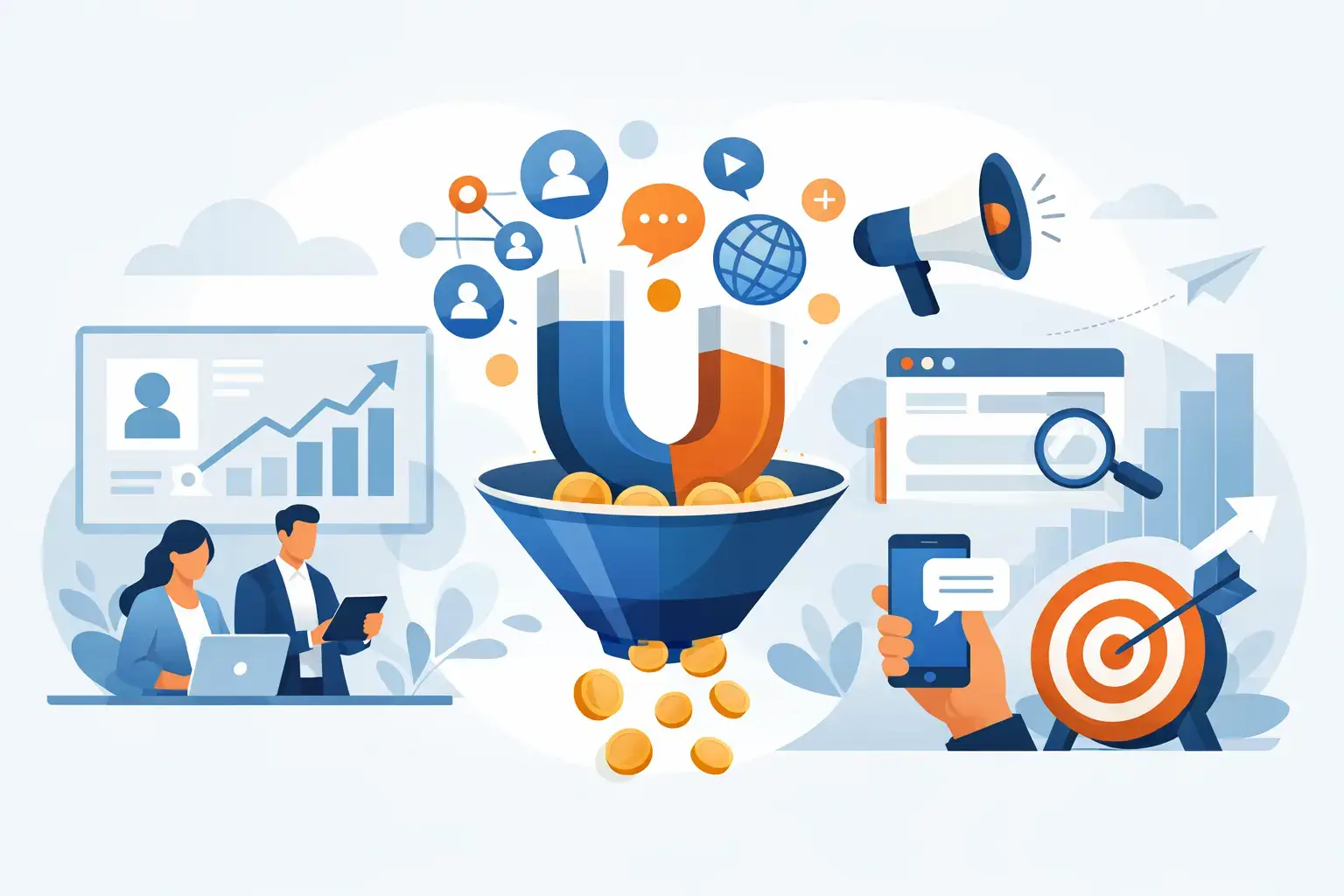
A new website, a polished logo, and active social pages can make a business look ready for growth. But appearance alone does not create a sales pipeline. The best lead generation channels put your offer in front of people who have a real reason to buy, then give them a clear, easy way to take the next step.
For small and mid-sized businesses, the goal is not to be everywhere. It is to invest in the channels that match how your customers search, compare, and make decisions. A restaurant, law firm, e-commerce store, travel agency, and B2B technology provider will not win leads in the same way. The right mix depends on your sales cycle, budget, market, and ability to respond quickly when an inquiry arrives.


What makes a lead generation channel worth your budget?
A channel is more than a traffic source. It should produce measurable commercial activity: calls, quote requests, consultations, booked appointments, demo requests, online orders, or qualified WhatsApp conversations. Views and followers may support brand awareness, but they are not enough if they do not move potential customers closer to a decision.
Evaluate every channel against four practical questions. How much buyer intent does it capture? How quickly can it produce results? What does a qualified lead cost? And can your team follow up while the prospect is still interested? High-intent channels often cost more per click, while lower-cost awareness channels may require more content, time, and nurturing. Both can work, but they do different jobs.
Your website is the center of this work. Every campaign should lead to a fast, mobile-friendly page with a focused message, proof of capability, a clear call to action, and dependable hosting. If visitors cannot find what they need, trust the business, or contact you in seconds, even a strong campaign will waste budget.
The best lead generation channels to prioritize
Search engine optimization for long-term demand
SEO is one of the strongest channels for businesses that want consistent lead flow without paying for every click forever. It helps your website appear when customers search for services, solutions, locations, pricing, and business problems. A user searching for “commercial CCTV installation,” “Dubai web design company,” or “online store development” already has a need. That intent matters.
SEO takes patience. New pages do not usually generate major results overnight, especially in competitive markets. Yet the upside is significant: useful service pages, local optimization, technical performance, and relevant content can keep attracting qualified prospects month after month.
The trade-off is that SEO needs real work. Thin pages and copied text rarely build trust or visibility. Your site needs clear structure, fast loading speed, secure technical setup, and content that answers customer questions better than competing results. For location-based businesses, accurate local details and consistent business information are also essential.
Pay-per-click advertising for speed and control
Google Ads and other search advertising platforms can place your business in front of buyers immediately. This makes PPC especially useful for service launches, seasonal offers, competitive industries, and businesses that need leads while SEO gains momentum.
The advantage is control. You can target specific services, locations, times, devices, and search terms. You can also direct users to landing pages created for one action, such as requesting a quote for structured cabling, booking a website consultation, or ordering a product online.
PPC is not simply about bidding higher. Poor keyword selection, broad targeting, slow landing pages, or unanswered calls can make costs rise quickly. Start with your highest-value services and the searches closest to purchase. Track calls, forms, and qualified conversations, not just clicks. A campaign that generates fewer inquiries but more sales is usually the better investment.
Social media advertising for targeted discovery
Social platforms work best when customers need to see, understand, or trust your business before they are ready to act. Hospitality, retail, real estate, beauty, automotive, events, and consumer products can use visual campaigns to create demand and retarget people who visited a website without converting.
For professional services and B2B companies, social media can still perform well, but the message should be more specific. Promote a clear business outcome rather than a generic company introduction. For example, a campaign around reducing IT downtime, launching an e-commerce store, or improving map-based reporting gives prospects a reason to engage.
Organic posting supports credibility, but paid social is usually needed for predictable reach. Strong creative matters: short videos, project examples, customer results, and clear offers tend to perform better than posts that only announce a service. Keep the form simple, and make sure someone follows up quickly. A lead that waits until tomorrow may choose a competitor today.
Email marketing for leads already within reach
Email is often overlooked because it does not feel as immediate as ads. In reality, it can be one of the most profitable channels when you already have contacts from past customers, inquiries, events, website signups, or abandoned shopping carts.
The value of email is relevance. A business owner who requested website pricing but did not proceed may respond to a useful case study, a launch checklist, or a limited consultation offer. An existing customer may need hosting support, SEO, social advertising, or a system upgrade later. These are warmer opportunities than a completely cold audience.
Avoid sending the same promotion to everyone. Segment contacts by service interest, industry, customer status, or where they are in the buying process. Keep messages useful and direct. One well-timed email that solves a real concern can create more revenue than a month of broad promotional sending.
Referral partnerships and customer recommendations
Some of the highest-quality leads come from trusted recommendations. A referred prospect often arrives with more confidence, a clearer understanding of your value, and less need for basic persuasion. This channel is particularly effective for agencies, consultants, IT providers, construction suppliers, accountants, and professional service firms.
Build referrals deliberately. Ask satisfied customers for introductions after a successful project, not months later when the result is forgotten. Develop partnerships with complementary businesses that serve the same customers but do not compete directly. A branding studio may refer web development work. An IT hardware supplier may refer network installation. A business consultant may refer clients who need digital marketing.
Referrals are difficult to scale through automation alone, but they can become a dependable source of high-value work when backed by excellent delivery, responsive support, and a clear reputation.
Content that proves expertise and creates demand
Content marketing is most valuable when your sales process requires education. If customers must understand a technical solution, compare options, calculate risk, or gain confidence before they buy, useful content shortens that journey.
This does not mean publishing articles for the sake of publishing. Create content around questions that appear in sales calls: What does a custom CMS solve? How should a company prepare for an e-commerce launch? When does a business need UPS protection? What should be included in a digital marketing budget? Turn your answers into service pages, practical guides, videos, checklists, and case-based content.
The strongest content works across channels. An article can support SEO, give sales teams something helpful to send prospects, provide material for social posts, and strengthen an email campaign. Its return may take longer than an ad, but it builds authority that continues working after publication.
Build a channel mix instead of betting on one source
Most growing businesses need a balance between immediate lead capture and long-term demand generation. A practical starting point is search ads for urgent buyer intent, SEO for compounding visibility, and retargeting for visitors who need more time. Add email when you have a contact database and referral activity when your service quality creates happy customers.
Do not spread a limited budget across every platform. Choose two or three channels, set a specific conversion goal, and run them long enough to learn. For example, a new B2B service provider may combine a focused landing page, Google Ads, and follow-up email. A retail business may prioritize social ads, product pages, and remarketing. A local technical contractor may put more weight on local SEO, search advertising, and referrals.
Measure leads by quality, not volume
A campaign report should show more than impressions and clicks. Track where each lead came from, which service they requested, how fast your team responded, whether they were qualified, and whether they became a customer. This shows which channels generate business rather than activity.
Use call tracking, form tracking, CRM records, and website analytics to connect marketing spend to outcomes. Review results monthly, but do not make major decisions based on a few days of data unless there is a clear technical issue. Some channels need time to optimize, especially when the sales cycle is long.
Your(1)Site helps businesses bring these moving parts together, from conversion-focused websites and hosting to SEO, advertising, content, analytics, and the technology that supports daily operations. The advantage of an end-to-end approach is accountability: the campaign, landing page, tracking, and follow-up path can be built to work as one system.
The channel that looks cheapest is not always the one that grows your business. Choose the sources that bring the right conversations, make it easy for prospects to trust you, and give your team a real chance to turn interest into a customer relationship.