


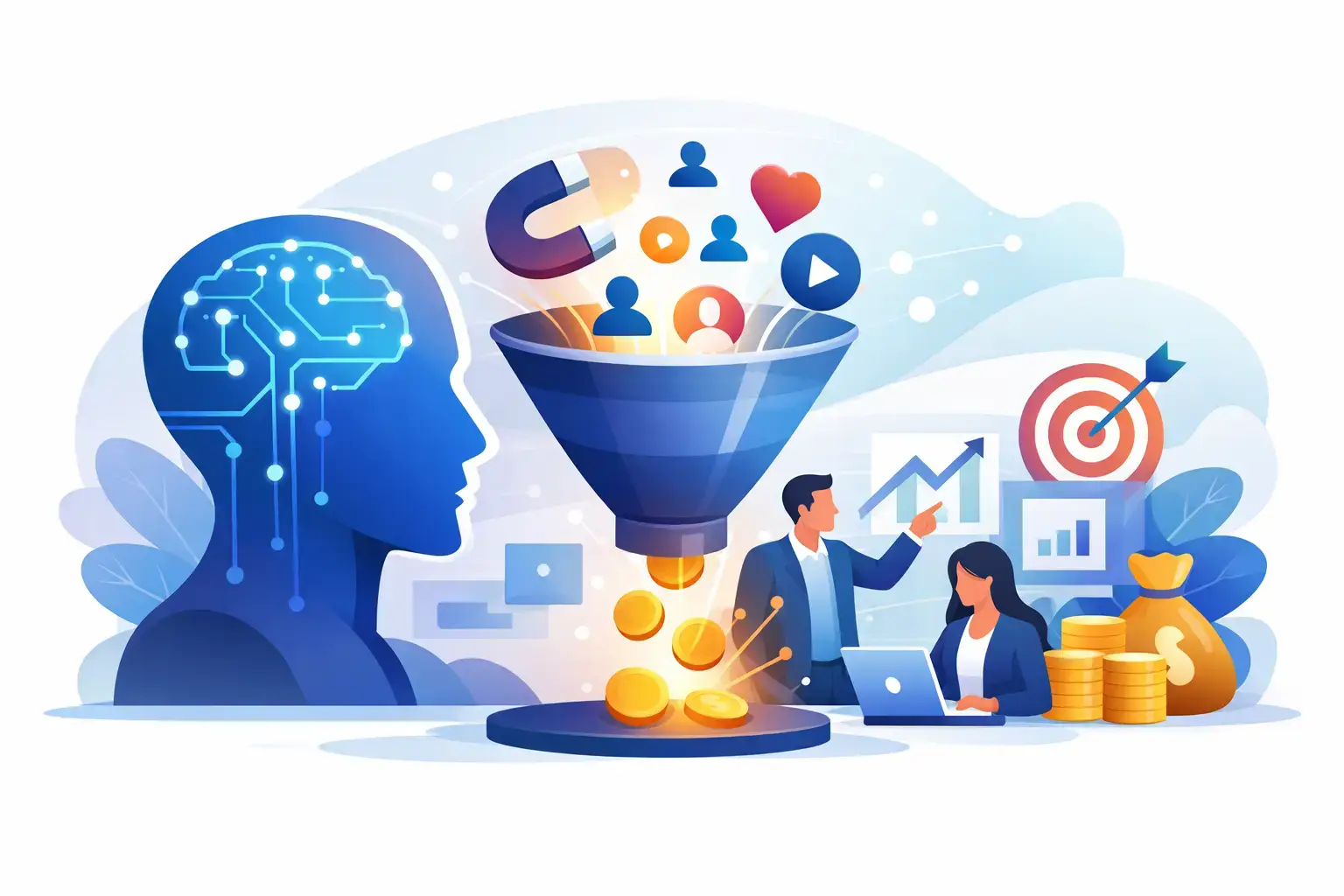
A customer visits your website at 11 p.m., compares two services, then leaves without calling. By morning, your sales team may never know that opportunity existed. AI marketing can change that by helping businesses recognize intent, respond with more relevant messages, and make smarter use of every visit, inquiry, campaign, and customer interaction.
For businesses competing in crowded markets, the real value is not using artificial intelligence because it is popular. The value is using it to reduce wasted advertising spend, improve follow-up, create better content faster, and give customers a more useful experience. When applied with a clear strategy, AI becomes a practical growth tool rather than another expensive platform your team barely uses.


What AI Marketing Actually Means
AI marketing is the use of artificial intelligence to analyze data, automate repetitive work, predict likely customer behavior, and improve marketing decisions. It can support search engine optimization, paid advertising, social media, email campaigns, website personalization, customer service, reporting, and content production.
For a small or mid-sized business, this does not have to mean a complex data science project. It may be as straightforward as identifying which ad audiences are most likely to submit a form, sending follow-up emails based on a visitor’s interest, or using campaign data to spot the services generating the best leads.
The key word is support. AI can process information at a speed no marketing manager can match, but it does not understand your business reputation, customer relationships, local market realities, or commercial priorities on its own. A hotel, legal firm, e-commerce store, automotive dealer, and travel agency may all use similar tools, yet they need very different messages, conversion paths, and success metrics.
Where AI Marketing Creates Measurable Value
The strongest AI marketing programs begin with a business problem, not a software subscription. If lead quality is poor, the focus should be on better targeting and qualification. If sales teams are slow to follow up, automation and lead alerts may be the priority. If advertising costs are rising, campaign analysis and landing-page improvements can deliver more value than simply producing more ads.
Better audience targeting
Paid campaigns often waste budget because the message reaches people with little interest or the wrong buying intent. AI-assisted advertising platforms can analyze engagement signals and conversion history to adjust bids, placements, and audiences. This can help a business reach prospects who are more likely to take action.
Still, automation needs supervision. An algorithm may optimize for cheap clicks when your real target is qualified inquiries, booked appointments, or completed sales. Your team must define the conversion event that matters and review whether the leads are commercially valuable, not just plentiful.
Faster, more relevant content
Content takes time, especially when a business needs web pages, blog articles, social captions, ad variations, emails, product descriptions, and video scripts. AI can accelerate first drafts, suggest campaign angles, organize topics, and repurpose approved material across channels.
That speed is useful, but generic content is easy to spot. Customers trust specific expertise: clear service details, accurate prices or processes, real project experience, local concerns, and language that sounds like your company. AI should help your team produce more useful material, while human experts verify facts, refine the message, and protect your brand voice.
More timely lead follow-up
A lead is most valuable when interest is high. AI-supported automation can route form submissions to the right team member, classify inquiries by service, send an immediate acknowledgment, or trigger a tailored email sequence based on what a prospect requested.
For example, someone asking for an e-commerce website should not receive the same follow-up as a company requesting CCTV installation or managed hosting. Relevant communication shows customers that you understand their need and makes the next step easier. It also gives sales teams context before they make contact.
Clearer reporting and decisions
Many businesses have data in too many places: website analytics, social accounts, CRM records, ad dashboards, email platforms, and sales reports. AI can help organize this information, surface patterns, and flag changes that deserve attention.
A useful report should answer direct questions. Which campaign produced the most qualified leads? Which landing page has a weak conversion rate? Which services generate repeat customers? Where are prospects dropping out of the sales process? Faster answers allow business owners to act before budget and opportunities disappear.
Build the Foundation Before You Automate
AI produces better results when the digital foundation is already working. A slow website, unclear service page, broken tracking setup, outdated customer database, or weak call to action will limit even the most sophisticated campaign.
Start by reviewing the customer journey from first search to final inquiry. Can customers find your company easily? Does the website work properly on mobile? Is the value of each service clear? Is there a simple way to call, request a quote, book a consultation, or buy? Are submissions recorded and followed up consistently?
Tracking also matters. Businesses should know which sources generate calls, forms, purchases, chats, and qualified appointments. Without reliable conversion data, AI tools are forced to make decisions based on incomplete signals. That can create attractive dashboards without meaningful sales growth.
For companies operating across multiple markets, consistency is equally important. Your messaging, contact details, campaign tracking, brand visuals, and response process should work together across every location and channel. Customers do not separate your website, ads, emails, and support experience. They see one business.
A Practical AI Marketing Plan for Growing Businesses
Begin with one measurable goal for the next 90 days. It could be increasing qualified website leads, lowering the cost per inquiry, improving online store sales, or reactivating former customers. A focused goal gives the project direction and prevents teams from testing tools without a business case.
Next, choose one high-impact use case. A service business might improve lead scoring and response automation. A retailer may focus on product recommendations and abandoned-cart emails. A professional firm may create a structured content plan that answers the questions prospects ask before hiring.
Then prepare the inputs. Organize customer data, confirm permissions, connect tracking, define conversion stages, and gather approved brand information. AI tools need accurate material to produce useful outputs. If your service descriptions are outdated or customer data is duplicated, fix that first.
Run a controlled test rather than changing every campaign at once. Compare results against a clear baseline, such as lead volume, cost per qualified lead, conversion rate, average order value, or sales response time. Keep what improves results and stop what does not. This approach protects budget while building confidence across the team.
Protect Trust, Data, and Brand Reputation
AI marketing can create risk when businesses treat it as an autopilot system. Customer information must be handled responsibly, especially when collecting contact details, browsing behavior, purchase history, or sensitive business information. Use secure systems, limit access, and ensure communications follow applicable privacy and consent requirements.
Accuracy is another concern. AI-generated copy can make incorrect claims, use outdated facts, or produce language that does not fit your market. Every customer-facing message needs human review when it covers pricing, legal matters, financial information, health claims, technical specifications, or brand promises.
There is also a simple reputational test: would you be comfortable explaining this message, recommendation, or data use directly to a customer? If the answer is no, reconsider the approach. Good marketing earns attention, but lasting growth depends on trust.
The Best Results Come From People and Technology Working Together
AI is most effective when it removes manual work and gives skilled people better information. It should help your marketing team spend less time sorting spreadsheets, writing repetitive variations, and chasing basic reporting. That leaves more time for strategy, creative direction, customer conversations, and improving the offer itself.
At Your(1)Site, we see AI as part of a connected growth system: a high-performing website, reliable hosting, accurate analytics, strong creative, targeted campaigns, and responsive technical support. A tool alone cannot fix a disconnected customer journey. A coordinated digital strategy can.
Start with the customer action that has the greatest value to your business, then use AI to make that action easier to achieve, measure, and improve. The companies that win will not be the ones using the most automation. They will be the ones using it to serve customers faster, communicate more clearly, and turn real interest into real business.