

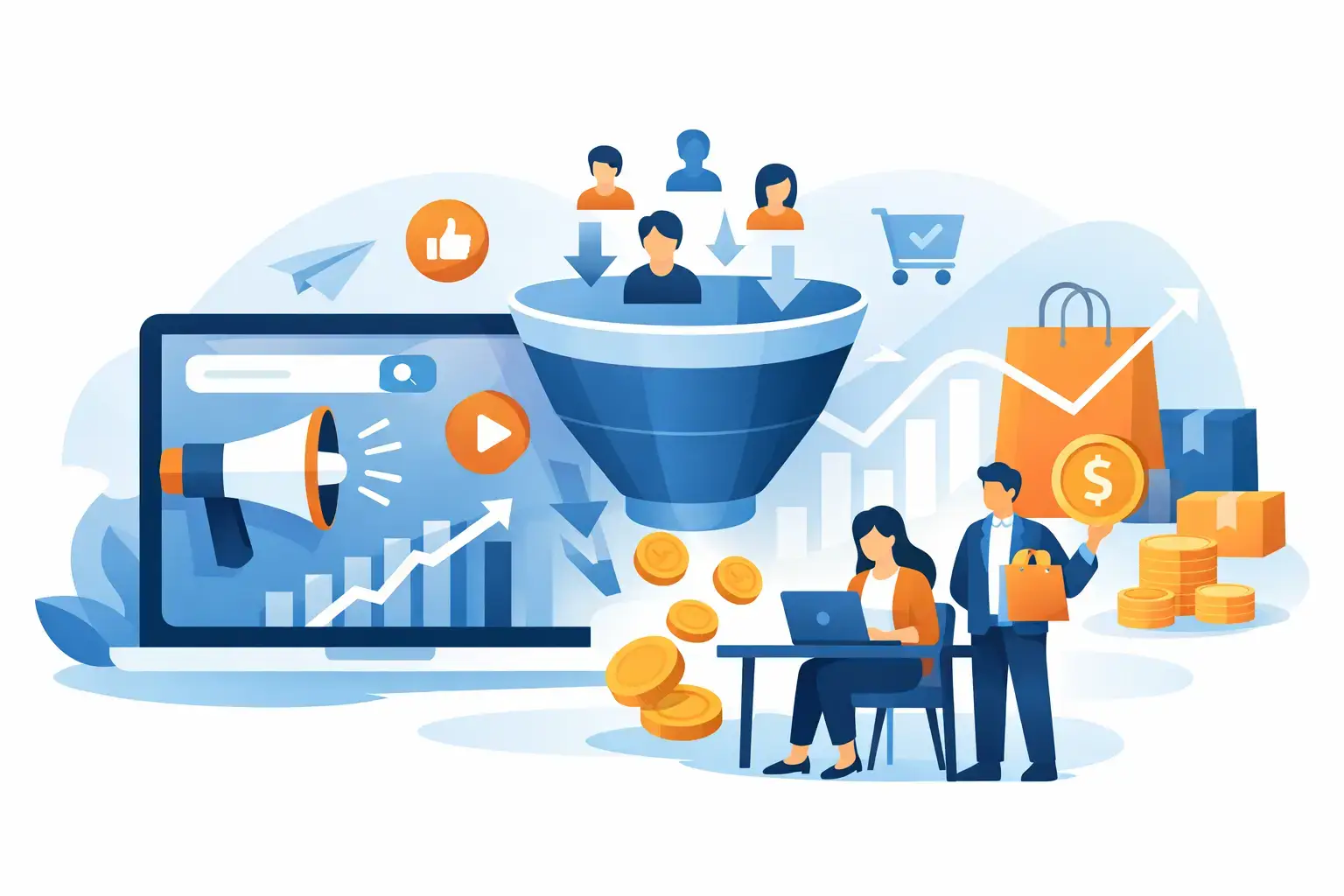
A polished website that no one can find will not grow a business. A social media page with thousands of followers but no inquiries will not pay the bills. Digital marketing works when every activity – from search visibility to paid ads and email campaigns – is connected to a clear commercial goal: more qualified leads, more bookings, more online orders, or stronger customer retention.
For businesses competing in fast-moving markets, attention is expensive. Customers compare options quickly, search before they call, and expect a website, campaign, and follow-up process to feel professional. The right strategy does not mean being active on every channel. It means investing in the channels that bring the right people closer to a decision.


What Digital Marketing Should Deliver
Digital marketing is often described as online promotion, but that definition is too limited for a growing business. It is the system that helps customers discover your brand, understand what you offer, trust your business, and take action.
A strong campaign can increase traffic, but traffic alone is not the finish line. A local service company may need phone calls and quotation requests. An e-commerce business may need completed purchases and repeat orders. A hospitality brand may need direct bookings, while a professional firm may focus on high-value consultation requests. The metrics should follow the business model, not the other way around.
This is why the best digital marketing plans combine creative work with technical discipline. Brand messaging must be clear. Landing pages must load quickly and work well on mobile devices. Forms, calls, tracking, and follow-up need to function without friction. When one part fails, ad spend and effort can be wasted.
Start With a Clear Growth Target
Before choosing SEO, paid advertising, social media, or email, define the result you want over the next three to six months. “More awareness” may be useful for a new brand, but it is not specific enough to guide a budget. A more practical goal could be generating 40 qualified inquiries per month, increasing online sales by 20 percent, or improving bookings from a specific city or customer segment.
Then look at the sales journey. Ask how customers currently find you, what information they need before contacting you, and where leads are lost. A travel agency may lose customers because package details are hard to compare. A retail business may receive traffic but have an unclear checkout process. A B2B company may need better case studies, stronger service pages, and faster response to inquiries.
The answer determines the campaign. There is no single channel that works equally well for every business.
Build the Foundation Before Buying Attention
Paid traffic can bring immediate visibility, but it exposes weaknesses quickly. If your website is slow, confusing, or not optimized for mobile, visitors may leave before they understand your offer. If a landing page has no persuasive reason to act now, even a well-targeted campaign can underperform.
Your digital foundation should include a professional website, clear service or product pages, visible contact options, secure hosting, reliable analytics, and a simple conversion path. For many businesses, that path is a call, WhatsApp message, booking form, quote request, or online checkout.
A good website should answer basic questions in seconds: What do you offer? Who is it for? Why should customers choose you? What should they do next? Design matters because first impressions affect trust, but the design must support action rather than distract from it.
Use SEO to Build Long-Term Demand
Search engine optimization helps your business appear when people are actively looking for answers, products, or services. Unlike interruption-based advertising, SEO reaches customers with existing intent. Someone searching for a website design company, a nearby hotel, a car repair service, or an online store solution is already closer to making a decision than someone casually scrolling through social media.
SEO takes time, especially in competitive categories, but it can create a valuable source of consistent traffic and inquiries. Effective work usually includes keyword research, technically sound website development, useful page content, local optimization where relevant, and ongoing performance improvements.
The trade-off is speed. SEO is rarely the best choice when a business needs leads this week. It is, however, one of the smartest investments for companies that want to reduce dependence on paid media over time. The strongest approach often pairs SEO with targeted advertising: ads create near-term demand while search optimization builds future visibility.
Create Content That Helps Customers Decide
Content should not exist just to fill a blog or increase posting frequency. It should remove hesitation. A customer may need to understand pricing factors, compare service options, see examples of previous work, or learn what happens after they submit a request.
For example, a custom software company can explain how a tailored system improves operations. A restaurant can show its menu, atmosphere, location details, and event options. An e-commerce retailer can use product descriptions that answer real buying questions instead of repeating generic manufacturer text.
The best content is specific, useful, and connected to a next step. It earns trust while helping search engines understand the relevance of your website.
Use Paid Ads When Speed and Precision Matter
Pay-per-click advertising can place your offer in front of customers quickly. It is particularly effective for promotions, new product launches, seasonal campaigns, competitive markets, and services where buyers already search with urgency.
But fast results do not mean easy results. Paid campaigns require careful targeting, compelling ad copy, a focused landing page, realistic budgets, and regular optimization. Sending every visitor to the homepage is usually a missed opportunity. A customer searching for a specific service should arrive on a page built around that service, its benefits, proof of capability, and a direct call to action.
Budget allocation also matters. A business with a limited budget should not spread spending across too many platforms. Start where customer intent is strongest. Search ads can be ideal for high-intent services. Social advertising may work better for visual products, brand launches, or audience-building. Display campaigns can support recognition and remarketing, but they may not produce the same immediate conversion rate as search campaigns.
Turn Social Media Into a Business Channel
Social media gives brands a chance to stay visible between buying moments. It can show personality, demonstrate expertise, highlight products, share customer stories, and support paid campaigns. Yet many businesses mistake regular posting for strategy.
A useful social presence has a purpose. It may build awareness, direct visitors to offers, generate messages, encourage repeat business, or reinforce trust after a customer discovers you through search. The content should reflect what your audience actually values, not simply what is easiest to publish.
For service businesses, before-and-after work, client outcomes, team expertise, short educational videos, and answers to common questions can perform well. For retail and hospitality brands, product visuals, seasonal offers, customer experiences, and behind-the-scenes content may be more effective. Consistency matters, but relevance matters more.
Follow Up With Email and Remarketing
Many customers will not convert on their first visit. They may be researching, comparing competitors, waiting for approval, or simply distracted. This is where email campaigns and remarketing can protect the value of your initial marketing investment.
Email is especially powerful when it is timely and useful. A new lead may need a quick introduction to your services. A previous customer may benefit from a renewal reminder, a related offer, or helpful guidance. An abandoned cart sequence can recover sales that would otherwise disappear.
Remarketing keeps your brand visible to people who have already interacted with your website or campaign. It works best when the message matches the visitor’s stage. Someone who viewed a product may need an offer or proof. Someone who started a contact form may need reassurance, a testimonial, or a reason to complete the request.
Measure What Matters, Then Improve It
Reports should make decisions easier, not bury business owners in numbers. Impressions, likes, and clicks are useful indicators, but they are not enough. Track the actions that matter: calls, forms, purchases, booking requests, qualified leads, cost per lead, conversion rate, and revenue where available.
Analytics also reveal where improvement is needed. High traffic with low conversion may point to weak messaging or a poor landing page. A high cost per lead may suggest targeting is too broad. Strong lead volume with low sales may signal a follow-up issue rather than a marketing issue.
This is where an end-to-end partner creates real value. Your(1)Site can connect website development, hosting, technical support, campaign execution, and reporting so each part of the customer journey supports business growth instead of operating in isolation.
The most effective next move is simple: choose one measurable business goal, review the path customers take to reach it, and fix the biggest point of friction first. Growth becomes far more achievable when every marketing action has a job to do.