


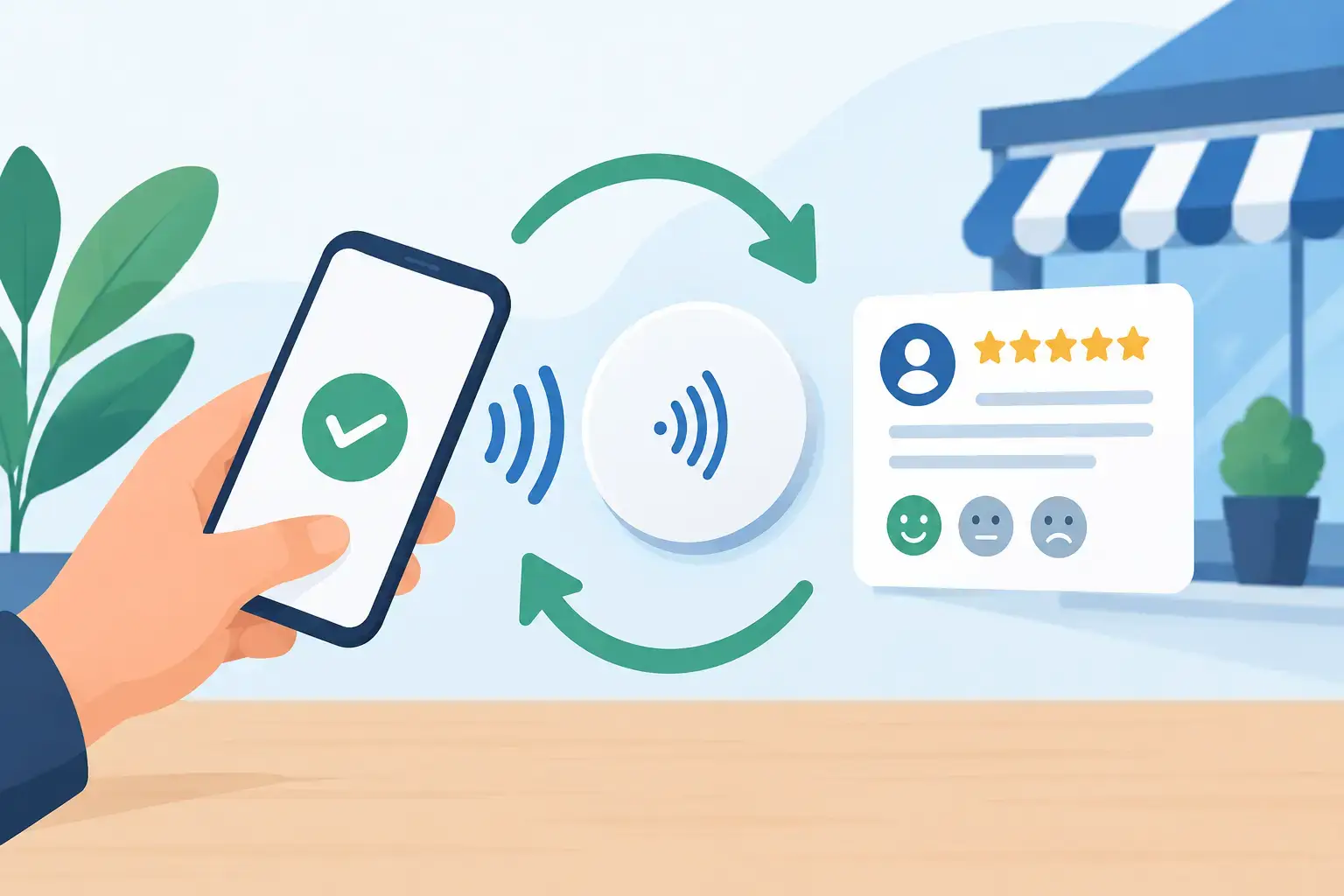
A table tent in a busy restaurant, a card at a dental front desk, or a sticker by the register has one job: make it effortless for a happy customer to act while the experience is still fresh. But what happens when your Google review link changes, you add a new location, or your campaign priorities shift? Business owners naturally ask: Are NFC tags reusable?
In many cases, yes. A reusable NFC tag can be updated to direct customers to a new destination, helping you keep an elegant physical review touchpoint in service instead of replacing it. The useful answer, however, depends on the type of tag, how it was programmed, and whether its destination is managed through a flexible link system.


Are NFC Tags Reusable? The Short Answer
Most NFC tags used in customer engagement products are reusable because their stored data can be rewritten. An NFC chip holds a small piece of information, usually a web link. When a customer taps it with a compatible smartphone, the phone opens that destination immediately.
If the chip has not been permanently locked, the programmed link can be erased and replaced with a new one. That means the same physical item – whether it is a review card, stand, plaque, coaster, or keyring – can support a new Google Business Profile, TripAdvisor listing, booking page, social channel, or custom URL.
There is an even more convenient option for businesses that want flexibility without touching the chip itself. The NFC tag can point to a managed redirect link. You update where that redirect leads, while the NFC tag remains exactly as it is. For a business with multiple locations, rotating promotions, or evolving review goals, this approach keeps changes quick and avoids disrupting a polished in-store setup.
Reusable Does Not Always Mean Unlimited
NFC technology is durable, but reuse has practical limits. A quality tag can typically be rewritten many thousands of times, far beyond what most restaurants, clinics, salons, gyms, and retailers will ever need. In a review-collection setting, you may only need to update it once or twice: perhaps when moving locations, changing your primary review platform, or refreshing a campaign.
The larger consideration is not usually the chip’s rewrite capacity. It is whether the tag was locked after setup. A locked NFC tag becomes read-only. Customers can still tap it, but its stored information cannot be changed. Locking can be useful when a business needs a fixed destination and wants to prevent unauthorized edits. It is less useful when flexibility is part of the plan.
Physical condition matters, too. An NFC tag may be reusable electronically but no longer suitable for presentation if a sticker is scratched, a card is bent, or a table display has suffered heavy wear. Premium, well-placed hardware lasts longer, especially in high-touch environments such as café counters, hotel reception desks, treatment rooms, and retail checkout areas.
Two Ways to Update an NFC Review Touchpoint
The simplest method is to rewrite the NFC tag directly. A business owner or manager uses an NFC-enabled phone and compatible programming tool to replace the existing link. This works well for a single item and a straightforward change.
Direct rewriting is not always ideal at scale. If you have review displays across several locations, each physical tag may need individual attention. It also requires confidence that the correct link is being written every time. One small typo can send a customer to the wrong page at the exact moment they are ready to leave feedback.
A managed destination is often the better business option. In this setup, the tag stores a stable redirect address rather than a final review link. When you want customers to visit a different platform or profile, you update the destination behind that address. The NFC card or stand stays in place, and every future tap follows the new path.
This is especially valuable when you want to shift attention between Google Reviews, Trustpilot, Facebook, Instagram, WhatsApp, TripAdvisor, Booking, or a custom landing page. It also supports seasonal campaigns without making your staff replace physical materials throughout the business.
QR Codes Can Provide the Same Flexibility
Many review products pair NFC with a QR code. The QR code gives customers an alternative if their phone settings do not support NFC or if they simply prefer scanning. Whether a QR code is reusable depends on its design.
A static QR code contains a final destination directly, so changing it usually means printing a new code. A dynamic QR code points to a redirect that can be updated later, similar to a managed NFC destination. For the most flexible customer experience, use NFC and QR together with a destination you can control after the product is in use.
When Reusable NFC Tags Make the Most Sense
Reusable tags are a smart fit for businesses that view reviews and customer engagement as an ongoing growth channel, not a one-time project. A new business may begin by sending every tap to its Google review page. Six months later, it may want to direct customers to a booking page, a feedback form, or a campaign that highlights a new service.
They are also practical when a company is growing. A spa opening a second location may need a new review destination for its new Google Business Profile. A hotel group may want each property to point to its own TripAdvisor or Booking page. A dental practice may change branding or consolidate multiple online listings. Reusable hardware protects the value of the physical display through those changes.
For agencies and resellers, flexibility matters even more. A branded NFC review stand can remain a premium part of a client’s front-desk experience while the underlying destination is adjusted as the client’s marketing plan develops. That makes the product more useful over its lifetime and easier to position as a long-term reputation asset.
How to Keep Your NFC Tags Useful for Longer
Start by choosing the destination strategy before placing your products around the business. If your Google Business Profile is your main review priority, send customers there directly or through a managed link that can later be changed. Do not rely on a generic search result or a link that creates unnecessary steps. The goal is for customers to leave a review with a simple tap or scan.
Next, match the format to the moment. A table tent belongs where guests have time to reflect after a meal. A countertop stand works well at checkout. A compact sticker can create a tap point on a door, menu folder, delivery bag, or service counter. A card or keyring gives staff a portable way to request feedback without making the interaction feel scripted.
Protect access to your tag management process. If anyone can overwrite the NFC data, a misplaced phone or an untrained employee can create an avoidable problem. Keep a record of each item’s intended destination, especially across locations. Test every tap and scan after an update using both iPhone and Android devices where possible.
Finally, make the display worth noticing. A generic tag may function, but a branded card, elegant stand, or customized plaque signals that feedback is genuinely welcome. When the call to action is clear and the presentation fits your business, customers are more likely to respond in the moment.
What Reusability Means for Review Growth
The real value of reusable NFC is not that you can rewrite a chip. It is that your customer-engagement hardware can keep pace with your business. Your review strategy may change as you expand services, open locations, introduce loyalty offers, or prioritize the platforms where new customers make decisions.
A fixed, printed request can become outdated quickly. A flexible tap-or-scan touchpoint stays useful, keeps your customer journey short, and supports a more consistent approach to collecting social proof. ReviewsLink products are designed around that practical advantage: premium physical presentation paired with destinations that can be assigned to the engagement channel that matters most.
Before you place your next review display, ask one simple question: if your best destination changes next quarter, can this touchpoint change with it? Choosing reusable NFC or a managed link gives your business room to grow without asking customers to take extra steps.