


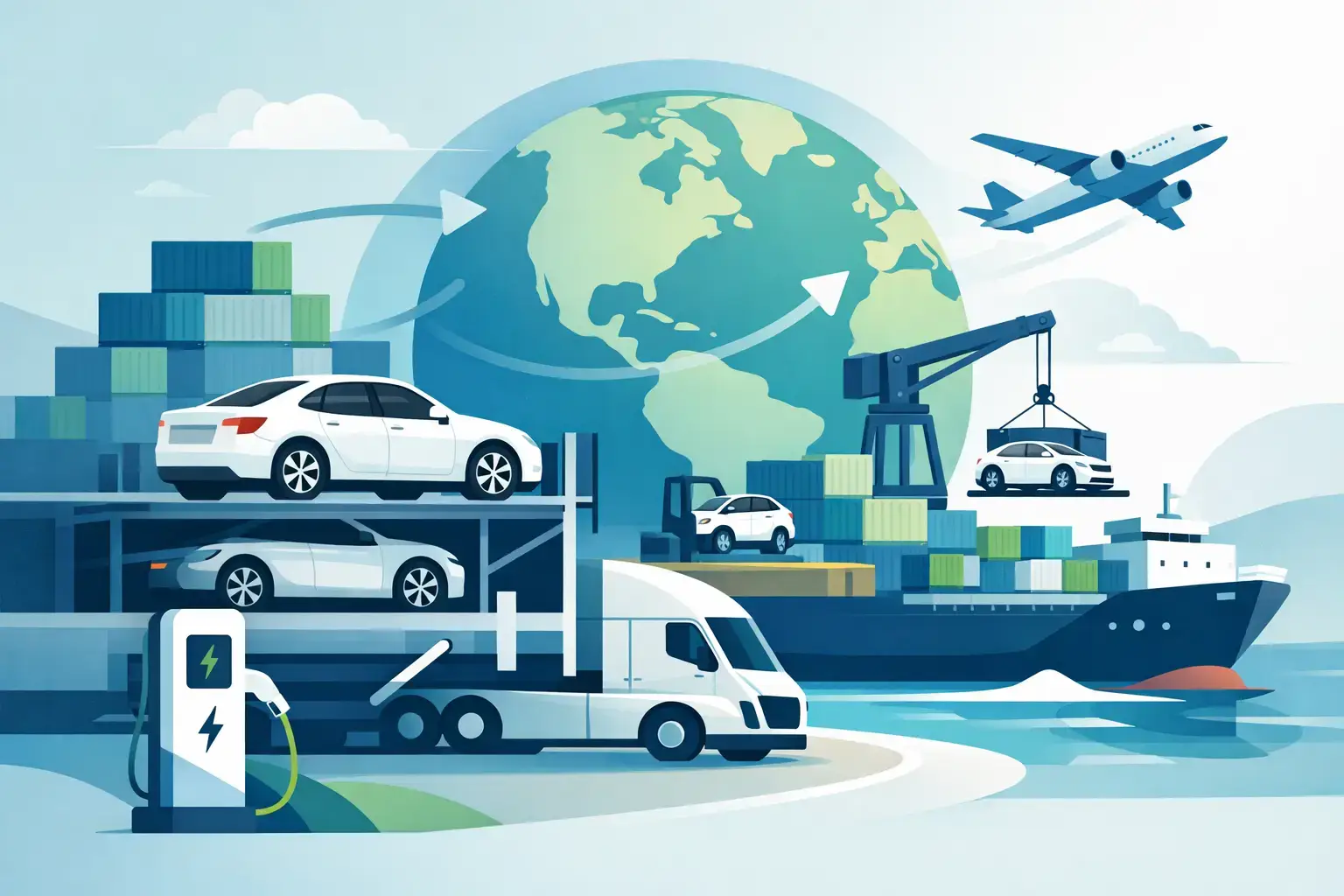
A vehicle can be ready to leave the factory, dealership, auction yard, or private garage and still be weeks away from a successful delivery. With electric vehicle logistics, the vehicle itself is only one part of the shipment. The traction battery changes how the cargo is documented, inspected, stored, loaded, and accepted by carriers at every stage.
For manufacturers, dealers, exporters, fleet operators, and private owners, the objective is straightforward: move the vehicle safely, legally, and at a predictable cost. Reaching that objective requires early planning. A battery-powered car in sound operating condition may move through established vehicle-shipping channels. A damaged, recalled, modified, or non-running EV can require a very different transport plan.


Why Electric Vehicle Logistics Requires Extra Planning
Lithium-ion batteries store significant energy. That is why electric vehicles are subject to carrier rules, port requirements, and dangerous-goods regulations that do not apply in the same way to conventional vehicles. The requirements can vary by transport mode, destination, carrier, battery condition, and whether the vehicle is new or used.
The key question is not simply, “Is this an EV?” It is whether the battery is intact, properly identified, and safe for the planned journey. A vehicle with no signs of battery damage may be accepted as a vehicle shipment under a carrier’s normal EV policy. If there is evidence of collision damage, swelling, overheating, leakage, an active warning light, or an unresolved recall, the shipment may need specialist assessment, extra packaging, isolation, or a different transport method.
This distinction affects timing and cost. Sending incomplete cargo details to a carrier can lead to a rejected booking, missed vessel cutoff, storage charges, or a vehicle held at the port. Accurate information from the start protects the shipment schedule.
Battery Condition Comes Before Booking
Before selecting a vessel, airline, truck, or container, inspect the vehicle and record its condition. A professional pre-shipment review should confirm the vehicle identification number, make and model, battery type where available, state of charge, operating condition, and any visible damage.
Photographs are valuable for both commercial and individual shipments. Capture all sides of the vehicle, the interior, dashboard warnings, charging-port area, underbody where practical, and any existing damage. This supports insurance discussions, customs declarations, and delivery inspections.
State of charge is especially important. Many carriers set their own permitted charge limit, often requiring EVs to be shipped at a reduced level rather than fully charged. The exact requirement must be confirmed with the selected carrier. Do not assume that a rule accepted by one ocean line, terminal, or destination will apply to another.
A vehicle that cannot be driven also needs special attention. Non-running EVs may need winching equipment, a flat rack, enclosed loading, or a dedicated recovery plan. If the reason it cannot move is battery-related, disclose that fact clearly. Trying to treat a damaged EV as an ordinary non-runner creates safety and compliance risks that no exporter should accept.
Documents That Keep the Shipment Moving
Documentation connects the vehicle, the battery, and the commercial transaction. For international movements, the basic file often includes the title or ownership documents, commercial invoice or purchase invoice, packing or vehicle details, export declaration where required, and consignee information.
Electric vehicle logistics may also require battery-related data. Depending on the route and carrier, this can include the manufacturer’s battery specification, confirmation of battery condition, dangerous-goods declaration, safety data, or evidence that the battery design has passed applicable transport testing. New vehicles from manufacturers usually have more standardized technical records. Used vehicles, auction purchases, salvage units, and privately owned cars often need more careful document collection.
Customs requirements are a separate issue from carrier acceptance. A vehicle can be accepted for ocean transport but still face delay because its value, title history, import eligibility, or local registration requirements were not reviewed. Import rules may also differ for new and used EVs, particularly where age limits, emissions standards, tax treatment, or charging standards apply.
The practical answer is to check both sides before booking: can the carrier transport this vehicle, and can the destination legally receive it?
Choosing the Right Transport Method
Ocean freight is generally the most cost-effective option for moving EVs internationally, particularly for dealer volumes, manufacturer allocations, and long-distance exports. Roll-on/roll-off service can be efficient for operational vehicles because the car is driven or moved onto the vessel. Container shipping offers added physical protection and may be more suitable for high-value vehicles, individual exports, or destinations without regular vehicle-carrier service.
The better option depends on the shipment, not just the freight rate. A single EV in a shared container may reduce cost, but it can involve more handling and a longer consolidation schedule. A dedicated container provides greater control but can cost more per vehicle. For multiple units, container loading plans must protect each vehicle, distribute weight correctly, and allow safe securing without damage to battery areas or body panels.
Air freight is possible for certain circumstances, but it is usually reserved for urgent, high-value, prototype, or specially approved shipments. Airline acceptance rules for lithium batteries are strict, and complete technical information is essential. For most complete vehicles, ocean and land transport remain the practical choices.
Road transport is a critical part of the plan, whether it moves the vehicle from a factory to port, from port to dealer, or across a regional border. Enclosed carriers, low-bed trailers, vehicle transporters, and recovery equipment may all be needed depending on clearance, condition, and quantity. The handoffs between truck, terminal, warehouse, and vessel are where an experienced coordinator adds real value.
Storage, Charging, and Port Handling
EV storage should not be treated as simple parking. Secure facilities need controlled access, routine inspection procedures, trained handling teams, and clear separation procedures for any vehicle with suspected battery issues. Long dwell times can create avoidable problems, particularly if the charge level, key availability, and condition records are not managed properly.
Charging is not always part of a freight forwarder’s standard storage service. Some vehicles need enough charge for yard movements, inspections, or final delivery, while others must remain within a carrier-defined state-of-charge range. Charging arrangements should be agreed upon in writing, including who is authorized to move the vehicle and who is responsible for monitoring it.
Port and terminal operators can impose their own restrictions. They may request advance declarations for EVs, limit storage duration, require defined parking areas, or refuse vehicles with certain warning indicators. These rules are operational controls, not unnecessary obstacles. They are designed to protect personnel, cargo, vessels, and facilities.
Cost Control Without Cutting Corners
Electric vehicle shipping costs are influenced by far more than distance. Vehicle dimensions, weight, battery status, origin and destination, transport mode, insurance, container type, carrier surcharges, customs services, storage, and inland delivery all shape the final price.
The lowest initial quote is not always the lowest total cost. A quote that excludes terminal handling, documentation, battery-related declarations, destination charges, or extended storage can become expensive quickly. Commercial shippers should request clear rate assumptions and confirm what happens if the carrier rejects a vehicle after it reaches the port.
For higher volumes, planning shipments around predictable production, auction, or dealer cycles can improve equipment availability and reduce last-minute freight premiums. For individual owners, early document preparation and accurate disclosure are usually the strongest ways to avoid unnecessary expense.
A Practical Plan for EV Exporters and Importers
A dependable shipment starts with complete vehicle information and ends with confirmed delivery condition. In between, every party needs the same understanding of the cargo: its identity, battery condition, handling needs, documents, and destination requirements.
Euro Star Shipping Services brings more than 25 years of vehicle-shipping experience to these decisions, coordinating international movements across ocean, air, and land routes with customs, storage, loading, and specialist handling under one operational plan. Whether the requirement is one electric car or a commercial vehicle volume, early discussion with a shipping specialist gives the shipment its best chance of moving safely, on schedule, and without costly surprises.