


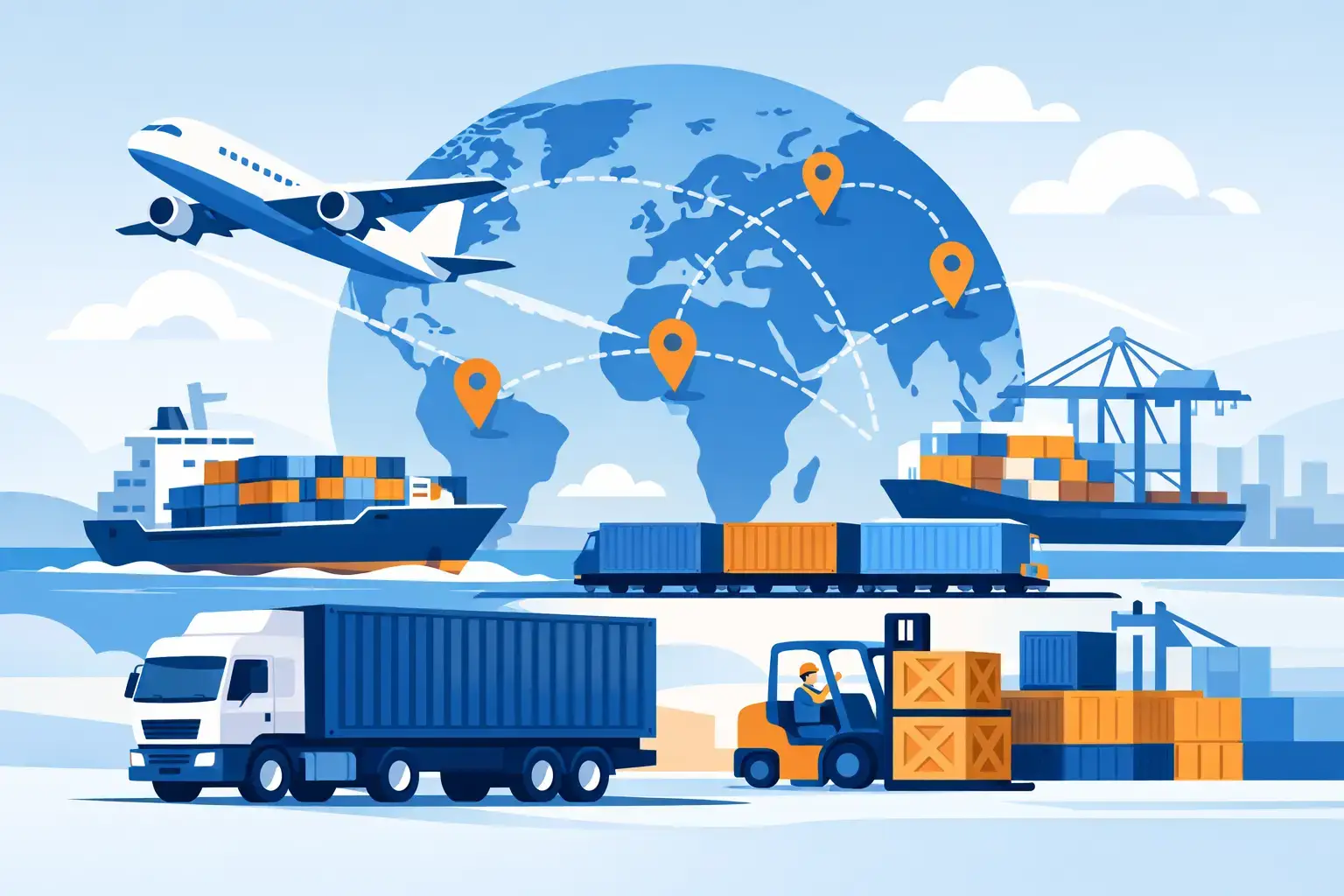
A vehicle can be ready at a dealer yard, a machine can be packed for export, and a buyer can be waiting overseas – yet the shipment can still stop over one missing document, an unsuitable container, or a customs requirement discovered too late. Freight forwarding brings the transport, paperwork, handling, and delivery decisions together before those problems become expensive delays.
For businesses moving commercial cargo and individuals shipping a vehicle internationally, the value is not simply booking space on a vessel or aircraft. It is having one experienced logistics partner coordinate the full movement, from collection and cargo preparation through customs clearance and final delivery.

What Freight Forwarding Actually Covers
Freight forwarding is the professional coordination of cargo moving from one country to another. A freight forwarder does not merely arrange transport. It assesses the shipment, selects the practical transport mode, prepares or checks shipping documents, coordinates carriers and port operations, manages customs processes, and arranges services such as storage, packing, loading, and inland delivery when needed.
The scope depends on the cargo and destination. A standard palletized shipment may require only pickup, ocean freight, export clearance, and delivery. A fleet of vehicles, oversized construction equipment, or dangerous goods may require far more planning: special loading equipment, approved packaging, secure open-yard storage, permits, route surveys, container stuffing, and careful handling at every transfer point.
That difference matters because international cargo rarely moves in one uninterrupted step. It passes through yards, warehouses, ports, airports, customs authorities, carriers, and destination agents. The freight forwarder is responsible for making those handoffs work as one coordinated operation.
How Freight Forwarding Moves a Shipment
Every shipment starts with details that affect cost, timing, and feasibility: cargo type, dimensions, weight, value, origin, destination, readiness date, and delivery deadline. For vehicles, the forwarder also needs the make, model, condition, vehicle identification number, and whether the unit is new, used, non-running, modified, or oversized.
Choosing the Right Transport Mode
Ocean freight is often the most cost-effective option for vehicles, heavy machinery, bulk cargo, and shipments where transit time is flexible. Containers provide protection and can be an efficient choice for cars, parts, and commercial goods. Roll-on/roll-off services can be suitable for driveable vehicles moving in volume, although sailing schedules, port coverage, and handling requirements should be reviewed carefully.
Air freight is appropriate when speed has a clear commercial value. It is commonly used for urgent parts, high-value goods, hospitality items needed for a project opening, or cargo where a delayed production line would cost more than the additional transport price. It is not automatically the best answer for every urgent shipment, especially when dimensions are large or the cargo requires special approvals.
Land transport connects factories, warehouses, ports, airports, and final destinations. It is also essential for cross-border movements within the Gulf region and for oversized cargo that needs specialist trailers or route planning. Many shipments use more than one mode, so the plan must account for each transfer rather than treating ocean, air, and road as separate services.
Preparing Cargo and Documents
Cargo preparation protects both the shipment and the schedule. Depending on the commodity, this may involve industrial packing, crating, lashing, blocking and bracing, shrink wrapping, moisture protection, or safe vehicle loading inside a container. Improperly secured cargo can be damaged in transit, rejected by a carrier, or create a safety risk during loading and unloading.
Documentation is equally important. Commercial invoices, packing lists, bills of lading or air waybills, certificates of origin, export declarations, vehicle titles, and destination-specific permits may all be required. The exact documents vary by cargo, trade lane, and importer status. A dependable forwarder identifies those requirements early instead of leaving the shipper to resolve them after the cargo reaches the port.
Managing Customs and Delivery
Customs clearance is not a formality. Authorities need accurate commodity descriptions, values, classifications, origin details, and supporting documents. Errors can lead to inspections, penalties, storage charges, and missed sailings. For vehicles, rules on age, emissions, ownership documents, and registration eligibility can be just as significant as the freight cost.
Once the cargo arrives, the operation continues through discharge, customs release, possible storage, and local delivery. A true end-to-end freight plan gives the customer visibility over these steps and a clear point of contact when an exception occurs.
Freight Forwarding for Vehicles and Heavy Cargo
Automotive shipping is a specialist area because no two vehicle movements are exactly alike. A single privately owned car, a dealer’s regular export volume, a damaged vehicle, and a fleet of new units need different loading methods, documents, insurance considerations, and destination checks.
Container loading can offer protection and control, particularly for high-value, classic, or individual vehicles. Multi-vehicle loading can improve cost efficiency for commercial exporters, but it requires experienced teams that know how to position, secure, and protect each unit. Roll-on/roll-off can be efficient for suitable driveable vehicles, while non-running or oversized units may need flat-rack equipment, breakbulk handling, or specialist lifting arrangements.
Heavy equipment presents another set of variables. Excavators, generators, industrial units, and project cargo may exceed standard container dimensions or weights. The forwarder must confirm lifting points, center of gravity, securing methods, port capabilities, road permits, and available equipment before collection. Trying to solve those questions after the cargo arrives at the terminal usually increases cost and reduces options.
Euro Star Shipping Services has shipped more than one million vehicles and supports these complex movements from Dubai with vehicle handling, industrial packing, customs support, storage, and international coordination across 150 countries. That combination is valuable when cargo needs more than a basic freight booking.
What Determines the Cost of Freight Forwarding?
Freight charges are shaped by far more than distance. The transport mode, cargo dimensions, weight, packaging, carrier capacity, fuel-related charges, port or airport fees, customs procedures, insurance, and final delivery location all affect the quote. For air freight, chargeable weight can be based on volume rather than actual weight. For ocean freight, a large but light shipment may take more container space than expected.
The lowest initial quote is not always the lowest total cost. A rate may exclude origin handling, destination charges, customs clearance, storage, inspections, or delivery. It may also rely on a transit schedule that does not meet the shipment deadline. A useful quote identifies the service scope, assumptions, cargo details, and charges that may change if the shipment differs from the information provided.
There are also practical trade-offs. Consolidated cargo can reduce cost but may add handling and wait time. Direct services can be faster but may be less frequent or more expensive. Container shipping can provide security, while roll-on/roll-off may be a better fit for high-volume driveable vehicles. The right choice depends on the cargo, budget, risk tolerance, and required arrival date.
How to Choose a Freight Forwarder
Look for operational capability, not just a familiar name or an attractive rate. The forwarder should be able to explain how your cargo will move, who will handle it at origin and destination, what documents are required, and what happens if the shipment is delayed, inspected, or damaged.
For specialized cargo, ask direct questions about similar shipments. Can the provider manage dangerous goods? Do they have secure warehousing or open-yard capacity? Can they arrange heavy lifting, cross stuffing, or oversized transport? Do they have people who understand vehicle export documentation and multi-unit loading? Clear answers are a better indicator of readiness than broad promises.
Infrastructure matters as well. Access to warehousing, vehicle yards, packing teams, equipment, and established carrier relationships can reduce handoffs and give the forwarder greater control over time-sensitive cargo. Around-the-clock surveillance and experienced handling teams are especially relevant when high-value vehicles or equipment must wait before departure.
Start With the Details That Prevent Delays
The fastest way to receive a useful freight plan is to provide accurate cargo information from the beginning. Share the pickup location, destination, dimensions, weight, cargo condition, target shipping date, and any special handling requirement. For a vehicle, include clear ownership documents and confirm whether it runs. For commercial cargo, provide the invoice, packing details, and commodity description as early as possible.
A good freight forwarder will turn those details into a practical shipping plan, identify risks before collection, and keep the movement under control from origin to final delivery. When the cargo is valuable, oversized, time-sensitive, or crossing several borders, early specialist advice is often the simplest way to keep it moving.