


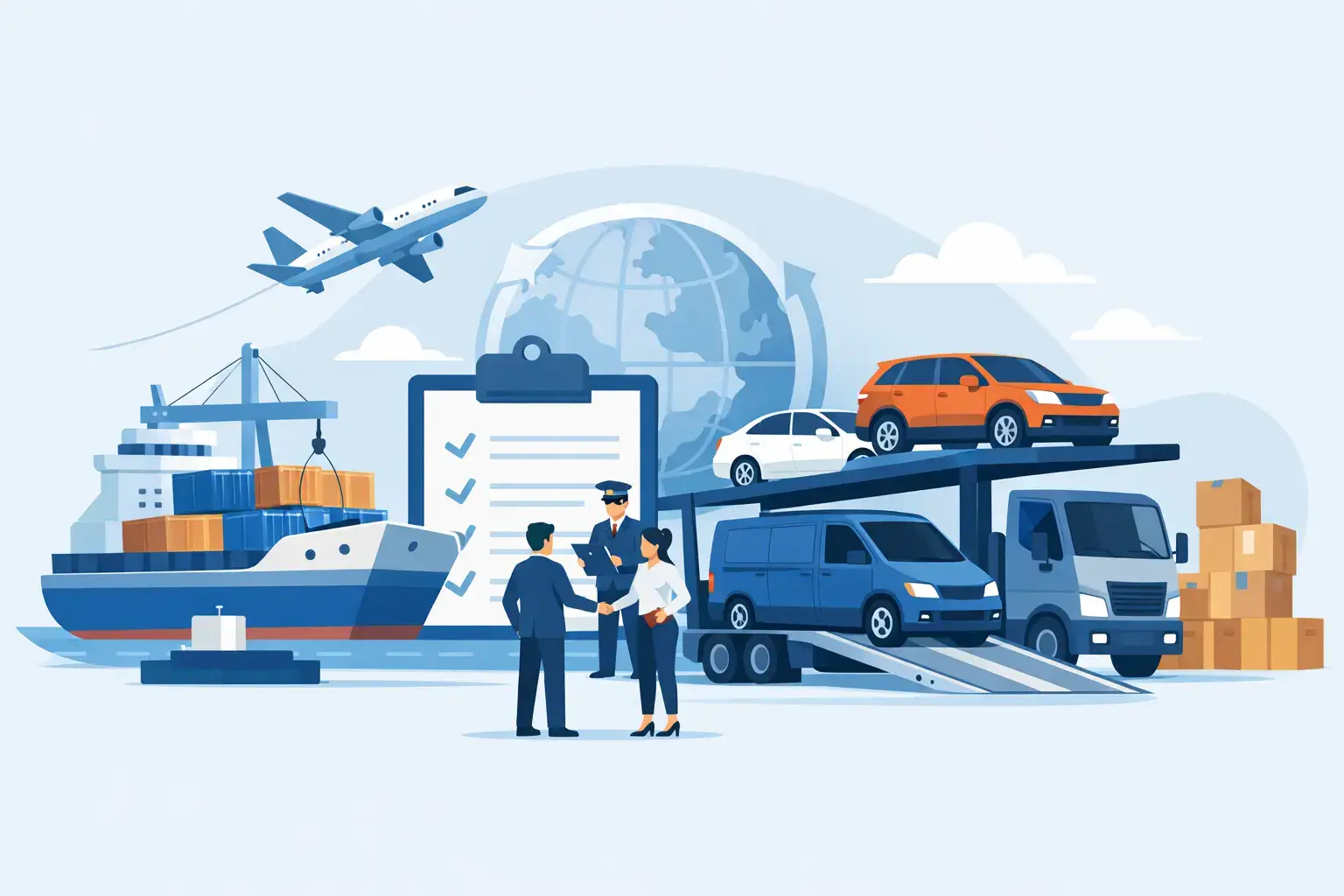
A vehicle order can look commercially attractive until one missing compliance document, incorrect model specification, or delayed port release turns the margin into storage costs. For importers, distributors, and fleet buyers, knowing how to import new vehicles means controlling the transaction before the units leave the supplier’s yard – not trying to solve problems after they arrive.
New-vehicle imports require more than a competitive purchase price. The process connects product selection, destination-market requirements, payment terms, export documents, shipping capacity, customs procedures, and final-mile delivery. The strongest import programs treat these as one operating plan.


How to Import New Vehicles With Commercial Control
Start by defining the commercial purpose of the order. A dealer may need fast-moving retail specifications in multiple colors and trims. A fleet operator may prioritize a uniform configuration, warranty support, accessories, and predictable delivery dates. A construction buyer may require trucks or heavy equipment prepared for demanding site conditions.
This decision shapes every later step, including which vehicles to source, whether conversions are required, how many units to consolidate per shipment, and what documentation must accompany the consignment. It also prevents a common mistake: buying available stock that does not match the requirements of the destination market or end customer.
Before requesting quotations, prepare a clear procurement brief. It should identify the vehicle make, model, model year, trim, engine or powertrain, drive configuration, required quantities, acceptable colors, target delivery market, and any needed accessories or modifications. For larger orders, include preferred production dates, vehicle identification number requirements, and a phased delivery schedule if the inventory will be released over time.
A precise brief enables the supplier to confirm genuine availability rather than offer a general indication of stock. It also gives your logistics and customs teams the information needed to evaluate the import route early.
Confirm destination-market eligibility before purchase
A new vehicle sold for one market is not automatically eligible for registration in another. Requirements can differ by country and, in some cases, by state or regional authority. They may cover emissions, safety equipment, lighting, glazing, labeling, steering position, speedometer units, onboard systems, fuel specifications, and recall status.
For U.S.-bound vehicles, importers should confirm the applicable requirements of the Environmental Protection Agency and Department of Transportation before committing to the order. A vehicle built to a non-U.S. specification may require additional review, modification, or may not be practical to import for road use at all. Commercial buyers should obtain guidance from qualified customs and compliance professionals for their specific vehicle type and entry scenario.
The same principle applies in other markets. Ask early whether the destination requires a certificate of conformity, homologation approval, pre-shipment inspection, local registration documentation, or specific technical certificates. Do not rely on model names alone. Two vehicles with the same badge can have materially different specifications depending on their intended market.
Select a Supplier That Can Support the Full Transaction
A supplier should be evaluated on more than unit pricing. Vehicle availability, documentation discipline, export experience, preparation capacity, and ability to coordinate shipment are equally relevant to the landed result.
For recurring import programs, assess whether the supplier can maintain stock continuity across passenger vehicles, SUVs, pickup trucks, commercial trucks, and equipment. A broad inventory can reduce the risk of re-sourcing when a particular trim or configuration becomes unavailable. It can also allow a buyer to consolidate mixed orders under one commercial relationship.
Ask how vehicles are identified and reserved, how condition is verified, and when final vehicle identification numbers are available. For new vehicles, buyers should confirm whether units are physically in stock, in transit, allocated from production, or subject to a future release date. Those categories carry very different lead-time and cancellation risks.
Ghassan Aboud Automotive supports international commercial buyers with more than 10,000 vehicles in inventory, alongside parts, accessories, conversions, refurbishment, shipping coordination, and customs-clearance assistance. For buyers managing bulk orders, combining these functions can reduce handoffs between separate sourcing, preparation, and export providers.
Set the purchase terms before funds move
A commercial invoice is not enough to manage a multi-unit import order. The sales agreement or purchase order should state the exact vehicle specifications, quantity, unit price, currency, Incoterms, payment schedule, delivery point, document package, and inspection or claims process.
Incoterms deserve particular attention because they define where cost and risk transfer between buyer and seller. Under EXW terms, the buyer manages collection from the seller’s location. FCA may be appropriate when the supplier delivers the vehicles to a named carrier or export point. FOB is commonly used for ocean shipments but applies only when goods are loaded on board the vessel. CIF includes freight and insurance to a named destination port, while DAP or DDP may shift more delivery responsibility to the seller, depending on the agreement.
There is no universally best term. The right choice depends on your internal logistics capability, insurance arrangements, customs structure, and need for cost visibility. What matters is that the term, named location, and responsibilities are written precisely.
Prepare Vehicles Before Export, Not After Arrival
Destination-market preparation is often more efficient when completed near the source. Depending on the market and vehicle use case, this may include accessory installation, protective treatments, body conversions, fleet markings, cargo equipment, spare-parts kits, or technical changes required for local operation.
Buyers should distinguish between work needed for compliance and work needed for commercial readiness. Compliance-related modifications must be reviewed against destination rules and supported by appropriate records. Commercial preparation, such as bed liners for pickup trucks, utility bodies, navigation configuration, or branded fleet accessories, should be specified with drawings, part numbers, and quality acceptance standards.
Use pre-shipment inspection as a control point. For each unit or batch, verify the vehicle identification number, model year, specification, odometer reading, exterior condition, included equipment, keys, and documentation. Photographing units before loading creates a clear record if transit damage is later identified.
Build the Export and Shipping Plan
Shipping should be planned around the vehicles, not arranged as an afterthought. The chosen method affects cost, transit time, damage exposure, port options, and handling requirements.
RoRo shipping is often efficient for operational vehicles moving in volume. Container shipping can provide greater protection and may suit higher-value units, selected vehicle types, or shipments combined with parts and accessories. Breakbulk or specialized handling may be required for heavy equipment and oversized commercial units.
When comparing freight quotations, review more than the base ocean rate. Confirm origin handling, port charges, loading fees, documentation fees, insurance, destination terminal charges, inland transport, demurrage exposure, and the validity period of the quotation. A lower freight rate can become less competitive if the shipment has limited free time at destination or high local handling costs.
The export document package typically includes the commercial invoice, packing list, bill of lading, certificate of origin where applicable, export declaration or clearance documents, insurance certificate if arranged, and vehicle-specific records. The exact package depends on the trade route, product category, and destination. Ensure the consignee name, vehicle identification numbers, quantities, and values match across all documents.
Manage Customs, Duties, and Port Release
Customs planning begins before the vessel sails. Import duties, taxes, fees, valuation rules, and documentation requirements can materially affect the landed cost of a vehicle program. Confirm the tariff classification with a customs broker or qualified trade adviser, especially for trucks, specialty vehicles, and equipment where classification can vary by configuration and intended use.
Your customs broker should receive the final documents early enough to pre-review inconsistencies. Delays frequently arise from mismatched invoices, incomplete vehicle records, unclear values, or missing regulatory declarations. Establish one owner for document approval on both the supplier and importer side so questions are answered quickly.
After port release, arrange inland movement to the dealer compound, distribution center, fleet location, or modification facility. Inspect vehicles again at handover, record any transport damage immediately, and reconcile received units against the shipping manifest before releasing them into inventory.
Measure the Landed Cost and Protect Future Margins
The purchase price is only one component of the true import cost. A useful landed-cost model includes vehicle cost, inspection, preparation, inland transport at origin, export processing, freight, marine insurance, port handling, duties, taxes, brokerage, destination transport, financing costs, and a contingency for currency or delay risk.
For recurring purchases, track these costs by route, vehicle category, carrier, and supplier. This creates a better basis for replenishment decisions than comparing factory or wholesale prices alone. It can also reveal whether consolidating orders, changing ports, or preparing vehicles at origin will improve the economics.
The practical objective is not simply to get vehicles across a border. It is to receive compliant, correctly specified units with documents in order, costs understood, and delivery timing that supports your sales or fleet plan. Build that discipline into the first order, and each subsequent shipment becomes easier to scale.