


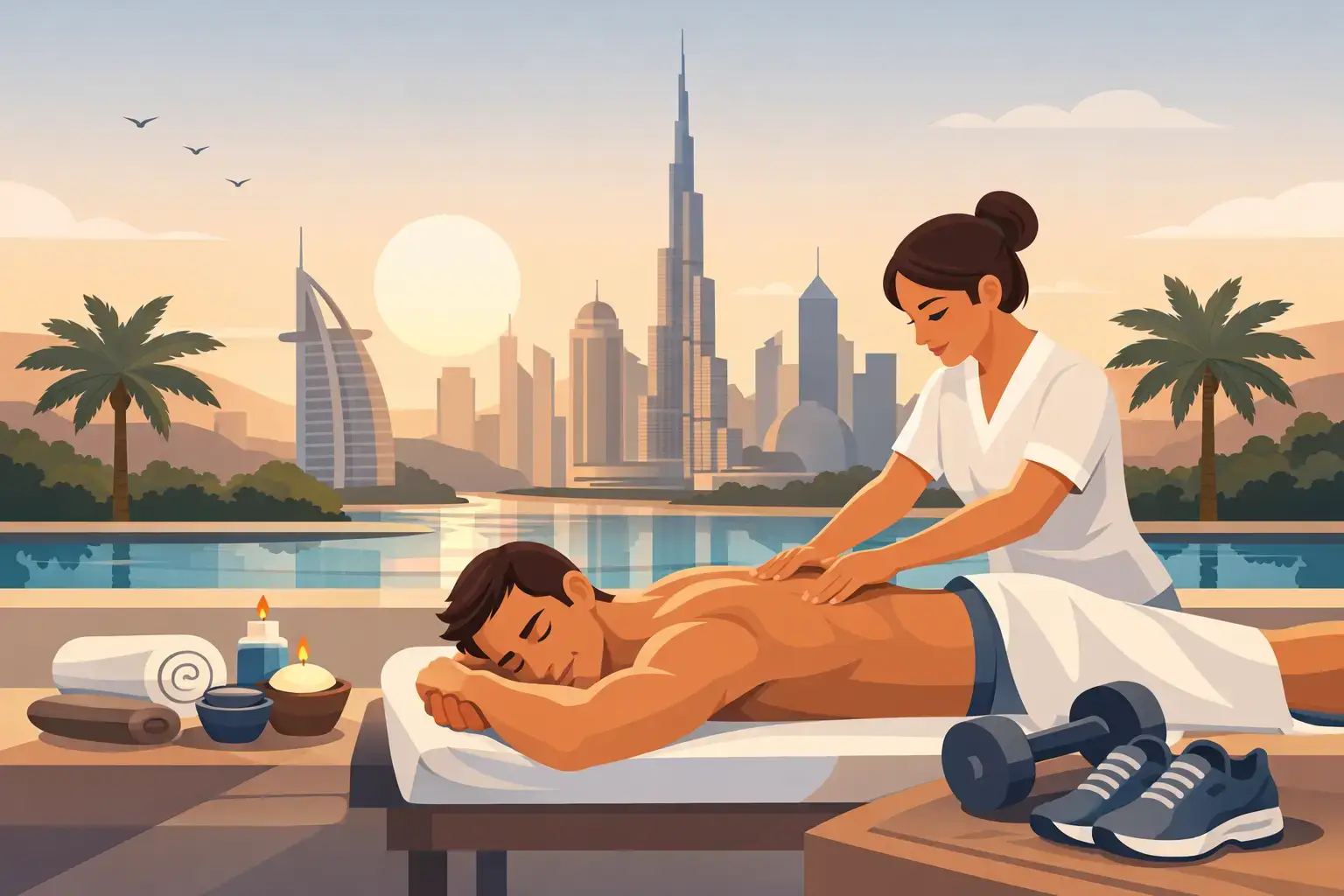
A hard session at the gym can leave you feeling accomplished, then suddenly very aware of every staircase, shoulder movement, and tight calf. Booking a massage after workout Dubai gives your body a more comfortable way to transition from effort to recovery – especially when training is only one part of a busy workday, travel schedule, or Dubai weekend.
At Orange Spa in Al Barsha, near Mall of the Emirates, post-workout care is never a one-size-fits-all experience. Some guests want slow, calming touch after an intense class. Others need focused attention around the back, legs, neck, or shoulders. The right treatment depends on how you trained, how your body feels, and whether you are looking for muscle relief, complete relaxation, or both.


Why a Post-Workout Massage Feels So Good
Exercise places healthy stress on the body. Muscles work hard, circulation increases, and areas that already hold tension – such as the shoulders, lower back, hips, and calves – can feel especially tight afterward. A professional massage creates a quiet pause after that effort, helping you settle physically and mentally.
For many people, the immediate benefit is simple comfort. Gentle, intentional pressure can soothe the feeling of stiffness and fatigue that follows strength training, running, cycling, swimming, or a demanding fitness class. The calm spa setting matters too. When your phone is away and your body is supported, the nervous system has space to slow down.
Massage is not a replacement for sleep, hydration, good nutrition, warm-ups, or appropriate training habits. It is a rewarding complement to them. Think of it as dedicated recovery time: a chance to listen to your body rather than push through every ache.
Choosing the Right Massage After Workout in Dubai
The best treatment is guided by your current condition, not just by the word “recovery.” A long-distance runner with heavy legs may want something different from someone whose shoulders are tight after a strength session or a day at a desk.
Swedish massage for lighter recovery days
A Swedish massage is a beautiful choice when you feel generally tired, mildly tight, or simply ready to relax after exercise. Flowing strokes and moderate pressure encourage a sense of ease without making the session feel overly intense. It works particularly well after a moderate workout, an active day exploring Dubai, or a hotel-gym session while traveling.
Choose this style when your goal is to leave feeling lighter, calmer, and ready for a restful evening. It is also approachable for first-time spa guests who are unsure how much pressure they prefer.
Deep-tissue massage for persistent tension
Deep-tissue massage may be more suitable when certain areas feel stubbornly tight, such as the upper back, glutes, hamstrings, calves, or shoulders. The therapist uses slower, more focused work to address areas that need extra attention.
More pressure is not automatically better. After a very demanding workout, intense deep work can feel like too much for a body that is already sensitive. Tell your therapist if you trained heavily that day, have a race or session planned tomorrow, or prefer a gentler approach. Professional care should feel purposeful and responsive, never like a test of endurance.
Hot stone and aromatherapy for full-body restoration
When workout fatigue is mixed with work stress, travel tiredness, or poor sleep, a hot-stone or aromatherapy massage can create a more indulgent recovery experience. Warm stones add comforting heat that helps the body relax, while aromatic oils bring a sensory element to the session.
These treatments are ideal when you do not need highly targeted pressure but want to feel restored from head to toe. They are especially inviting after an active Dubai day when dry heat, commuting, and exercise have left you feeling depleted.
Focused massage for neck, shoulders, and back
Not every workout-related discomfort begins in the gym. Desk posture, driving, carrying bags, and long flights can leave the upper body tense before you even start training. A focused head, shoulder, and neck massage is a practical option when that familiar tightness is distracting you.
For guests who feel tension in several places, a full-body treatment with added focus on the problem area is often the more satisfying choice. Let your therapist know where you feel restriction and where you prefer to avoid pressure.
When Should You Schedule Your Massage?
There is no single perfect post-workout window. A gentle massage can feel lovely shortly after a moderate session, once you have cooled down, hydrated, and had time to shower. If you have completed an unusually intense workout, feel very sore, or have trained a specific muscle group heavily, waiting until the next day may be more comfortable.
The practical question is not only “when did I exercise?” but “how does my body feel now?” If your legs are tender to touch or your muscles feel exhausted rather than merely tight, choose a lighter treatment or give yourself more recovery time. If you feel loose enough to enjoy touch but still carry tension, the same-day appointment can be a welcome finish to your routine.
Plan around what comes next, too. If you have another high-intensity session, sports event, or long run the following morning, ask for relaxing, moderate work rather than an aggressively deep session. A massage should support your schedule, not leave you feeling unexpectedly tender.
Make the Most of Your Session
Arrive with a little time to spare so the treatment does not feel rushed. Drink water after your workout and before your appointment, and have a light meal if you need one. Being overly hungry, dehydrated, or rushed from a meeting can make it harder to fully relax.
The most valuable part of the consultation is honesty. Tell the therapist what workout you did, where you feel tight, whether you have any sensitive areas, and what pressure you enjoy. Mention recent injuries, medical conditions, skin sensitivity, or pregnancy before the treatment begins. This allows the experience to be adjusted with your comfort and well-being in mind.
Afterward, avoid treating the massage as a reason to immediately return to a punishing workout. Give yourself a gentler evening if possible. A warm shower, comfortable clothing, water, and a good night’s sleep allow the sense of restoration to last longer.
When Massage Should Wait
A massage is designed for wellness and comfort, not for diagnosing or treating injuries. Skip the appointment and seek appropriate medical advice if you have sharp or sudden pain, significant swelling, bruising, numbness, fever, an open wound, or a suspected strain, tear, or fracture. The same caution applies if a workout has made an existing condition noticeably worse.
It is always better to be careful with a new pain than to try to massage it away. Once you have been advised that massage is appropriate, your therapist can tailor the experience around your needs.
Turn Recovery Into a Ritual
A post-workout treatment does not have to be limited to the massage table. If you have more time, pairing bodywork with a steam bath, jacuzzi access, or a Moroccan bath can make recovery feel like a complete reset. The right combination depends on whether you want deep relaxation, a cleansing ritual, or simply a quiet hour away from Dubai’s pace.
For couples who train together or visitors sharing an active holiday, a couples massage offers a more memorable way to recover side by side. It turns the end of a workout into an occasion rather than another item on the to-do list.
Your body works hard for every lift, lap, class, and kilometer. Give it a recovery experience that feels just as considered: choose the pressure that suits you, share what you need with your therapist, and leave enough room in your day to enjoy the calm that follows.