


A patient may leave your clinic relieved, grateful, and ready to recommend your team – then forget to leave a review by the time they reach the parking lot. That small gap is where clinic review tools make a measurable difference. They give patients a simple, immediate way to share feedback while the experience is still fresh, without adding another task to a busy front desk.
For clinics, dental offices, wellness practices, and specialty providers, online reviews are more than a nice-to-have. They influence local search visibility, first impressions, appointment decisions, and the confidence a prospective patient feels before making contact. The best tools make asking feel natural, protect the professionalism of the patient experience, and give staff a process they can use consistently.

What clinic review tools should solve
A review tool is not valuable just because it sends a patient to a review page. The real question is whether it removes friction at the exact moment a patient is most likely to respond.
Traditional methods often rely on staff remembering to ask, a patient typing a long web address later, or an automated email that arrives among dozens of other messages. Each extra step reduces participation. A tap-or-scan review tool places the action directly at the point of service: a reception counter, checkout desk, consultation room exit, payment terminal, or follow-up packet.
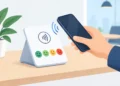
With an NFC-enabled stand, card, sticker, or plaque, a patient taps their phone and is taken directly to your chosen destination. A QR code provides the same option for patients who prefer to scan. There is no app to download, no search to perform, and no need for staff to explain a complicated process.
That simplicity matters because clinical teams already have enough to manage. The right system should support the patient journey, not create another administrative workflow.
The business value behind more patient reviews
Patients researching care are often choosing between providers with similar services, locations, and insurance options. Reviews help them understand the part of the experience that a directory listing cannot show: how clearly the team communicates, whether appointments run smoothly, how welcoming the environment feels, and whether patients believe they were treated with respect.
A steady flow of authentic feedback can strengthen your Google Business Profile, improve the credibility of your clinic in local results, and give prospective patients more reasons to choose your practice. It also gives your team useful signals. Repeated praise can reveal what your clinic does exceptionally well, while recurring concerns may point to communication or operational improvements worth addressing.
The goal is not to chase a perfect rating at any cost. It is to build a current, credible picture of the patient experience. A clinic with recent, thoughtful reviews generally feels more active and dependable than one with a handful of older comments, even if both have strong average ratings.
Choose tools that fit the patient journey
The most effective review collection setup depends on how and where patients interact with your practice. A dental office may benefit from a premium countertop stand at checkout. A physical therapy clinic may use a small branded sign near the reception desk and a card included with visit paperwork. A multi-location healthcare group may need customized displays with different links assigned to each office.
Countertop stands for checkout and reception
A standard or premium NFC/QR stand is ideal where a team member completes payment, schedules the next appointment, or says goodbye. It is visible without being intrusive and gives staff an easy, consistent prompt: “If you have a moment, we would appreciate a review. You can scan or tap right here.”
For a premium clinic environment, the design matters. An elegant, customized stand with your logo and brand colors feels like part of the reception area rather than an afterthought. It signals that your practice values feedback and patient service.
Stickers, plaques, and smart tags for high-traffic moments
Stickers and smart tags work well on check-in desks, doors, clipboards, mirrors, product displays, and payment counters. They are especially useful when patients move through the space independently or when your staff does not always have a natural moment to make a verbal request.
A plaque can provide a more established look in a reception area, while a compact sticker is useful where space is limited. The best choice is the one patients will notice at the moment they are most satisfied and least rushed.
Cards and hang tags for follow-up touchpoints
Not every clinic should ask for a review during checkout. In some settings, a patient may need privacy, time, or a chance to see results from treatment before commenting. NFC review cards or hang tags can extend the invitation beyond the desk without relying entirely on email.
For example, a med spa could provide a tasteful card with aftercare information, while a veterinary clinic could attach a review tag to a take-home item. The patient can scan when the timing feels right. This approach is less immediate, but it can be more appropriate for longer care journeys.
Platform choice: send patients where your reputation grows
Google Reviews is usually the priority for local clinics because it influences visibility when people search for providers nearby. But it is not the only relevant destination. Depending on your practice, patients may also use Facebook, Trustpilot, TripAdvisor, Booking, Instagram, WhatsApp, or a custom feedback page.
A flexible tool should let you assign the destination after purchase rather than locking you into a single platform forever. That gives your clinic room to adjust its strategy as marketing priorities change, a new location opens, or a campaign calls for more social engagement.
For most practices, keep the request focused. Sending a patient to one clear destination is usually more effective than presenting too many choices. If Google is your main review channel, make it the primary action. If your clinic also needs appointment inquiries through WhatsApp or community engagement through Instagram, those can be used on separate displays in the right context.
Build a process your staff will actually use
Even the most attractive review display cannot compensate for an inconsistent process. The request should be short, warm, and part of the normal patient goodbye – never a pressured sales pitch.
Train staff to ask at a suitable moment, such as after a patient expresses appreciation, completes a successful visit, or confirms a future appointment. A simple phrase is enough: “We are glad we could help. If you would like to share your experience, you can leave a review with a quick scan or tap.”
Avoid asking staff to decide which patients are likely to leave positive feedback. Inviting only happy patients can create an unfair process and may conflict with platform policies against review gating. A better approach is to make the invitation available consistently to patients while keeping it completely optional.
The request also needs to respect the clinical setting. Do not ask patients to disclose private health details, and never respond publicly in a way that confirms someone’s treatment or patient relationship. A review system can support reputation growth, but privacy and professional judgment must always lead.
How to measure whether your tools are working
Start with a baseline. Record your current review count, average rating, review frequency, and the number of new reviews each location receives monthly. Then introduce your physical review tools in selected areas and watch what changes over the next 60 to 90 days.
Look beyond total volume. Are reviews arriving more consistently? Are patients mentioning specific strengths, such as friendly staff, easy scheduling, clean facilities, or clear explanations? Are more prospects saying they found you through Google? These patterns show whether your feedback strategy is improving trust, not merely generating clicks.
If results are slow, the issue is often placement or staff adoption rather than the technology itself. Move a display closer to checkout, improve its visibility, or give the team a more natural request script. Small changes can make a large difference when the patient has only a few seconds to act.
A polished review request is part of patient service
Clinic review tools work best when they feel like a thoughtful extension of your service standards. ReviewsLink offers NFC and QR products ranging from compact stickers and cards to customized premium stands, so practices can match the tool to the setting, brand, and patient flow.
The right display should not compete for attention or make patients feel obligated. It should make their next step obvious: tap or scan, leave feedback, and help another person feel more confident about choosing your clinic.
Your patients are already forming opinions about their experience. Give the satisfied ones an elegant, immediate way to put those opinions where future patients can find them.