



A guest tells your restaurant manager that dinner was excellent. A patient thanks the front-desk team after a smooth appointment. A salon client admires their new color before walking out the door. Then the review request arrives later by email or text, and nothing happens.
That gap explains why customers ignore review requests even when they had a genuinely positive experience. It is rarely because they do not value your business. More often, the timing is wrong, the request asks for too much effort, or the customer simply moves on to the next part of their day.

For customer-facing businesses, that is a missed opportunity. Reviews influence local search visibility, trust, bookings, calls, and purchases. The goal is not to pressure every customer into writing a review. It is to make feedback easy to give at the moment satisfaction is highest.
The customer has already changed contexts
A review request sent hours later competes with everything else in a customer’s life: work messages, family plans, errands, travel, and dozens of notifications. Even a loyal customer may think, “I’ll do that later,” then never see the request again.
This is especially common in hospitality, healthcare, beauty, fitness, and retail. The best moment to ask is often immediately after a positive interaction, when the customer can still recall the friendly service, the finished treatment, the great meal, or the helpful recommendation.
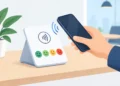
A physical prompt at that point of service creates a more natural path. A table tent beside the check, a smart tag at reception, a counter stand, or a branded plaque near the exit gives customers a clear next step while the experience is still fresh.
Review requests often create too much friction
Customers may be willing to leave a review, but willingness disappears quickly when the process requires several steps. Searching for your business, finding the correct Google Business Profile, logging into the right account, or trying to remember the business name creates small obstacles that add up.
The most effective request is specific and immediate: scan a QR code or tap an NFC-enabled display, then arrive directly at the review destination. A customer should not have to search, guess, download an app, or ask a staff member where to go.
That is where the physical design matters as much as the technology. An elegant, clearly branded stand signals that the interaction is intentional and trustworthy. It also removes the awkwardness of handing someone a paper card or asking staff to recite instructions at checkout.
The ask feels generic or poorly timed
A message that says “Please leave us a review” can sound like mass marketing, especially if it arrives without context. Customers respond better when the request connects to the service they just received.
For example, a dental practice can invite patients to share feedback after a comfortable visit. A hotel can place a review display at checkout, when guests are reflecting on their stay. A café can use a small countertop tag near the register, where regulars already have a familiar routine.
Timing still requires judgment. Do not ask a customer to review their experience before the service is complete. Do not place a review prompt where it distracts from a serious medical conversation or a guest complaint. If an issue has occurred, solve it first. A review request should follow a positive moment, not replace customer care.
Customers are unsure where you want feedback
Many businesses have a presence on Google, TripAdvisor, Booking, Trustpilot, Facebook, Instagram, WhatsApp, and other channels. That reach is valuable, but it can confuse customers when a request does not clearly identify the preferred destination.
A customer who asks, “Where should I leave it?” may abandon the task if the answer is complicated. Directing each display to one selected destination keeps the action simple. For a local service business, Google Reviews may be the priority. For a hotel or restaurant with travelers, TripAdvisor or Booking may make more sense. A retail brand may want to encourage engagement on Instagram or WhatsApp.
The right platform depends on how customers discover and choose your business. There is no universal answer, but there should be one obvious action for the customer standing in front of your display.
Staff may not feel comfortable asking
Even excellent teams can hesitate to request reviews. They may worry about sounding pushy, forget during a busy shift, or feel uncertain about what to say. If your review strategy depends entirely on staff remembering a script, results will vary from day to day.
A visible QR or NFC review display makes the request easier for everyone. Staff can simply say, “If you enjoyed your visit, you can leave us a review with a quick tap or scan.” The display does the rest.
This approach works because it is an invitation, not a hard sell. Customers retain control, while your business creates a convenient opening for those who want to share their experience. Managers also gain consistency across shifts, locations, and team members.
Why customers ignore review requests after a great experience
The central issue is not customer satisfaction alone. A satisfied customer may still ignore a request because the action is delayed, unclear, inconvenient, or easy to forget. Businesses sometimes assume that great service automatically produces reviews. In reality, great service creates the reason to review, while a simple process creates the follow-through.
Think of review collection as part of the customer journey. The final touchpoint should feel as polished as the rest of the experience. A premium salon does not want a wrinkled paper sign at the front desk. A boutique hotel does not want guests searching online for a review page. A clinic does not need another complicated software workflow for staff to manage.
A customized physical display can match your logo, colors, and environment while giving customers direct access to the channel that matters most. QR codes support nearly every modern smartphone camera. NFC makes the action even faster for customers who can tap their phone to the display. Offering both gives people a choice without adding complexity.
Make the request visible, simple, and appropriate
Improving response rates does not require aggressive follow-up campaigns. Start by placing review prompts where satisfied customers naturally pause: at tables, checkout counters, reception desks, treatment rooms after service, exits, product packaging, or delivery handoffs.
The message should be brief. “Loved your visit? Scan to leave us a Google review” is more useful than a long explanation. Make sure the QR code is large enough to scan comfortably, the NFC area is obvious, and the destination has been checked on both iPhone and Android devices.
Placement should reflect your environment. A tabletop coaster or table tent can suit a restaurant or café. A premium stand may fit a hotel lobby, clinic, or luxury retail counter. Stickers and smart tags can work well on doors, mirrors, product displays, or service vehicles. For multi-location brands, consistent customized displays help customers recognize the request wherever they visit.
Treat feedback as a trust-building moment
More reviews are valuable, but quality and authenticity matter more than volume alone. Never offer incentives in exchange for positive reviews, pressure customers to rate a certain way, or selectively ask only people you believe will praise you. Platform rules and customer trust both favor genuine, voluntary feedback.
Instead, deliver an experience worth discussing and make the invitation easy. When a customer has had a great interaction, a quick scan or tap lets them act on that feeling before it fades. When their experience was not great, give them space to raise the issue directly and respond with care.
ReviewsLink products are designed for this practical moment: turning a physical point of service into a direct route to the digital destination your business wants to grow. The technology is simple, but the commercial effect can be meaningful – more visible feedback, stronger social proof, and more confidence for the next customer deciding where to book, buy, or visit.
Your best customers are often willing to help. Put the invitation where appreciation is highest, remove every unnecessary step, and let a simple tap or scan turn a positive experience into feedback that keeps working for your business.