


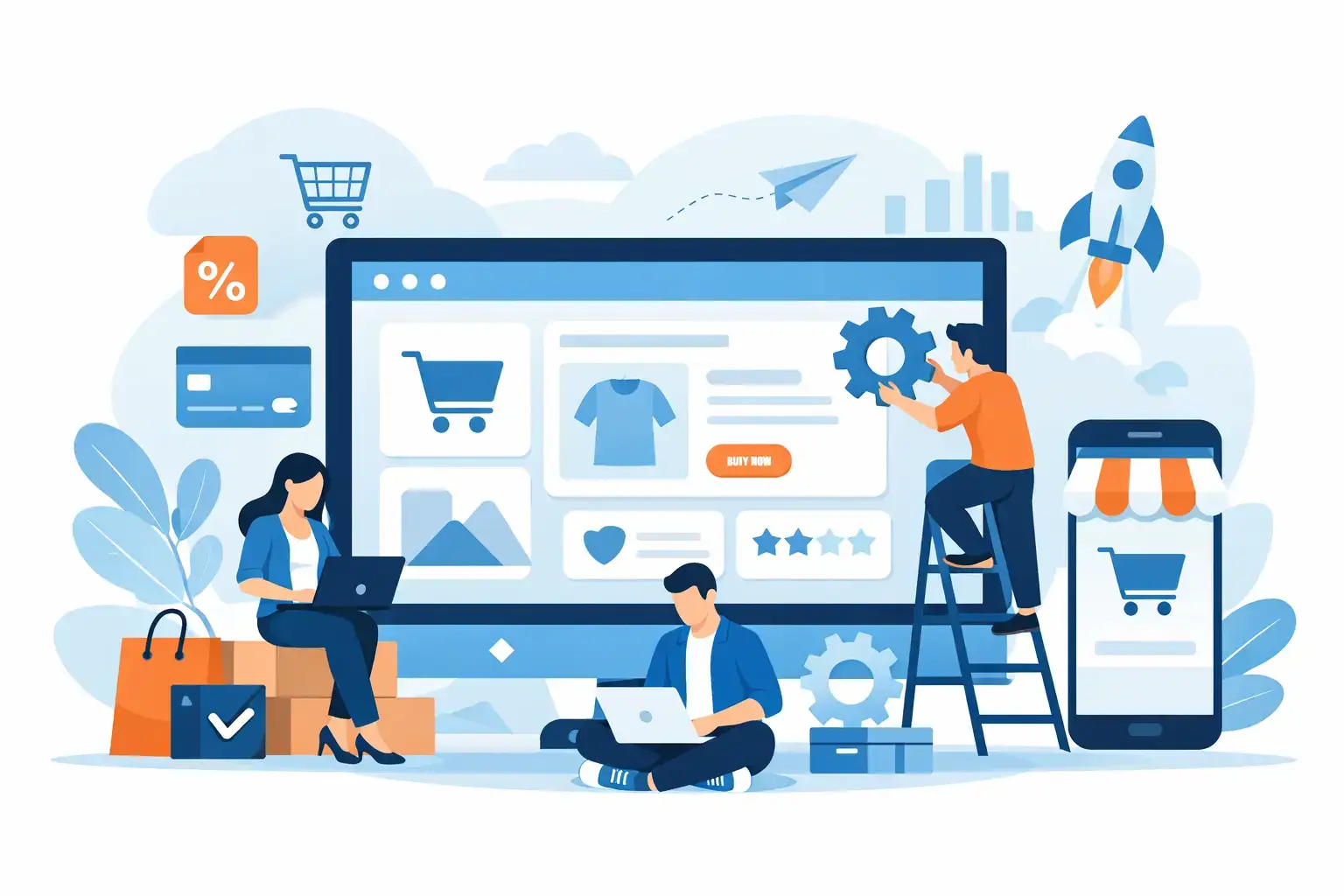
A store can look polished and still lose sales every day. A confusing checkout, slow mobile pages, missing delivery details, or a product page that answers none of the buyer’s questions can send ready-to-buy customers elsewhere. That is why ecommerce website development services should focus on the complete sales journey, not just a beautiful homepage.
For growing businesses, an ecommerce website is more than a digital catalog. It is a 24/7 sales representative, a brand experience, and a source of valuable customer data. Built correctly, it helps shoppers find products, feel confident about buying, and return when they need more.


What Ecommerce Website Development Services Should Deliver
The right development partner starts with commercial goals. Are you launching a new retail brand, moving an existing shop online, selling to customers in multiple markets, or giving wholesale buyers a faster way to order? Each goal affects the platform, structure, payment options, product setup, and marketing plan.
A complete ecommerce project typically brings together strategy, design, development, hosting, security, content, and performance tracking. Treating these as separate tasks often creates gaps. A website may be attractive but difficult to update. It may accept payments but fail to show up in search results. It may generate traffic but provide no clear way to measure where sales came from.
Strong ecommerce website development services connect these pieces from the start. The outcome is a store built to support real business operations: inventory updates, promotions, customer questions, order notifications, delivery policies, and future growth.
Start With the Customer Journey, Not the Theme
Many online stores begin with a ready-made theme because it appears quick and affordable. That can be a smart choice for a focused catalog and a fast launch. However, a theme should support your business model, not force your business into generic layouts and limited workflows.
Before design begins, define how customers move from first visit to completed order. A travel business may need package inquiry forms and date-based availability. A fashion retailer may need size guides, color variations, wish lists, and simple exchanges. A B2B supplier may need quote requests, account pricing, bulk ordering, or approval workflows.
This planning stage should answer practical questions. What information does a buyer need before purchasing? Which products should be promoted together? How will customers contact your team? What happens when an item is out of stock? The answers shape a store that feels clear and useful rather than complicated.
Product Pages Must Do the Selling
A product page is where interest becomes revenue. It needs clear images, accurate descriptions, pricing, availability, product variations, delivery information, and a visible call to action. For higher-value items, add specifications, comparison points, care instructions, warranty details, and answers to common objections.
Do not copy supplier descriptions and expect strong results. Original, buyer-focused content improves brand credibility and helps search engines understand what you sell. It also reduces support requests because customers can make better decisions before they order.
Product recommendations can increase average order value, but they must be relevant. Suggesting a compatible accessory, a refill, or a matching item helps. Filling every page with unrelated products distracts shoppers and can weaken the buying decision.
Mobile Speed Is a Revenue Requirement
Most ecommerce browsing happens on mobile devices, especially when customers discover brands through social media, search, or paid ads. If your store is difficult to use on a phone, marketing spend becomes less effective before a visitor even sees your full offer.
Mobile-first development means more than shrinking a desktop design. Buttons need enough space to tap, menus must be easy to navigate, forms should ask for only necessary information, and product images should load quickly without losing quality. The checkout should feel simple from beginning to end.
Speed also affects trust. Customers may tolerate a short delay when browsing, but they are far less patient when they are ready to pay. Heavy images, unnecessary scripts, weak hosting, and poorly configured plugins can slow down the experience. A reliable hosting environment, regular updates, image optimization, and technical monitoring protect both user experience and sales potential.
Build Trust Into Every Purchase Step
Online buyers cannot inspect a product in person or speak with a salesperson across a counter. Your website has to provide the reassurance that a physical store offers naturally.
Clear contact details, a professional brand identity, secure payment options, transparent shipping information, and visible return policies all help reduce hesitation. Reviews and testimonials can also support confidence when they are genuine and presented in the right context. A customer should never have to search for basic information about delivery costs, order timing, or how to get help.
Payment options require local market awareness. A business selling internationally may need multiple currencies and widely used card payments. A company serving specific regions may benefit from cash-on-delivery options, local gateways, or direct bank transfer processes. There is no single payment setup that fits every business. The best choice balances customer preference, transaction fees, fraud prevention, and operational simplicity.
Choose Technology for Growth, Not for Fashion
The platform behind your store should make daily work easier for your team. It should allow you to add products, update pricing, manage orders, publish promotions, and review sales without relying on a developer for every small change.
For some businesses, a proven ecommerce platform with carefully selected extensions offers speed and value. For others, custom ecommerce development is the better investment. This is especially true when the business needs complex product rules, integrations with ERP or accounting systems, custom customer portals, multi-branch inventory, or specialized booking and ordering processes.
Custom development offers control, but it also requires a clear budget for testing, maintenance, security updates, and future enhancements. A simpler platform can launch faster, but may create limitations as operations expand. The right decision depends on the number of products, sales channels, internal systems, customer expectations, and growth plan.
Connect Your Store to Marketing and Operations
A store cannot generate sales in isolation. It needs a practical route for customers to find it, and your team needs visibility into what happens after they arrive.
Search engine optimization should be considered during development, not treated as a repair job after launch. Clean page structures, meaningful product categories, fast loading, useful content, and properly organized metadata give your store a stronger foundation for organic visibility. Paid search, social campaigns, email marketing, and retargeting can then bring qualified visitors to focused landing pages and product collections.
Analytics is equally valuable. Track the sources of traffic, product-page performance, add-to-cart activity, checkout abandonment, conversion rate, and repeat purchases. These numbers show where buyers are dropping off and where investment is producing results. A high number of visitors means little if the store is not converting them.
Operational connections matter too. Order notifications, inventory management, customer relationship tools, delivery partners, invoicing, and support channels should work together wherever possible. Manual workarounds may be acceptable at launch, but they can quickly become costly as order volume increases.
A Practical Ecommerce Launch Process
A successful launch is not simply the day a website goes live. It is a controlled process that reduces errors and prepares your business to serve customers from the first order.
First, set commercial priorities: target customer, product range, pricing, delivery coverage, payment methods, and sales targets. Next, organize product data, images, policies, and brand assets. Development can then create the store structure, responsive interface, integrations, and administration tools around those priorities.
Before launch, test the entire buying process on different devices. Place test orders, verify confirmation emails, review tax and shipping rules, check payment responses, and make sure staff know how to manage refunds, returns, and customer inquiries. After launch, review performance closely and improve based on real behavior rather than assumptions.
Your(1)Site approaches ecommerce as part of a broader growth system. From brand design and development to hosting, SEO, paid campaigns, analytics, and technical support, the goal is to help businesses avoid the delays and accountability gaps that come from coordinating multiple vendors.
Invest in the Parts Customers Actually Feel
A lower upfront price can be attractive, particularly for a startup. But the cheapest build can become expensive if it creates slow pages, checkout issues, weak security, poor support, or a difficult management process. At the same time, not every business needs an oversized custom platform on day one.
Spend where it protects sales and customer confidence: mobile usability, product content, secure payments, reliable hosting, clear policies, and a checkout built for completion. Add advanced features when they solve a proven business need, not because they sound impressive in a proposal.
The strongest online stores improve over time. Launch the version that serves your customers well, measure what they do, and keep refining the experience. When your ecommerce site makes buying easier, your marketing becomes more productive and your business has a stronger foundation for growth.