

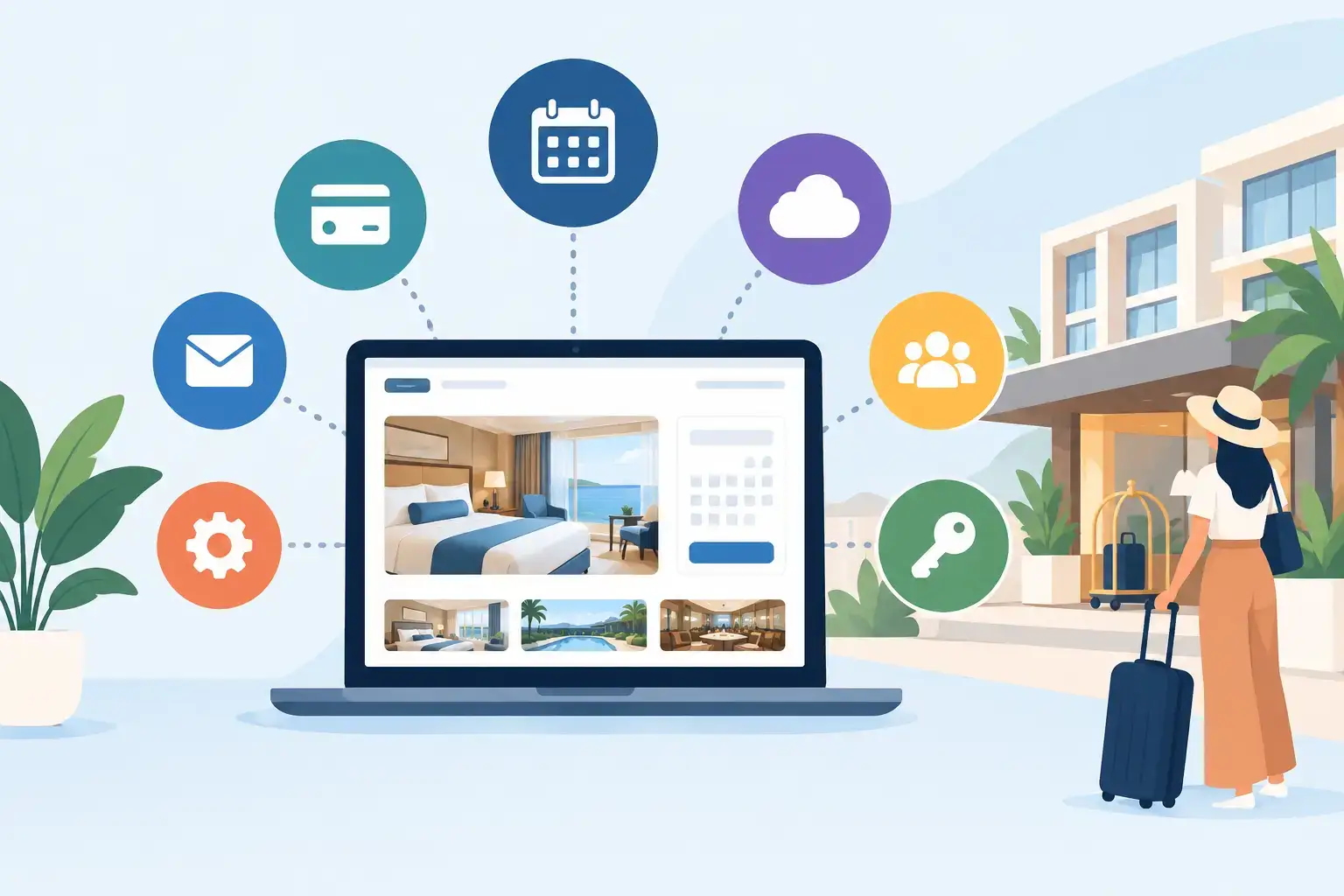
A hotel website can look exceptional and still lose revenue every day if guests cannot check availability, pay confidently, get quick answers, or find the property on the channels they trust. The right top hospitality website integrations turn a website from an online brochure into a direct-sales engine that supports reservations, guest service, marketing, and operations.
For hotels, resorts, serviced apartments, restaurants, travel agencies, and event venues, the goal is not to add every available tool. It is to connect the systems that remove friction between a guest’s first visit and a confirmed booking. That means choosing integrations that fit your property size, sales model, target market, and internal workflow.


Why Hospitality Integrations Directly Affect Revenue
Hospitality customers make decisions quickly. A traveler may compare five properties in a few minutes, check room availability from a mobile phone, read reviews, and book with whichever option feels easiest and most trustworthy. If your website sends that customer elsewhere to complete the reservation, shows outdated availability, or makes payment difficult, you may be paying for traffic that becomes someone else’s booking.
Connected systems also reduce repetitive work for your team. Instead of manually updating rates across platforms, copying guest information into multiple systems, or responding to every basic question by email, your staff can focus on service quality and revenue-generating tasks.
For small and mid-sized hospitality businesses, this is especially valuable. A well-planned website can give an independent hotel or boutique property many of the commercial advantages of a larger brand without building a large internal technology department.
The Top Hospitality Website Integrations to Prioritize
1. Booking Engine and Property Management System
A booking engine is the highest-priority integration for most accommodation businesses. It lets guests search dates, see available rooms or units, select options, and complete a direct reservation without leaving your website.
The best result comes when the booking engine connects to your property management system, or PMS. This connection keeps availability, rates, reservations, guest details, and room inventory aligned. When a guest books online, the reservation should appear in the operational system without your receptionist re-entering the information.
This is where the technical details matter. An attractive booking form is not enough if rates are delayed, room categories are confusing, or promotions do not apply correctly. Before selecting a system, confirm it supports your property type, currencies, taxes, cancellation policies, add-ons, and reporting needs.
A small serviced-apartment operator may need flexible long-stay pricing and deposit rules. A hotel with multiple room types may need packages, upgrades, and occupancy-based pricing. The correct setup depends on the business, not on which platform has the most features.
2. Channel Manager for Rate and Inventory Control
Hotels often sell rooms through online travel agencies, regional booking platforms, wholesalers, and their own direct website. A channel manager connects those sales channels to your PMS or booking system so rates and availability are updated from one central place.
Without this connection, double bookings and rate inconsistencies become real risks. A room sold through one channel may still appear available somewhere else. Your team then has to solve the problem with a guest who expected confirmation, not an apology.
A channel manager is particularly useful for properties that rely on several distribution channels. However, it should support your direct-booking strategy rather than replace it. Online travel agencies can bring visibility, but your website should give guests a strong reason to book directly, such as flexible terms, exclusive packages, a complimentary upgrade when available, or a clear price advantage where permitted.
3. Secure Payment Gateway
A guest can be ready to book and still abandon the process at the payment page. Common reasons include unsupported cards, confusing payment steps, unexpected currency conversion, weak security signals, or a checkout experience that does not work properly on mobile.
A payment gateway integrated into the booking flow helps you accept payments securely and reliably. Depending on your market, you may need to accept major international cards, local payment methods, payment links, deposits, or pay-at-property options. The setup should also handle refunds, cancellations, and no-show rules in a way your team can manage easily.
Security is not just an IT requirement. It is a trust signal. Guests are entering personal and financial information, often while planning an important trip. Secure hosting, an SSL certificate, controlled access, regular software updates, and clear privacy messaging all support a booking experience people feel comfortable completing.
4. CRM and Email Marketing Automation
Most hospitality websites focus heavily on acquiring a booking. Smart operators also build a relationship after the first visit. A customer relationship management system, or CRM, can collect guest data with permission and help your team create more relevant communication.
For example, someone who downloads a wedding venue brochure should not receive the same messages as a business traveler who booked a one-night stay. A family that visited during school holidays may respond to a seasonal package. A past guest who has not returned for a year may be a candidate for a loyalty offer.
When your website forms, booking system, CRM, and email campaigns work together, marketing becomes more targeted. You can follow up on incomplete inquiries, send pre-arrival information, request reviews after checkout, and promote offers based on genuine guest interests.
Use this carefully. Hospitality marketing should feel helpful, not intrusive. Gain consent, protect guest data, and avoid sending every offer to every contact. Better segmentation usually produces better engagement and protects your brand reputation.
5. Live Chat, WhatsApp, or AI-Assisted Guest Support
Guests often have one question standing between them and a booking: Is airport pickup available? Can I check in late? Is breakfast included? Does the room have a balcony? Is the venue available on a certain date?
Live chat or business messaging can answer these questions while the visitor is still on your website. For businesses serving international audiences, messaging tools can be especially effective because travelers may prefer a quick written response over an international phone call.
An AI-assisted chat tool can handle common questions outside business hours, but it needs accurate information and a clear path to a human team member. Do not allow automation to invent availability, pricing, policies, or service promises. A fast incorrect answer can cost more than a slower honest one.
6. Review, Map, and Social Proof Tools
Hospitality is built on trust. Guests want evidence that the rooms match the photos, the location is convenient, the service is responsive, and other travelers had a positive experience.
Integrating verified reviews, map information, guest testimonials, awards, and selected social content can strengthen confidence at the point of decision. Location information is particularly important for hotels, restaurants, and venues. Guests should be able to understand nearby landmarks, transport options, parking, attractions, and travel time.
The key is credibility. Display real reviews and respond professionally to feedback. Avoid cluttering every page with badges and pop-ups. A clean, well-placed review section near room pages, booking calls to action, or venue inquiry forms is often more effective than overwhelming visitors with proof points.
7. Analytics, Conversion Tracking, and Reporting
You cannot improve what you cannot measure. Analytics integrations show how visitors find your website, which pages they view, where they leave, and which campaigns produce reservations or inquiries.
For hospitality businesses, basic traffic numbers are not enough. Track meaningful actions: booking-engine visits, completed reservations, inquiry forms, phone clicks, WhatsApp conversations, menu downloads, event requests, and revenue by marketing channel. This allows your marketing budget to support activities that create real business results rather than vanity metrics.
A campaign may generate thousands of visits but no bookings. Another may bring fewer visitors but high-value long-stay reservations. Clear reporting helps owners and marketing managers make decisions based on revenue potential, not assumptions.
8. Multilingual and Multi-Currency Features
Hospitality businesses in Dubai, Lebanon, Syria, and international markets frequently serve guests from multiple countries. If your audience speaks more than one language or pays in more than one currency, your website should reduce that barrier.
Multilingual content must be written and managed carefully. Poor automatic translation can make a premium hotel appear careless, and it can create misunderstandings around policies or pricing. Multi-currency displays also need clarity because final charges may depend on your payment provider, taxes, and exchange rates.
These features are worthwhile when they reflect your actual guest mix. A property serving local weekend guests may benefit more from fast booking and messaging than from six language options. An international resort or travel company may see a stronger return from both.
Build the Right Integration Stack, Not the Largest One
The best hospitality website does not try to connect every system on the market. It starts with the guest journey and your operational reality. First, make direct booking or inquiry easy. Then connect payments, inventory, guest communication, marketing data, and reporting in a logical order.
Before implementation, ask practical questions: Who owns the data? What happens if an integration fails? Can your staff update offers without calling a developer? Will the tools work on mobile? Are there monthly fees, transaction costs, or training requirements? Can the solution grow if you add rooms, properties, locations, or sales channels?
Your(1)Site helps hospitality businesses bring website design, booking functionality, digital marketing, secure hosting, analytics, and technical support into one accountable project. That reduces the confusion of coordinating separate designers, developers, marketers, and IT providers while keeping the focus on bookings and guest satisfaction.
A guest should never have to work hard to choose your property. Build a website that answers questions, proves value, accepts bookings, and gives your team the information needed to deliver an experience guests want to repeat.